
For entrepreneurs and established hygiene brands looking to expand their product portfolios, the decision to make your own diapers through an in-house manufacturing line offers significant advantages. Transitioning from third-party contract manufacturing to a self-owned production facility grants direct control over product quality, supply chain timelines, and raw material utilization. This transition requires a detailed understanding of material science, industrial machinery configurations, and regulatory compliances.
Setting up a sanitary production plant is a capital-intensive project that demands precise engineering. By taking control of the manufacturing process, a brand can respond dynamically to market changes, adjust product specifications for different demographics, and manage unit economics. Working with industrial partners like KIMEPR helps brands navigate the complexities of machine procurement, raw material sourcing, and production line layout planning.
Market Entry and Feasibility Analysis
Before investing in industrial capital equipment, a structured feasibility study is necessary to define the target market and product specifications. The hygiene market is divided into distinct segments, each requiring specific manufacturing parameters and raw material selections.
Demographic Demand and Segment Selection
Manufacturers must choose whether to target baby care, adult incontinence, or pet hygiene products. Baby diapers are divided into size brackets (typically Newborn to Size 6) and product types (tape-style diapers vs. training pants). The machinery configuration must accommodate these variations. Adult incontinence products require larger core sizes and higher absorption capacities, which alters the physical footprint of the forming drum and cutting dies in the production line.
Capital Expenditure and Operational Cost Structures
The financial commitment required to make your own diapers comprises primary equipment acquisition, raw material inventory, facility construction, and utilities. Operational costs are heavily influenced by raw material waste rates and machine efficiency. Highly automated lines reduce labor dependencies but require skilled technicians for maintenance and caliber adjustments. Analyzing the payback period based on projected regional sales volume determines the viable speed and automation level of the machinery.
Selecting Raw Materials to Make Your Own Diapers
A diaper is a multi-layered composite structure designed to acquire, distribute, and retain liquid under pressure. The quality of the finished product depends entirely on the specifications of the raw materials fed into the converter.
The Absorbent Core Construction
The absorbent core is the functional center of the diaper. It traditionally consists of a blend of Superabsorbent Polymer (SAP) and wood fluff pulp.
Superabsorbent Polymer (SAP): Typically sodium polyacrylate, SAP particles absorb and bind moisture through osmotic pressure, turning liquid into a gel. The ratio of SAP to fluff pulp determines the absorption capacity and core thickness.
Wood Fluff Pulp: This material acts as the initial wicking medium, drawing liquid away from the point of insult and distributing it across the SAP network. The pulp must be bleached chemical softwood pulp for optimal absorption and fiber separation.
Composite Cores: Some modern production setups utilize SAP-only or pre-formed composite cores wrapped in tissue or non-woven carriers. This eliminates the fluff pulp preparation step, resulting in a thinner diaper profile and a smaller machinery footprint.
Top Sheet and Backsheet Non-woven Selection
The outer layers manage liquid entry and containment while maintaining skin dry state.
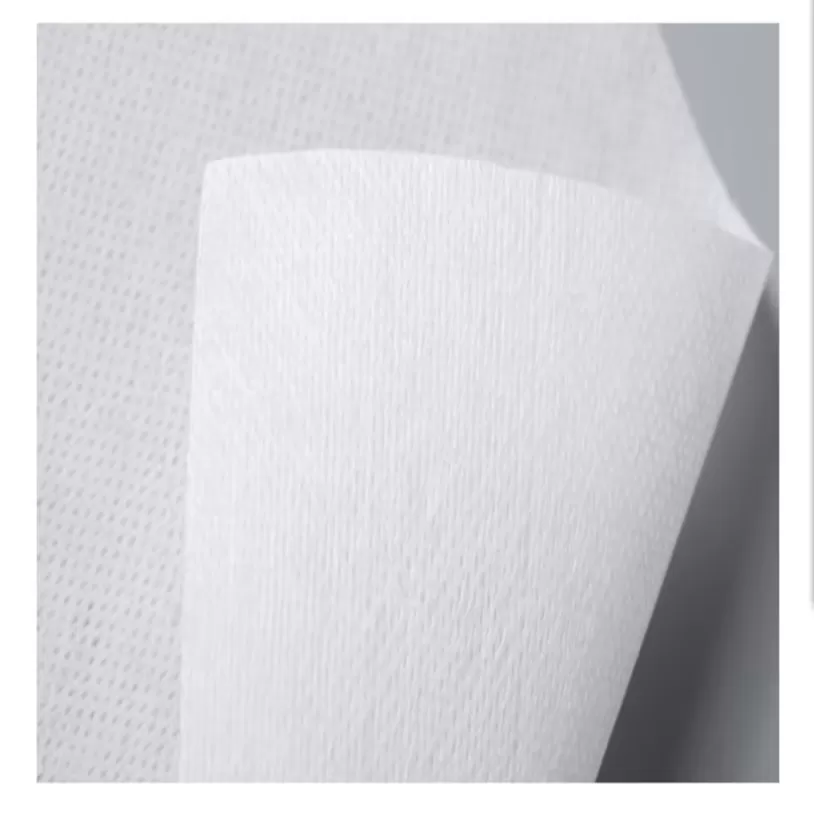
Top Sheet: This layer sits directly against the user's skin. It must be a hydrophilic non-woven fabric, usually spunbond polypropylene (PP) or carded non-woven, allowing liquid to pass through rapidly without retaining moisture.
Backsheet: To prevent leakage, the backsheet uses a liquid-impermeable material. It is typically a composite of a thin polyethylene (PE) film laminated with a soft, breathable spunbond non-woven fabric. This allows water vapor to escape while retaining liquid water.
Elastic Components and Acquisition Distribution Layer (ADL)
Fit and rapid distribution are managed by secondary layers. The Acquisition Distribution Layer (ADL) is positioned between the top sheet and the core. Made from high-loft synthetic fibers, the ADL temporarily stores liquid and distributes it evenly along the length of the core to prevent localized pooling. Leg cuffs and elastic waistbands utilize elastomeric polyurethane fibers (such as Lycra or spandex) to provide a snug fit and prevent side leakage.
Machinery Configurations Required to Make Your Own Diapers at Scale
An industrial diaper line is a continuous rotary converting machine that processes raw material webs at high speeds. The design of these machines determines production output, product versatility, and material efficiency.
For brands setting up their first facility, partnering with an experienced equipment provider like KIMEPR ensures that the machinery matches the intended production capacity and raw material specifications. The converter comprises several synchronized modules working in series.
High-Speed Rotary Converters
The primary machinery consists of unwinding stands, material splicing units, core forming drums, laminating stations, and cutting modules. Modern lines use full-servo drive systems where electronic controllers manage each rotary shaft. This replaces older mechanical gearboxes, allowing operators to change product sizes via a touchscreen interface with minimal physical tooling changes. Raw material webs are fed into the machine from continuous spools; automatic splicing systems join the tail of an expiring roll to a new roll at full running speed to prevent downtime.
Inline Quality Inspection Systems
High-speed manufacturing operating at 400 to 1000 pieces per minute makes manual inspection impossible. Automated vision systems utilize high-resolution cameras and sensors to scan the product stream in real-time. These systems detect defects such as core misalignment, missing elastic strands, incorrect adhesive placement, or foreign contamination. Defective products are automatically tracked and diverted to a reject bin at the discharge end of the line without stopping the machine.
Packaging and Bundling Automation
Finished diapers must be stacked, compressed, and bagged. Automated packaging machinery receives the product stream from the converter, groups them into specific counts, compresses the stack to reduce volume, and inserts them into pre-formed plastic bags. The bags are then sealed and prepared for casing. Automating this step reduces physical handling, lowers secondary contamination risks, and matches the throughput of high-speed converting lines.
Operational Processes and Quality Control Protocols
Operating a diaper production line requires precise control of environmental, mechanical, and physical variables. Deviations in any parameter can cause immediate product defects or machine jams.
Maintaining Web Tension Control
Since the diaper is composed of multiple materials with different elasticities (PE films, non-wovens, elastic strands), maintaining precise tension across all webs is necessary. If tension is too high, the materials will stretch and snap, causing line stops. If tension is too low, the layers will wrinkle, causing product misalignment and leakage. Closed-loop tension control systems utilizing load cells and dancer rolls continuously adjust the speed of the unwind motors to maintain stable tension.
Adhesive Application Temperature and Alignment
Hot melt adhesives are used to bond the different diaper components together. The adhesive application system must maintain precise temperatures (typically between 140°C and 160°C) to ensure proper viscosity and bond strength. There are two primary application methods:
Slot Coating: Used for continuous lamination, such as bonding the backsheet PE film to the outer non-woven fabric.
Spray Application: Used for structured patterns or fiber coating, such as securing the elastic strands or bonding the ADL to the core without blocking liquid permeability.
Regulatory Approvals and Testing Standards
Products intended for skin contact must comply with international safety and performance standards. Before commercial distribution can begin, manufacturers must implement a rigorous testing regimen.
Biocompatibility and Skin Sensitization Tests
Materials must undergo toxicological evaluation to ensure they do not cause irritation or allergic reactions. Standardized testing includes ISO 10993 biocompatibility assessments for skin contact materials. This involves testing the raw non-wovens, adhesives, and elastic components for cytotoxins, sensitizers, and irritants.
Functional Performance Benchmarking
To verify that the diaper functions as intended under real-world conditions, laboratory testing must measure several key performance metrics:
Acquisition Time: The time required for a specific volume of synthetic urine to pass through the top sheet into the absorbent core.
Rewet Value: The amount of liquid that returns to the surface of the top sheet when subjected to standard physical pressure, indicating how dry the diaper keeps the skin.
Retention Capacity: The total amount of fluid the core can retain when fully saturated and placed under centrifugal force.
Establishing a Solid B2B Partnership
Launching a manufacturing facility to make your own diapers requires a balance of raw material sourcing, mechanical precision, and operational expertise. For companies seeking to establish or upgrade a production facility, KIMEPR provides industrial equipment engineering, line customization, and raw material integration services. Our engineering team assists with facility layout, line calibration, and technical training to ensure your investment achieves optimal efficiency from day one.
To discuss machinery configurations, output capacities, or raw material integration for your upcoming manufacturing project, please reach out to our project engineering office for a detailed technical consultation and quotation.
Frequently Asked Questions
Q1: What is the average footprint required for a commercial diaper manufacturing line?
A1: A standard baby diaper production line, including the unwinding stands, converting section, packaging unit, and raw material staging areas, typically requires a physical footprint of approximately 30 to 45 meters in length and 6 to 8 meters in width. The facility must also accommodate ceiling clearances of at least 5 meters to allow for crane systems used during roll changes, along with ample warehousing space for raw materials and finished goods inventory.
Q2: How does a full-servo machine compare to a semi-servo machine when starting to make your own diapers?
A2: A full-servo machine uses independent electronic motors to control each rotating shaft, offering precise tension control, automated size changeovers via software, lower noise levels, and reduced material waste. A semi-servo machine combines servo control on critical cutting or feeding shafts with mechanical chain and gear drives for secondary functions. While semi-servo lines have a lower initial capital cost, full-servo lines provide higher operational efficiency and lower long-term maintenance overhead.
Q3: What are the common causes of high material waste on a diaper production line?
A3: Material waste is typically caused by improper web tension control, leading to material drift or breakage, poor temperature management in the hot melt adhesive system, and misalignment during automatic splicing of raw material rolls. Regular calibration of tension sensors, routine maintenance of adhesive application nozzles, and utilizing automated vision inspection systems help identify and resolve these issues before they result in large-scale material loss.
Q4: Can one production line make both baby diapers and adult incontinence products?
A4: Due to the significant differences in physical dimensions, core sizes, and material volumes, it is not practical to produce both baby and adult diapers on the same machinery line. Converting modules, cutting dies, and core forming drums are designed for specific size ranges. While a baby diaper machine can be adjusted to produce multiple baby sizes (from size 1 to size 6) by changing the mechanical molds and program settings, producing adult incontinence products requires a separate, larger-scale machinery line.
Q5: How is the ratio of SAP to fluff pulp determined for different product tiers?
A5: The ratio is determined by the target thickness and absorption speed of the product. Premium, thin diapers typically use a higher ratio of SAP (up to 70% SAP to 30% pulp) or composite core technologies to minimize bulk while maintaining high retention capacity. Standard or economy diapers often use a higher percentage of fluff pulp (e.g., 50% pulp to 50% SAP) to provide faster initial fluid distribution and a softer, thicker feel, though this increases the overall weight and shipping volume of the finished product.