
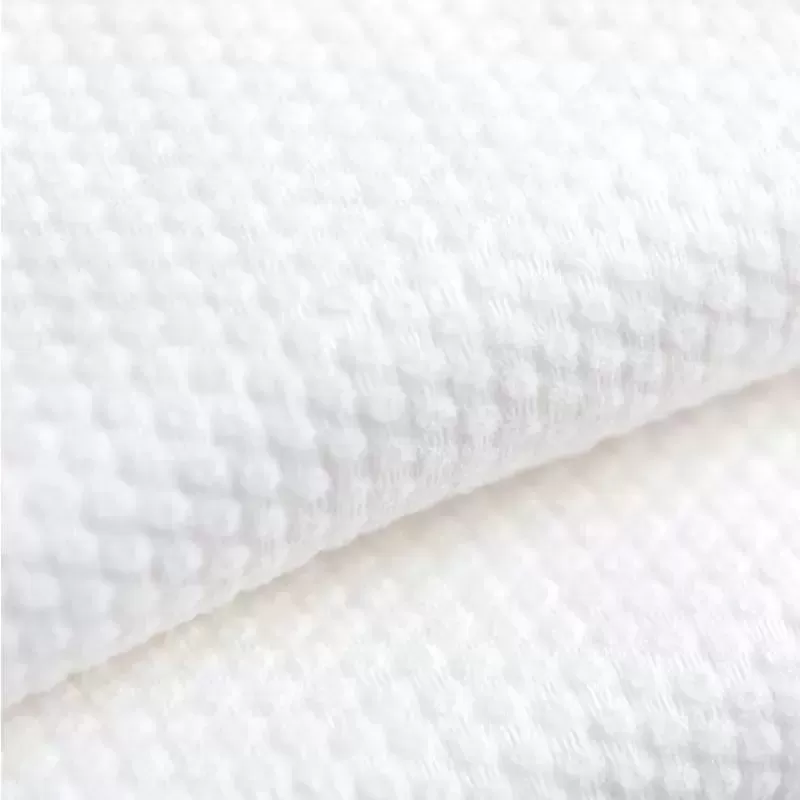
The global hygiene products sector has experienced a notable shift toward specialized topical care solutions. Among these developments, wet sanitary pads have emerged as a prominent category designed to address specific dermatological and hygiene needs. Unlike conventional dry liners or standard baby wipes, these products combine structured non-woven substrates with precise liquid dosing to support recovery, soothing, and targeted hygiene. For B2B distributors, medical buyers, and private label brands, understanding the material science and manufacturing parameters behind these products is necessary for securing high-performing inventory that aligns with global safety regulations.
Product performance depends on the interaction between the physical substrate and the chemical formulation. When sourcing these specialized hygiene items, procurement teams must evaluate material properties such as tensile strength, fluid retention, and biological compatibility. KIMEPR works to address these requirements by focusing on cleanroom production standards and advanced fluid-dosing technologies to deliver consistent, high-integrity products for global markets.
Substrate Engineering and Material Selection
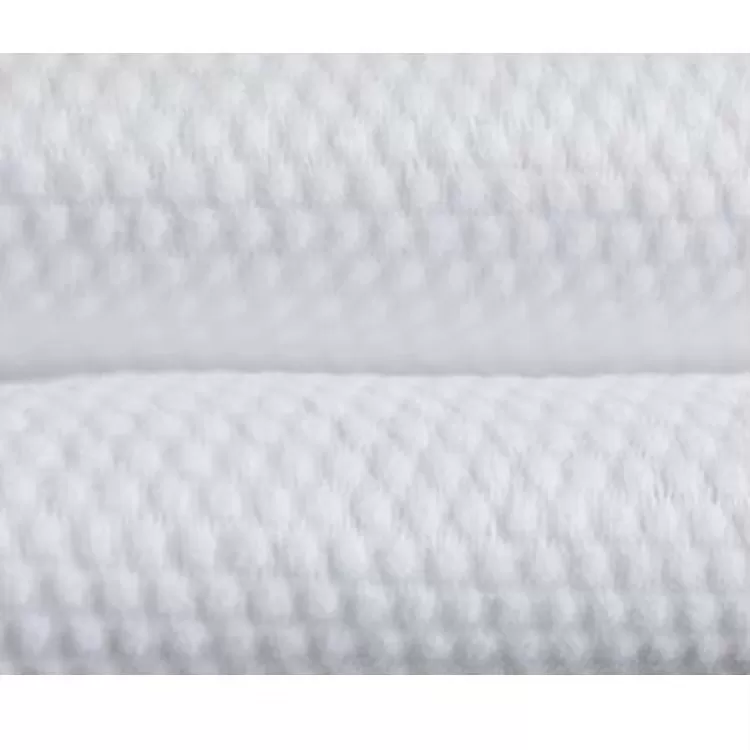
The choice of non-woven substrate determines how the product behaves during use. The material must offer sufficient tensile strength to prevent tearing while maintaining a soft texture to avoid mechanical irritation of sensitive mucosal tissues.
Spunlace non-woven fabric remains the industry standard for premium wet sanitary pads due to its high absorbency and structural integrity. This material is produced by entangling loose fibers through high-pressure water jets, creating a web structure that mimics woven textiles without the use of chemical binders. Manufacturers typically utilize various fiber blends depending on the target market requirements:
Viscose/Rayon Blends: Viscose provides high hydrophilic capacity, absorbing liquid quickly and holding the formulation evenly across the sheet. Blending viscose with polyester enhances the overall tensile strength of the pad, ensuring it does not disintegrate during dispensing or application.
100% Biodegradable Cotton: For premium or eco-conscious product lines, organic cotton substrates offer natural softness and excellent biocompatibility. These fibers naturally decompose under industrial composting conditions, aligning with environmental compliance standards.
Wood Pulp and Lyocell: These wood-derived fibers provide a balance of structural rigidity, absorption, and rapid biodegradability, which is particularly beneficial for products designed to meet flushability standards.
From an engineering perspective, the basis weight of the non-woven substrate, measured in grams per square meter (GSM), must be carefully calibrated. If the GSM is too low, the pad lacks the structural barrier needed to protect the user's hand and fails to retain adequate moisture. If the GSM is too high, the product becomes rigid, increasing shipping weight and manufacturing costs. A range of 45 GSM to 65 GSM is generally recognized as the optimal window for balancing structural resilience with user comfort.
Formulation Chemistry and Microbiological Stability
The lotion applied to wet sanitary pads must satisfy dual criteria: it must remain chemically stable over a multi-year shelf life while proving completely non-irritating to sensitive skin. The formulation typically consists of purified water, humectants, mild surfactants, soothing agents, and a robust preservation system.
Maintaining a correct pH level is a primary design parameter. The natural pH of the female intimate area is acidic, generally ranging between 3.8 and 4.5. Introducing a highly alkaline or neutral product can disrupt the local microbiome, potentially leading to bacterial imbalances or irritation. Therefore, formulations incorporate buffering agents, such as lactic acid or citric acid, to stabilize the pH within this exact biological range.
The preservative system represents another complex area of formulation engineering. Because these pads remain wet for extended periods inside their packaging, they are susceptible to microbial growth, including Gram-negative bacteria, yeast, and mold. However, many standard cosmetic preservatives are known sensitizers. Manufacturers must select mild preservative systems, such as sodium benzoate, potassium sorbate, or phenoxyethanol, used in low concentrations that effectively prevent contamination without causing contact dermatitis. Every formulation must undergo rigorous Preservative Efficacy Testing (PET) according to USP <51> or EP standards before commercial distribution.
To enhance the soothing characteristics of wet sanitary pads, active botanical extracts are frequently incorporated. Ingredients such as Aloe Barbadensis Leaf Juice, Chamomilla Recutita (Matricaria) Flower Extract, and Hamamelis Virginiana (Witch Hazel) are selected for their anti-inflammatory properties. These extracts must be highly purified and free from pesticide residues or heavy metals to ensure complete safety during clinical and daily use.
B2B Sourcing Pain Points and Production Solutions
Procurement professionals face several logistical and qualitative hurdles when sourcing wet hygiene products. Inconsistent moisture distribution within a single production batch is a common quality defect. If the liquid dosing system on the production line is not calibrated, the pads at the top of a package may arrive dry, while those at the bottom are oversaturated. This imbalance leads to poor product performance and negative end-user feedback.
To resolve this, advanced manufacturing facilities utilize continuous, automated liquid injection systems that monitor flow rates in real-time. This guarantees that every individual sheet receives an identical volume of formulation, maintaining uniform moisture retention throughout the product lifecycle.
Another common concern is packaging failure. The high moisture content and active chemical ingredients in wet sanitary pads can degrade poor-quality packaging films over time, leading to premature drying or contamination. B2B buyers must specify multi-layer barrier films, typically incorporating aluminum or specialized polymer layers, to block UV light and prevent moisture vapor transmission. Resealable plastic lids or high-tack labels are required to maintain a secure seal after the initial opening.
Compliance with international regulatory frameworks is also a major consideration. Depending on the specific marketing claims (e.g., cosmetic daily use vs. medical-grade postpartum recovery), these products may fall under different regulatory categories. In the United States, products making therapeutic claims are regulated as medical devices or over-the-counter (OTC) drugs, requiring manufacturing facilities to be registered with the FDA and adhere to strict Current Good Manufacturing Practices (cGMP). In Europe, cosmetic-grade items must comply with Regulation (EC) No 1223/2009, which involves detailed safety assessments and notifications via the CPNP portal.
Manufacturing Standards at KIMEPR
To address these industrial challenges, KIMEPR maintains dedicated production lines configured to meet demanding quality control parameters. Our manufacturing facilities utilize high-speed rotary converting machines that integrate raw material unwinding, folding, liquid dosing, cutting, and packaging into a single automated process. This continuous cycle minimizes manual handling, lowering the risk of microbial introduction.
Our facility designs incorporate cleanroom environments operating under positive air pressure with HEPA filtration. This environment ensures that the assembly and packaging of wet sanitary pads occur under controlled atmospheric conditions, minimizing suspended particulate matter and environmental microbes. By maintaining these strict cleanroom protocols, we can reduce the concentration of chemical preservatives in our formulations, resulting in a milder, more natural product for end consumers.
Quality control at KIMEPR extends to rigorous raw material validation. Every batch of non-woven fabric undergoes testing for tensile strength, thickness, and absorption capacity before entering the production hall. Deionized water systems are monitored continuously to ensure the water used in our formulations meets USP purified water specifications, free from chlorine, minerals, and organic impurities.
Evaluating Total Cost of Ownership in Bulk Sourcing
When analyzing quotes from manufacturers, B2B buyers must look beyond the unit price to evaluate the total cost of ownership. Factors such as minimum order quantities (MOQs), packaging customization, lead times, and shipping logistics significantly impact overall margins.
Customization options play a key role in market differentiation. KIMEPR offers private label partners a wide range of configuration choices, including custom sheet dimensions, specialized folding patterns (such as Z-fold or interfolded sheets for single-sheet dispensing), and tailored formulation profiles. Buyers should evaluate how these custom specifications influence production efficiency and shipping volumes. For instance, high-density packaging configurations can optimize container space, lowering international freight costs per unit.
Furthermore, sourcing from a manufacturer with integrated packaging capabilities reduces the supply chain risk of coordinating between separate substrate converters and chemical compounding facilities. By managing the entire production cycle under one roof, KIMEPR simplifies quality tracing, providing a single point of accountability for both the physical substrate and the chemical solution.
Frequently Asked Questions
Q1: What is the primary difference between standard wet wipes and wet sanitary pads designed for intimate care?
A1: Standard wet wipes often contain fragrances, alcohol, or stronger surfactants designed for general skin cleansing, which can disrupt the delicate vaginal pH and cause irritation. Wet sanitary pads are engineered specifically for intimate mucosal areas, featuring a balanced pH (typically 3.8 to 4.5), dermatologically tested mild preservatives, and soothing botanical extracts, all applied to a high-purity non-woven substrate.
Q2: How do manufacturers prevent the formulation from separating or settling within the packaging during long-term storage?
A2: Formulators utilize food-grade stabilizers and solubilizers to keep active ingredients and botanical extracts uniformly suspended in the aqueous solution. Additionally, the fiber structure of the spunlace non-woven substrate is selected for its capillary action, which holds the liquid evenly across the entire surface of each pad, preventing gravity-driven settling.
Q3: Are wet sanitary pads safe for postpartum recovery applications?
A3: Yes, provided they are manufactured under medical-grade standards. For postpartum use, formulations often exclude all synthetic fragrances and include natural anti-inflammatory agents like witch hazel or aloe vera to soothe perineal discomfort. Buyers should ensure the manufacturing facility holds ISO 13485 (medical devices) or ISO 22716 (cosmetic GMP) certifications for these applications.
Q4: Can these products be certified as flushable under current environmental regulations?
A4: Flushability depends entirely on the substrate material. To be labeled as flushable, the pads must be made from dispersible wet-laid or short-fiber non-woven materials that meet EDANA/INDA flushability guidelines. Standard polyester-blend spunlace pads do not break down rapidly in sewer systems and must be disposed of in dry waste bins.
Q5: What is the typical shelf life of sealed wet sanitary pads packages?
A5: When packaged in high-barrier multi-layer films, the typical shelf life is 24 to 36 months from the date of manufacture. To preserve moisture and formulation stability throughout this period, packages must be stored in cool, dry conditions away from direct sunlight.
Contact KIMEPR for Professional Sourcing Solutions
Selecting the right manufacturing partner is a strategic decision that affects product safety, brand reputation, and market positioning. KIMEPR provides reliable, certified manufacturing services for companies looking to expand their hygiene portfolios with high-quality wet sanitary pads. We invite distributors, sourcing agents, and brand owners to contact our commercial team to discuss technical specifications, request product samples, or schedule a virtual facility audit. Let us work together to develop a solution tailored to your target market's specific requirements.