
Because of these hurdles, purchasing a second hand wet wipe machine has become a practical growth strategy. A pre-owned line lets you capture short-term market windows at a fraction of the cost. Still, the used machinery market carries substantial risks. Buying without an engineering audit can saddle your business with obsolete electronics, worn mechanical assemblies, and costly downtime.
This guide breaks down everything hygiene manufacturers must review before signing a purchase contract for pre-owned converting equipment.
The Pros and Cons of Investing in a Used Wet Wipe Machine
Procuring pre-owned machinery is fundamentally a balance between risk and financial flexibility. A disciplined evaluation helps you determine whether a used line fits your operational risk tolerance.
The Advantages
- Lower Upfront Capital Outlay: A used wet wipe making machine typically costs 30% to 60% less than a comparable new unit. This financial cushion preserves working capital for raw materials like spunlace nonwoven fabric, packaging films, and formulations.
- Immediate Delivery and Faster Commissioning: Fabricating a new multi-lane converting and packaging machine takes months. A second hand wet wipe machine already sits on a factory floor or warehouse, ready for crating and shipping within weeks.
- Flatter Depreciation Curve: Brand-new machinery depreciates rapidly during its first two years of operation. When you buy pre-owned, the original owner has already absorbed that steep financial hit.
The Risks and Downsides
- Lack of Manufacturer Warranty: Most pre-owned equipment sells under strict "as-is, where-is" terms. If an electrical drive fails during commissioning, the repair costs fall entirely on you.
- Substrate Limitations: Modern consumers demand eco-friendly, plastic-free, and flushable nonwovens. Older wet tissue converting lines often struggle to process 100% viscose, bamboo, or wood pulp blends without web tears.
- Component Obsolescence: Older lines frequently run on legacy PLCs, obsolete servomotors, or discontinued temperature controllers. Sourcing replacement modules can paralyze your output for weeks.
Types of Second Hand Wet Wipe Machines Available in the Market
Wet wipe lines are engineered around specific packaging formats and folding styles. You must match the used equipment to the exact pack format your target market expects.
1. Single-Sachet Wet Wipe Packaging Machines
These compact lines convert, fold, wet, and package single sheets into four-side sealed sachets. You find them widely in the hospitality, aviation, restaurant, and medical alcohol prep pad markets. Single-sachet lines are mechanically straightforward, making them relatively safe to buy on the second hand market.
2. Flow-Pack Lines with Plastic Lid Applicators
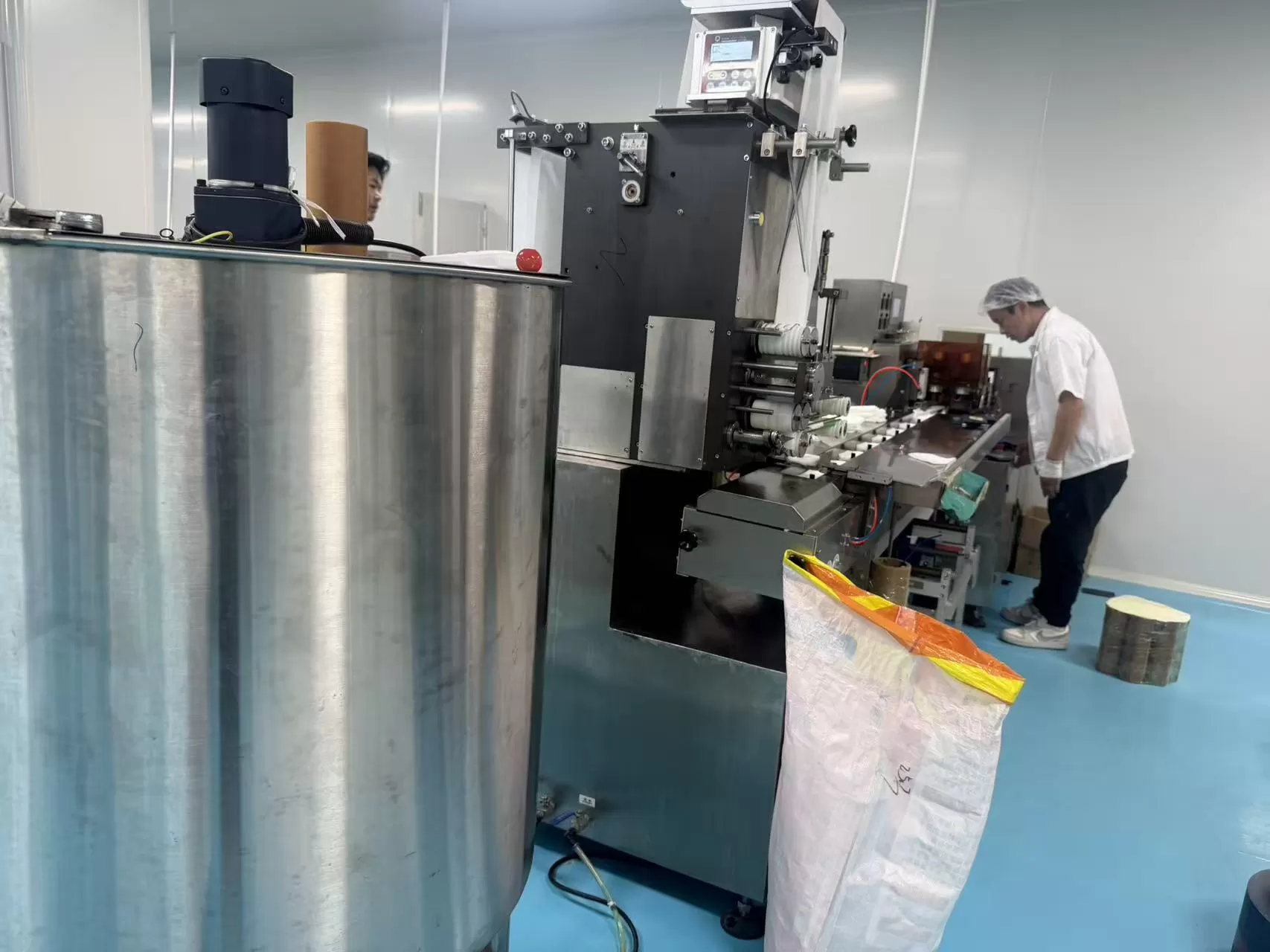
This configuration produces standard multi-packs, such as 40-count to 120-count baby wipes or household disinfectant wipes. The line includes three core sections: the nonwoven converting/folding unit, the flow-wrapping packaging machine, and the robotic lid applicator. These lines contain multiple synchronized servo axes, requiring close inspection of their motion controls.
3. Canister and Bucket Wet Wipe Machines
Canister lines take parent rolls of spunlace, slit them, perforate the web, and wind them into coreless rolls. Operators or automated systems load these rolls into plastic tubs before liquid dispensing. These machines have fewer electronic synchronization points than flow-wrap lines, reducing maintenance complexity.
4. Cross-Fold vs. Z-Fold Converting Units
Examine the folding mechanism carefully. Z-fold and interfold (pop-up) configurations dominate retail baby wipe shelves because the next wipe pulls up automatically. Older pre-owned equipment may only offer non-interfolded continuous sheets, which fail to meet modern consumer preferences.
Technical Inspection Checklist: 6 Critical Areas Before Buying
Never purchase a second hand wet wipe machine based on video footage alone. Send an internal maintenance engineer or third-party technician to conduct a physical inspection across these six critical functional zones.
Checklist 1: Mechanical Structure and Folding Assembly
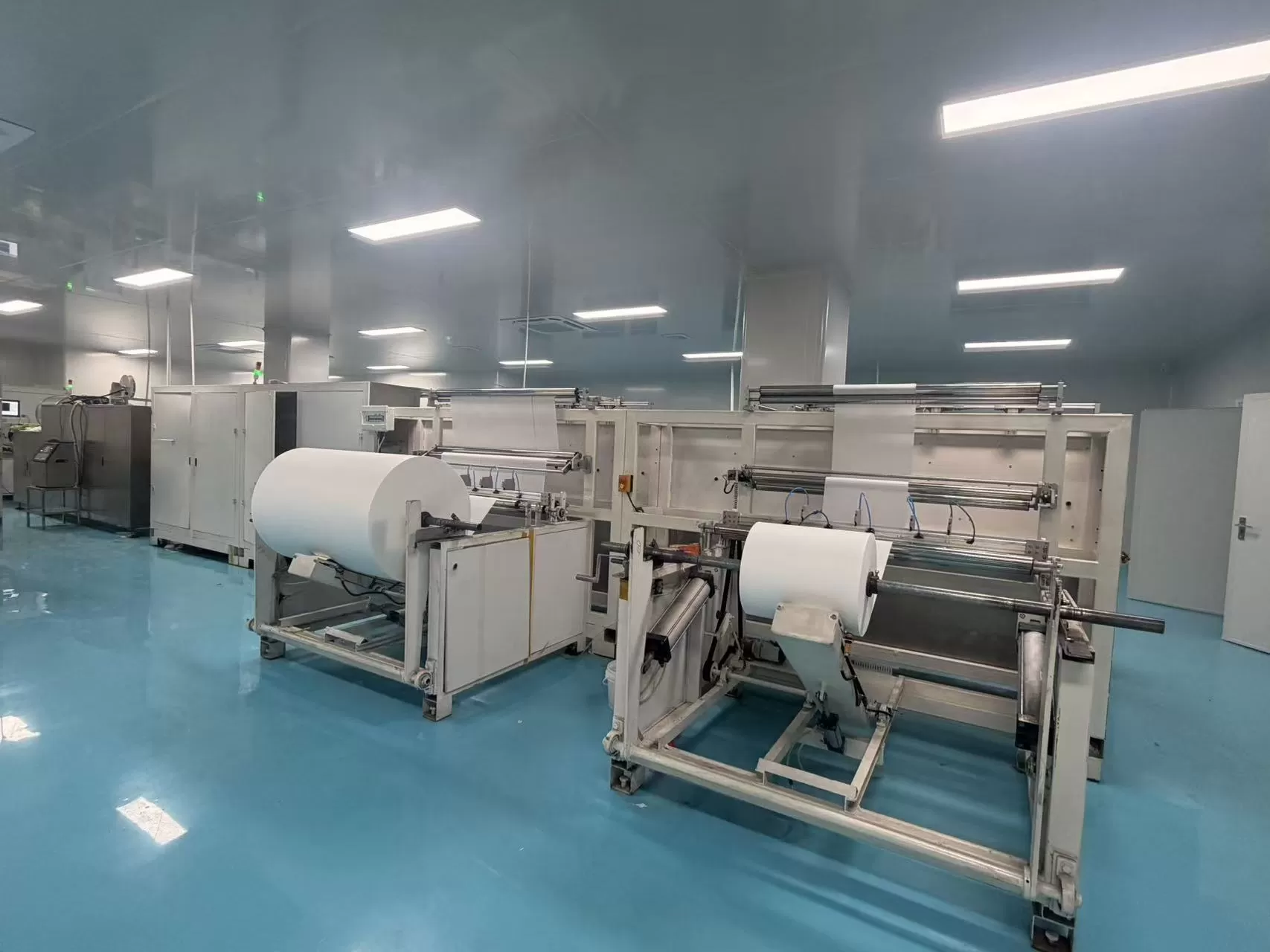
The folding section processes parent rolls into stacked nonwoven sheets. Inspect the main slitting blades, perforating rollers, and folding boards for excessive play, gouges, or corrosion.
- Check guide rollers for bearing runout using a dial indicator. Misaligned rollers cause web drift and uneven tension.
- Inspect the rotary cutting unit. Dull rotary knives or chipped anvils crush the fabric edge rather than cutting it cleanly, resulting in lint contamination.
- Listen for irregular gearbox backlash and inspect the timing belts for tooth wear or fraying.
Checklist 2: Liquid Dosing and Wetting System
The lotion application system must deliver liquid evenly across every wipe. Inconsistent dosing leads to bottom-of-pack pooling or dry top sheets.
- Inspect all fluid-contact parts. Medical and cosmetic wipes require sanitary grade AISI 316L stainless steel. Reject lines that show signs of pitting, mineral scaling, or rust.
- Evaluate the dosing pump configuration. Peristaltic and positive displacement flow-meter systems offer superior consistency over gravity-fed nozzles.
- Examine seals, diaphragm valves, and liquid distribution manifolds for hardened formulation residues or chemical degradation.
Checklist 3: Electrical, PLC, and Drive Architecture
Controls are the most vulnerable component of any pre-owned wipes packaging machine. Engineering teams like those at KIMEPR always prioritize electrical audits during equipment evaluations.
- Identify the hardware brand. Lines built on Siemens, Rockwell Automation (Allen-Bradley), Omron, or Mitsubishi simplify component replacement.
- Confirm that the PLC program is unlocked. If the previous owner or original builder password-protected the PLC, you cannot adjust machine parameters, add sensors, or diagnose internal faults.
- Open the control cabinet to check for heat scorches, makeshift wiring bypasses, and cooling fan failures.
Checklist 4: Packaging and Sealing Integrity
Defective seals ruin wet wipe products by allowing moisture to evaporate before consumer use. The packaging unit must form hermetic seals at production speeds.
- Inspect the horizontal end-seal crimpers and longitudinal heat-sealing rollers for carbon buildup, surface scratches, and heating element burnouts.
- Check the PID temperature controllers to verify they maintain target heat levels within ±1°C without wild fluctuations.
- Inspect the film unwinding shaft and web-tracking mechanism. The photodiode sensor must track print registration marks reliably without drifting.
Checklist 5: Raw Material Compatibility
Ensure the machine can feed your intended substrates smoothly. Viscose-polyester blends run easily, but eco-friendly alternatives behave differently.
- Test run 100% flushable wood pulp/cellulose paper and plastic-free spunlace. These materials possess lower tensile strength and tear easily under uneven web tension.
- Verify minimum and maximum parent roll widths and roll diameters accommodated by the unwind stand.
Checklist 6: Labeling and Automatic Lid Applicator
Multi-pack lines typically feature an online die-cut resealable label applicator or a robotic plastic lid applicator.
- Examine the hot-melt glue dispensing unit (such as Nordson systems). Check the heated hoses and spray nozzles for charred adhesive buildup.
- Inspect the Delta-robot or cartesian lid-placement arm. The vacuum suction cups, vision cameras, and mechanical grippers must align lids within ±1 mm of the pouch opening.
The Hidden Costs of Buying Pre-Owned Equipment
A used machine with a tempting initial price tag can quickly drain capital if you overlook secondary project expenses. Calculate the true Total Cost of Ownership (TCO) using these variables:
- De-commissioning and Rigging: Disassembling a multi-lane converting line requires skilled mechanics. Improper handling during removal can warp precision beds or damage servo shafts.
- Specialized Transport: Packaging machinery contains sensitive optics and drives. You must factor in moisture-barrier vacuum bagging, anti-corrosion crating, and insured freight.
- Refurbishment and Wear Parts: Budget immediately for fresh timing belts, slitting blades, heating elements, vacuum hoses, and liquid seals.
- Field Service Re-Commissioning: Hiring external factory service engineers to install the line, calibrate motion profiles, and train your operators adds several thousand dollars to your total budget.
- Ramp-Up Scrap Rates: An older, unfamiliar used wipes
packaging machine generates more scrap fabric and film during the initial tuning
phase than a new, factory-tested machine.
Second Hand vs. Brand New Wet Wipe Machine: A Quick Comparison
Review this side-by-side comparison to clarify which machinery route matches your business timeline and budget:
| Evaluation Metric | Second Hand Wet Wipe Machine | Brand New Production Machine |
|---|---|---|
| Initial Capital Cost | Low (30% to 60% savings compared to new) | High (Demands significant initial capital or leasing) |
| Lead Time to Delivery | Fast (Typically 2 to 6 weeks) | Long (Usually 4 to 10 months from order placement) |
| Equipment Lifespan | Shorter (Depends on operating history) | Long (Designed for 10-15+ years of continuous service) |
| Technology & Controls | May feature legacy PLCs or older drive systems | Modern motion controls, IoT telemetry, remote diagnostics |
| Substrate Flexibility | Often restricted to traditional synthetic spunlace | Engineered to handle delicate, plastic-free, and flushable webs |
| Customization Options | Fixed layout; adjustments require costly retrofits | Built specifically to match your plant space and packaging specs |
Sourcing Strategies: Where and How to Buy Safely
Where you source your used machinery directly impacts your operational risk level. Avoid unverified intermediaries who cannot demonstrate working knowledge of hygiene converting.
1. Direct Plant Liquidations: Purchasing directly from a hygiene brand closing down an operational site offers one big advantage: you can inspect the machine running on the production floor. You also gain direct access to maintenance logs and operating recipes.
2. Certified Equipment Dealers and Rebuilders: Reputable machinery rebuilding specialists dismantle lines, replace bearings, refresh electronics, and test machines under power. While this costs more than buying from an online auction, it sharply reduces commissioning failure.
3. Insist on a Two-Phase Test Run: Never release final payment without seeing a comprehensive material run. Execute a dry run first to verify mechanical motions and servo timing. Follow this with a full-speed wet run using your production spunlace, lotion formulation, and packaging film to check seal integrity and wetting consistency.
4. Demand Original Documentation: Ensure the transaction includes the original electrical schematics, pneumatic diagrams, parts manuals, and uncompiled PLC software backups.
Frequently Asked Questions (FAQ)
Q1: Can a second hand wet wipe machine process plastic-free and
flushable nonwoven fabrics?
A1: It depends on the
machine's tension control systems. Plastic-free materials like bamboo, 100%
viscose, and flushable cellulose possess lower wet tensile strength than
traditional polyester blends. Older machines without closed-loop servo tension
controls frequently break these delicate webs during folding. You must run test
rolls of your specific material prior to purchasing.
Q2: How much can I save by buying a used wet wipe making
machine?
A2: Most buyers save between 30% and 60%
on purchase costs compared to a new line. However, after budgeting for crating,
transport, retrofitting, worn part replacements, and engineering commissioning,
realistic net savings settle between 20% and 40%.
Q3: Which spare parts should I stock immediately for a pre-owned
converting line?
A3: Order high-wear consumable
components right away: slitting circular blades, cross-cutting rotary knives,
heat-sealing resistance bars, thermocouple sensors, Teflon sealing belts, vacuum
suction cups, and liquid dosing pump seals. Keep a spare inverter drive and
matching servomotor on hand to prevent extended downtime.
Q4: How do I verify that the PLC program is unlocked before
completing the purchase?
A4: Bring a qualified
automation engineer to the inspection. Connect a programming laptop running the
relevant automation suite (such as Siemens TIA Portal or Rockwell Studio 5000)
directly to the controller. Confirm that you can upload the full project, view
the ladder logic rungs without entering a password, and verify that the safety
system keys are active.
Q5: What is the typical operational lifespan of a second hand wet
wipe packaging machine?
A5: A well-maintained
machine from an established builder can operate reliably for 10 to 15 years. If
you buy a unit that is 5 years old, expect another 5 to 8 years of dependable
production, provided you follow preventive maintenance schedules and service the
electrical components periodically.
Take the Next Step in Your Production Expansion
Buying a second hand wet wipe machine gives you a fast, cost-effective way to ramp up capacity when market conditions demand speed. The key to capturing that value lies in methodical mechanical checks, rigorous electrical verifications, and an honest assessment of hidden refurbishment expenses.
Whether you need an on-site equipment inspection, a professional engineering audit, or high-performance wet wipe converting equipment, KIMEPR provides the machinery expertise your factory needs. Contact our hygiene manufacturing team today to discuss your production targets and request an equipment proposal.