
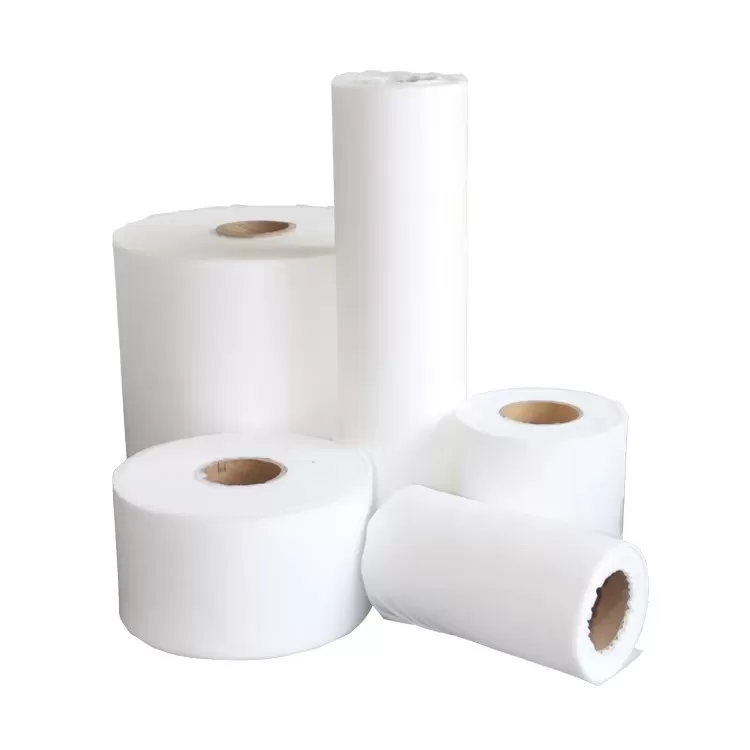
The manufacture of disposable hygiene products requires a precise balance of moisture management, fluid barrier performance, and tactile comfort. At the center of this balance is the diaper film, which acts as the primary moisture barrier on the backsheet of infant diapers and adult incontinence products. For global hygiene brands and OEM manufacturers, selecting the correct film formulation and structure directly impacts both the runnability on high-speed conversion lines and the physical comfort of the end user. KIMEPR provides specialized material manufacturing solutions in this sector, focusing on film performance metrics that meet international standards.
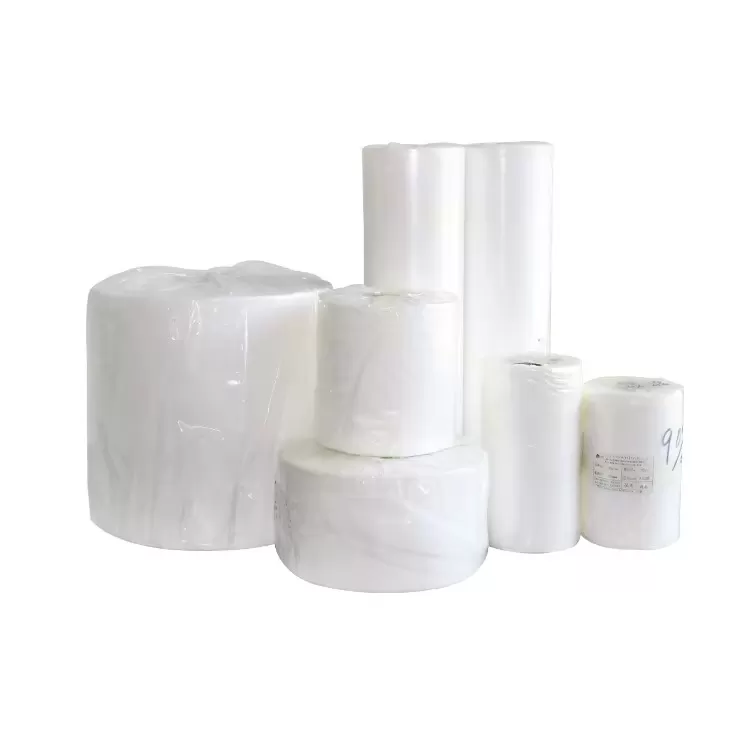
The Polymer Chemistry and Raw Materials of Moisture Barriers
The physical capabilities of a diaper film are determined by its polymer composition. Typically, these backsheet films are manufactured from polyolefin resins, primarily polyethylene (PE). Linear Low-Density Polyethylene (LLDPE) is selected as the base resin due to its high tensile strength and puncture resistance. These mechanical properties are necessary to prevent tearing when the film is pulled through tension control systems on assembly lines operating at speeds exceeding 800 pieces per minute.
To balance the rigidity of LLDPE, Low-Density Polyethylene (LDPE) is blended into the formulation. LDPE improves melt strength during the extrusion process, ensuring a stable bubble or web width. For premium product segments, manufacturers may introduce metallocene-catalyzed LLDPE (mLLDPE). This polymer offers narrow molecular weight distribution, yielding superior sealability, lower heat-seal initiation temperatures, and excellent puncture resistance at reduced thicknesses.
In addition to the polymer matrix, mineral fillers are added to produce breathable films. Calcium carbonate (CaCO3) is the most common filler, typically comprising 45% to 55% of the formulation by weight. The CaCO3 particles must be uniform in size, generally between 1.0 and 1.5 microns, and pre-coated with stearic acid to prevent agglomeration and ensure even dispersion during compounding.
Manufacturing Methods and Processing Technologies
Hygiene film production relies on two main extrusion methods: cast film extrusion and blown film extrusion. Each method imparts distinct mechanical and physical characteristics to the finished diaper film.
Cast Film Extrusion
Cast extrusion involves extruding the molten polymer through a flat T-die directly onto a polished, water-cooled chill roll. This rapid cooling limits crystallization, resulting in a highly amorphous structure. Cast films are recognized for their excellent gauge uniformity, high gloss, and superior softness. Because the process allows for high production speeds, it is widely utilized for high-volume, cost-sensitive backsheet production. The thickness variation in cast lines can be controlled within narrow margins, which is a key requirement for uniform tension during subsequent lamination steps.
Blown Film Extrusion
Blown film extrusion passes the melt through a circular die, inflating it into a vertical bubble before cooling it with air rings. This process stretches the film in both the machine direction (MD) and the transverse direction (TD), creating a biaxially oriented structure. As a result, blown films display balanced mechanical properties, which helps prevent directional tearing. This balanced strength is valuable when the backsheet must withstand multi-directional stresses, such as the tension exerted by elastomeric leg cuffs and waistbands.
Stretching and Micropore Formation
To convert a standard PE film into a breathable diaper film, the material must undergo a mechanical stretching process, typically using Machine Direction Orientation (MDO) rollers. The extruded film containing CaCO3 is heated and passed through a series of rollers operating at progressively higher speeds. This differential speed stretches the polymer matrix in the machine direction. Because the rigid calcium carbonate particles do not stretch, the polymer chains detach from the filler surfaces, creating millions of microscopic voids, or micropores. These micropores are small enough to let vapor molecules pass through but large enough to block liquid water droplets.
Overcoming Processing Challenges on High-Speed Conversion Lines
Converting diaper film into finished hygiene products involves multiple high-speed mechanical processes. To maintain efficiency and minimize machine downtime, several operational challenges must be managed.
Inconsistent Water Vapor Transmission Rate (WVTR): If the stretching process is not uniform, the WVTR will vary across the web. Low breathability causes heat and humidity to build up inside the diaper, increasing skin irritation. High breathability can cause moisture to condense on the outer nonwoven layer, creating a damp feeling that users interpret as a leak.
Micro-tears and Pinholes: Even microscopic physical defects can cause liquid leakage under pressure. These pinholes often occur during the extrusion of thin films if the raw material contains moisture or external contaminants. Consistent melt filtration and high-quality resin compounding are needed to prevent these defects.
Loss of Corona Treatment: Diaper films are usually laminated to a soft nonwoven fabric to form a cloth-like backsheet. To ensure strong adhesive bonding, the film must undergo corona discharge treatment to raise its surface energy to between 38 and 42 dynes/cm. If this treatment decays during storage, the adhesive will not wet out properly, resulting in delamination on the production line or during product use.
To address these challenges, KIMEPR maintains strict quality control protocols during film production. This includes continuous monitoring of film thickness profiles, real-time testing of surface tension, and regular hydrostatic pressure testing to verify barrier integrity.
Lamination and Assembly Dynamics
The backsheet used in modern baby diapers is rarely a single layer of film. Instead, it is a composite structure formed by laminating the diaper film to a spunbond polypropylene nonwoven web. This lamination process can be achieved through hot-melt adhesive bonding or thermal-ultrasonic bonding.
In hot-melt adhesive lamination, the adhesive is applied in a fine spray pattern or multi-line configuration. The amount of adhesive must be carefully metered, typically between 1.5 and 2.5 grams per square meter. Applying too much adhesive can block the micropores of a breathable film, significantly reducing its WVTR. Conversely, insufficient adhesive leads to poor bond strength, causing the nonwoven layer to separate from the barrier film when handled by the consumer.
The tension of both the film and the nonwoven web must be synchronized during lamination. PE film has a much lower modulus of elasticity than polypropylene nonwoven. If the tension is unbalanced, the composite material will curl or pucker after cutting, leading to leaks along the leg cuffs of the finished diaper.
Evaluating Quality Metrics for Global Sourcing
Procurement teams and product development engineers must look beyond cost when qualifying diaper film suppliers. A comprehensive technical evaluation should focus on specific performance tolerances:
| Parameter | Standard Testing Method | Target Value / Range |
|---|---|---|
| Basis Weight | ASTM D3776 | 12 gsm to 20 gsm (±1 gsm) |
| Tensile Strength (MD) | ASTM D882 | ≥ 12 N / 25mm |
| Elongation at Break (MD) | ASTM D882 | 150% to 350% |
| Hydrostatic Head Resistance | AATCC 127 | ≥ 120 cm H2O |
| WVTR (Breathable type) | ASTM E96 / Water Method | 1,200 to 5,000 g/m²/24h |
These specifications ensure that the film can withstand the mechanical stress of modern converters without sacrificing the skin-protection features expected by consumers.
Downgauging and Circular Economy Trends
Material development in the hygiene sector is increasingly focused on reducing the environmental footprint of single-use plastics. Downgauging, or reducing film thickness, is a primary strategy for lowering material consumption. Advanced extrusion technology allows manufacturers to lower the basis weight of diaper film from the traditional 18 gsm down to 12 gsm or below, without a proportional loss in mechanical strength or barrier performance.
This downgauging is made possible by using multi-layer co-extrusion systems (such as 3-layer, 5-layer, or 7-layer dies). By separating the film into thin functional layers, manufacturers can place high-strength resins in the core layer and softer, high-friction polymers in the skin layers. This approach maintains the overall performance of the film while reducing resin usage.
Additionally, the industry is transitioning toward mono-material structures. When both the barrier film and the nonwoven backsheet are made of polyolefin-based materials, the post-industrial and post-consumer waste can be recycled more easily, avoiding the separation processes required for mixed-polymer laminates. KIMEPR actively supports these product design initiatives by offering co-extruded films designed for recycling stream compatibility.
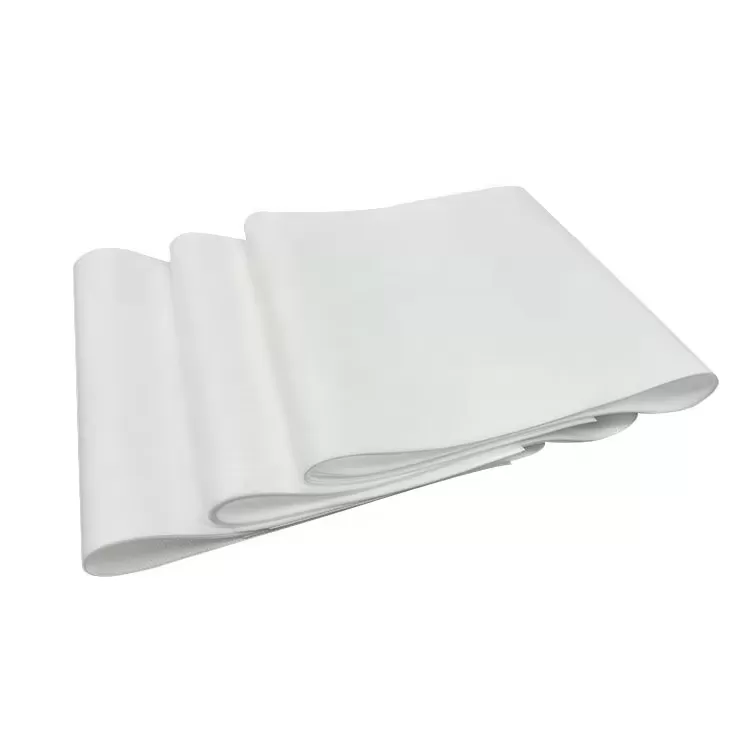
Inquiry and Custom Specifications Support
Selecting the correct film grade involves matching the technical specifications of your conversion machinery with the right polymer blend. KIMEPR manufactures a wide range of breathable and non-breathable films engineered for high-speed automated diaper lines.
If you require custom trial rolls for compatibility testing, detailed material safety data sheets, or customized thickness and WVTR profiles, please contact our engineering team. We are ready to provide technical support and tailored production runs to match your specific machinery configurations. Please submit your request for information, and our technical sales representatives will follow up with your inquiry shortly.
Frequently Asked Questions
Q1: What is the main structural difference between breathable and non-breathable diaper film?
A1: Breathable film contains a high concentration of calcium carbonate (CaCO3) fillers and undergoes a stretching process (MDO) during manufacturing to create microscopic voids that allow moisture vapor to escape while blocking liquid water. Non-breathable film consists of a solid polymer blend without CaCO3 fillers and is not stretched to create micropores, acting as a complete barrier to both air, vapor, and liquid.
Q2: How does corona treatment affect the shelf life of diaper film during storage?
A2: Corona treatment increases the surface energy of the polyethylene film to enable proper adhesive bonding with nonwovens. However, this treatment decays over time due to surface contamination and polymer chain migration. Under normal warehouse conditions, the treatment level typically remains stable for 3 to 6 months. It is recommended to store rolls in a cool, dry place and use them within this timeframe to prevent delamination issues.
Q3: Why does high-speed diaper production require precise control over the coefficient of friction (COF)?
A3: The COF determines how the film slides over metal rollers, folding boards, and cutting knives. If the COF is too high, the film can stick, causing tension spikes, wrinkles, or web breaks. If the COF is too low, the film may slip, leading to tracking errors, misaligned printing, and inconsistent cutting lengths.
Q4: Can bio-based polyethylene be used in existing diaper film extrusion lines?
A4: Yes, bio-based polyethylene (derived from renewable resources such as sugarcane) has the same chemical and physical properties as fossil-based polyethylene. It can be processed on the same extrusion equipment using identical temperature profiles and parameters, making it a direct substitute that does not require machinery retooling.
Q5: What causes gel spots in extruded polyethylene film, and how do they impact quality?
A5: Gel spots are small, unplasticized polymer particles or cross-linked polymers formed during extrusion. If these gels are too large, they create weak points in the film, leading to pinholes during the stretching process or tearing on high-speed conversion lines. Continuous melt filtration using fine-mesh screen changers is required to remove these impurities.