
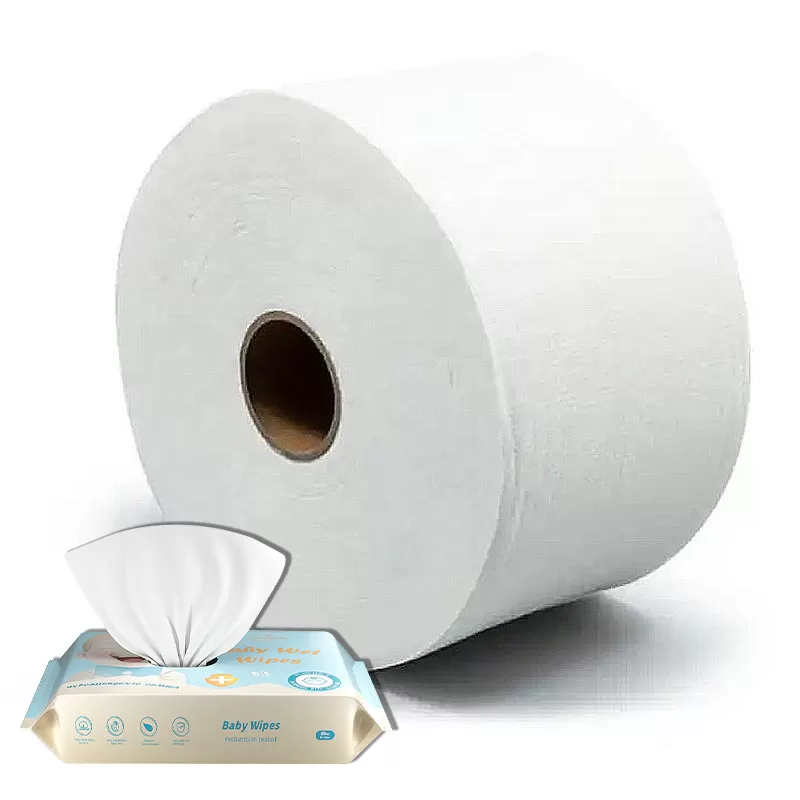
The operational efficiency of modern disposable hygiene products depends heavily on the internal architecture of their absorbent cores. While superabsorbent polymers have modified the fluid retention capacity of these products, diaper fluff remains the indispensable physical matrix that makes fast absorption and distribution possible. Without this fibrous network, fluids would pool on the surface, leading to leakage and surface wetness. Understanding the physical and mechanical properties of these cellulose fibers is a primary requirement for manufacturers aiming to maintain high product standards while managing raw material costs.
KIMEPR provides manufacturing machinery designed to handle fibrous materials at high speeds, ensuring that the structural integrity of the fibers is preserved throughout the production lifecycle. Achieving this balance requires deep insight into wood pulp selection, fiber individualization, and core-forming dynamics.
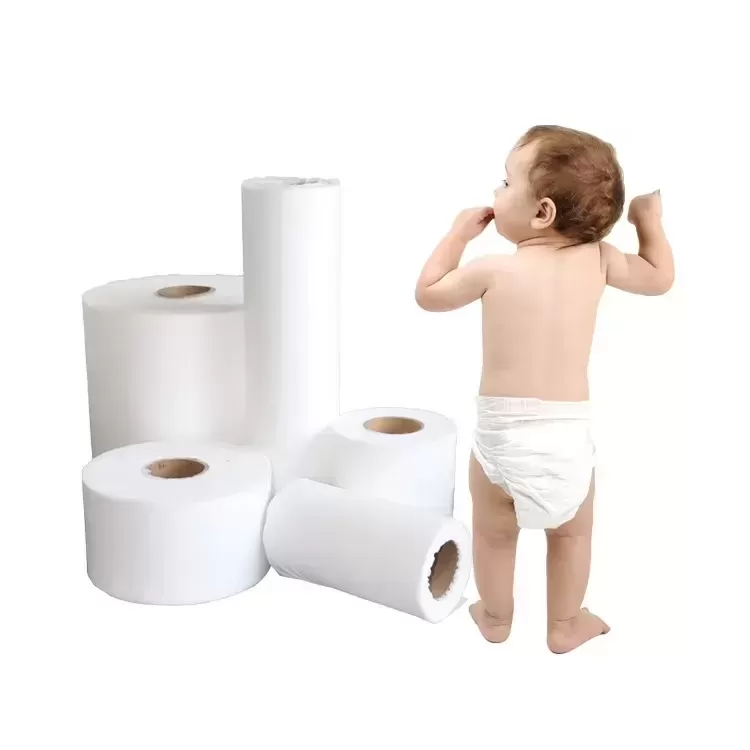
The Physical Properties of Cellulose Fibers
To understand why certain wood pulps are preferred for absorbent products, one must examine the cellular structure of conifers. Southern Yellow Pine is the global standard for producing diaper fluff. The physical dimensions of these fibers, which typically range from 2.5 to 3.5 millimeters in length, provide the necessary void volume within the dry pad. This void volume is the primary factor determining the initial fluid acquisition speed.
When liquid first contacts the core, the capillary action of these long fibers quickly draws moisture away from the topsheet. If shorter hardwood fibers were utilized, the resulting pack would be too dense, restricting fluid movement and leading to premature saturation of the surface layer. The coarser nature of softwood fibers also prevents the pad from collapsing completely when wet, maintaining a porous structure even under moderate pressure.
Chemical Processing and Fiber Swelling
Chemical processing during pulp manufacturing also alters fiber characteristics. The Kraft pulping process removes hemicellulose and lignin, leaving highly purified cellulose. Some pulp sheets are treated with debonding agents during manufacturing. These chemical additives reduce hydrogen bonding between individual fibers in the dry pulp sheet, making it easier to disintegrate during dry-laid processing without damaging the actual fiber length.
Alpha-Cellulose Content and Absorption Capacity
High alpha-cellulose content is associated with superior purity and brightness. More importantly, it influences how the fiber interacts with moisture. While the fibers themselves do not absorb liquid inside their cell walls to the extent that polymers do, the surface chemistry of highly purified cellulose promotes rapid wetting. This rapid wetting is necessary to transport fluid to the superabsorbent polymer particles distributed throughout the matrix.
Mechanical Defiberization and Core Forming
Before pulp can be incorporated into an absorbent core, the compressed pulp sheets must be returned to an individualized fiber state. This process occurs within high-speed hammermills, where mechanical impact separates the compressed sheet into a low-density cloud of fibers.
Defiberization requires precise mechanical balance. Insufficient mechanical energy results in "nits"—unopened fiber clumps that decrease absorption efficiency and create hard spots in the finished product. Conversely, excessive mechanical impact shears the fibers, reducing their average length and increasing dust generation. Shortened fibers cannot maintain pad bulk, leading to structural collapse when wet.
Modern machinery designed by KIMEPR addresses these processing challenges through refined rotor dynamics and adjustable feed control. By maintaining uniform tension on the pulp roll as it enters the milling chamber, the system ensures consistent fiber separation. This consistency directly influences the uniform density of the dry-laid web during the drum-forming process.
Hammermill Rotor Speed and Energy Consumption
The speed of the hammermill rotor, measured in revolutions per minute, must be calibrated based on the basis weight and moisture content of the incoming pulp roll. Standard rolls contain between 6% and 10% moisture. If the pulp is too dry, static electricity increases, causing the fibers to clump during forming. If it is too damp, the energy required to defiber the sheet increases significantly, leading to higher operational costs and potential motor strain.
Air Handling and Web Formation
Once defiberized, the individual fibers are transported via a high-velocity airflow system to the forming drum. The ratio of air to fiber must be carefully managed to prevent premature fiber twisting or localized grouping. Vacuum pressure within the forming pocket draws the fibers down, creating a uniform three-dimensional web. This step is where the base structural properties of the diaper fluff pad are established.
Balancing Cellulose Fibers and Superabsorbent Polymers
The interaction between diaper fluff and superabsorbent polymers (SAP) is a fundamental aspect of core engineering. SAP can retain many times its weight in saline solution, but it cannot absorb fluid instantaneously. Fluff pulp acts as a temporary reservoir, holding liquid until the polymer can chemically bind it.
An imbalance in this ratio creates distinct performance failures:
High Pulp, Low SAP: The core absorbs fluid rapidly but cannot retain it under pressure, resulting in high rewet values when the user sits or moves.
Low Pulp, High SAP: The core is exceptionally thin when dry, but suffers from "gel blocking" when wet. Gel blocking occurs when saturated polymer particles swell and form a continuous gel barrier, preventing subsequent fluid insults from reaching dry areas of the core.
Achieving the correct distribution of these two components requires precise dosing systems. The fibers must physically wrap around the polymer particles, anchoring them in place. Without this mechanical entrapment, the heavy polymer particles would migrate to the bottom of the diaper during shipping and wear, leading to uneven performance and structural failure.
Pore Size Distribution and Capillary Pressure
The physical relationship between fiber spacing and polymer size determines the pore size distribution within the core. Large pores allow for immediate fluid entry, while smaller pores generate higher capillary pressure, pulling fluid further along the longitudinal axis of the product. By engineering a gradient pore structure—where the top layer has larger pores and the bottom layer has smaller pores—manufacturers can improve fluid distribution without increasing raw material volume.
Structural Integrity and Prevention of Pad Sagging
One of the most common challenges in the B2B hygiene manufacturing sector is pad cracking or sagging during active use. When a diaper becomes wet, the hydrogen bonds holding the diaper fluff matrix together begin to weaken. Under the dynamic forces of a moving user, the core can split, creating void areas where leakage occurs.
To prevent this, manufacturers employ several structural engineering methods:
Thermoplastic Binders: Low-melt synthetic fibers are mixed with the pulp and subsequently activated by heat, creating permanent physical bonds that resist moisture.
Embossing Patterns: Mechanical compression of the wet core creates high-density channels that guide fluid flow while reinforcing the structure against mechanical stress.
High-Porosity Wrapping Tissues: Enclosing the core in carrier sheets helps maintain the shape of the fibrous mass even when fully saturated.
KIMEPR engineering focuses on stabilizing the physical structure of the core during high-speed assembly. By utilizing advanced vacuum systems within the forming drums, the fiber-polymer mixture is deposited with variable density profiles. This allows for a thicker core in the target zone where fluid insult is highest, while maintaining thinner, more flexible zones near the leg cuffs.
Dynamic Fluid Management and Core Stability
During active use, a diaper is subjected to multiple fluid insults. The first acquisition is typically rapid because the dry cellulose fibers are highly receptive. Subsequent acquisitions are slower because the vacant space within the fiber matrix is already partially occupied by swollen polymer. To maintain performance, the core must distribute fluid away from the target zone. This distribution is achieved by utilizing long fibers with high wet resiliency, which resist compaction even when wet.
Industrial Sourcing and Quality Metrics
For manufacturers, raw material quality consistency is just as important as machine calibration. Variations in pulp roll density, moisture content, or fiber length can cause disruptions on high-speed production lines. Standardized testing methods are employed to verify pulp performance before it reaches the feed stand.
Key quality metrics include:
Bursting Strength: The force required to rupture the pulp sheet, indicating how much mechanical effort will be needed in the hammermill.
De-knotting Efficiency: The percentage of fibers that are completely individualized during standard milling tests.
Specific Volume (Bulk): The volume occupied by a given mass of dry pulp, which correlates directly with the loft and softness of the finished diaper core.
Fluctuations in these parameters require real-time adjustments to feed roll speeds and vacuum pressures. Modern production lines utilize closed-loop feedback systems to monitor pad basis weight and density, making micro-adjustments to ensure product uniformity.
Engineering Collaboration and Equipment Integration
Hygiene product manufacturers seeking to improve raw material utilization or upgrade existing core forming machinery can partner with KIMEPR for customized equipment engineering and consulting services. Our application engineers analyze your current diaper fluff consumption, moisture profiles, and target production speeds to design processing solutions that balance material costs with final product performance. Contact our sales department to arrange a detailed project evaluation and discuss machine compatibility.
Frequently Asked Questions
Q1: Why is Southern Yellow Pine preferred over other wood species for diaper fluff?
A1: Southern Yellow Pine offers exceptionally long and coarse tracheid fibers compared to hardwoods or other softwoods. This length is vital for creating a high-bulk, low-density web that can absorb fluid quickly and resist wet collapse, which is necessary for maintaining pad integrity during use.
Q2: How does defiberization energy affect diaper fluff performance?
A2: The energy level applied during defiberization must be balanced. If the energy is too low, the pulp sheet does not separate completely, leaving dense fiber clumps (nits) that reduce absorption efficiency. If the energy is too high, the mechanical impact shears the fibers, creating short fragments and fine dust, which lowers the overall pad bulk and absorption speed.
Q3: Can alternative agricultural fibers completely replace wood pulp in diaper fluff production?
A3: While fibers like bamboo or hemp are investigated for environmental reasons, they generally have shorter fiber lengths or different surface chemistry compared to Southern Yellow Pine. This makes them more prone to wet collapse and reduces fluid distribution speed, meaning they usually require blending with traditional wood pulp to maintain acceptable performance standards.
Q4: What is the impact of moisture content in pulp rolls on high-speed manufacturing?
A4: Standard pulp rolls maintain a moisture content of 6% to 10%. If the moisture content is too low, static electricity increases within the forming section, causing the fibers to group unevenly. If the moisture is too high, the mechanical energy required to defiber the sheet increases, and the risk of forming wet clumps rises, which can disrupt the uniformity of the core.
Q5: How do production lines prevent the separation of diaper fluff and superabsorbent polymer during high-speed forming?
A5: Prevention relies on a combination of vacuum-assisted deposition and structural adhesives. High-velocity air systems mix the polymer particles thoroughly with the individualized fibers before they reach the forming drum. The vacuum then draws the fibers around the polymer particles, trapping them physically, while a fine mist of construction adhesive can be applied to secure the dry-laid core before wrapping.