
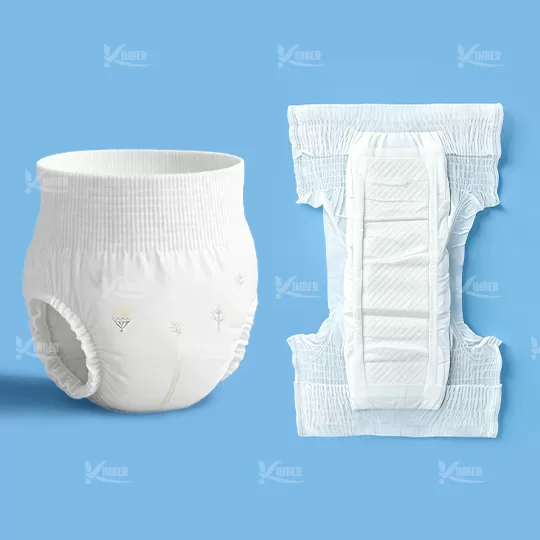
In the world of disposable hygiene and medical protective wear, few components carry as much functional weight as the elastic waistband material. It seals, it stretches, it holds—yet it must remain comfortable against the skin for hours on end. Whether you engineer adult incontinence briefs, surgical gowns, or baby diapers, the choice of elastic waistband material directly shapes user experience and brand trust.
That is precisely why KIMEPR approaches this category not as a passive supplier, but as a technical partner. Backed by our parent company’s two decades of turnkey engineering experience in the hygiene industry, we bring a systems-level perspective to every roll of elastic composite we deliver.
This article walks you through the real-world demands of elastic waistband materials, the manufacturing rigor behind medical-grade grades, and how fast-roll shipping can protect your production uptime. We will also share why KIMEPR’s advisory model helps you avoid costly trial-and-error—and how you can get started with a no-obligation sample pack.
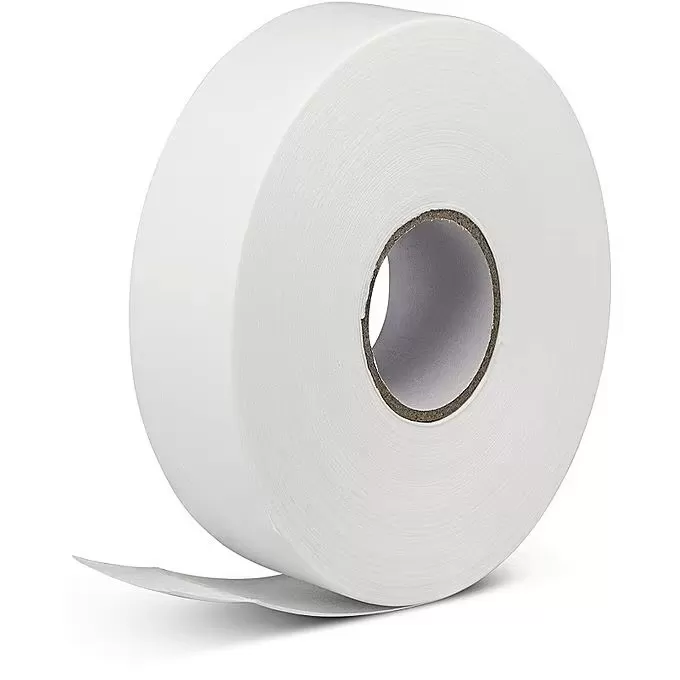
Why the elastic waistband material matters more than you think
Many buyers focus on the absorbent core or the top sheet, yet the waistband is what keeps everything in place. A poor elastic waistband material leads to:
Red marking or chafing after extended wear
Premature relaxation, causing sagging and leakage paths
Inconsistent tension that complicates high-speed converting lines
Higher rejection rates due to uneven lamination or delamination
Conversely, a well-engineered elastic waistband material enhances wearer confidence, reduces nursing time in hospitals, and minimises returns from end-users. For adult incontinence products, the difference between a good and a great waistband is often the difference between a discreet fit and an embarrassing incident.
KIMEPR has seen this play out across dozens of production floors. Our technical team regularly conducts line audits where we adjust unwind tensions, sealing temperatures, and nip pressures to match the specific elastic waistband material to the customer’s machine. That hands-on experience is rare among pure material traders.
Medical-grade standards: non-negotiable for high-risk applications
When your final product enters a surgical theatre or a long-term care facility, the elastic waistband material must meet biological safety benchmarks that go beyond commercial grades. KIMEPR’s elastic waistband material uses medical-grade spandex/lycra and nonwoven substrates that have passed ISO 10993 biocompatibility testing for cytotoxicity, sensitization, and irritation.
This means low allergenicity and zero skin irritation—even for patients with fragile or compromised skin. We also pay close attention to residual monomers and processing aids, ensuring they fall well below the limits set by FDA and EU MDR guidelines.
Our quality files include full declaration of compliance, and we can supply third-party test reports upon request. For buyers who serve multiple regulatory regions, this documentation streamlines your own registration processes.
Precision stretch & recovery: the heart of functional performance
Not all elastic waistband materials behave the same way under dynamic loading. A diaper that stretches well when stationary may lose its grip after the baby crawls or rolls. A surgical gown that feels snug initially might gap open after repeated arm movements.
That is why KIMEPR offers customisable stretch ratios—for example, 2.5x, 3.0x, or even higher—with a recovery rate of ≥92% after cyclic testing. We define these parameters not by guesswork but by analysing your product’s intended range of motion and wearing duration.
For adult pull-up pants, we often recommend a higher recovery value to maintain constant abdominal compression. For baby diapers, we might tune the modulus to be gentler while still preventing drooping. These nuances are where engineering meets comfort.
Width and basis weight flexibility: one size does not fit all
Your production line may run multiple SKUs with different waist dimensions. KIMEPR supports custom widths from 20 mm to 200 mm, and basis weights from 60 gsm to 180 gsm. This range covers everything from narrow elastics for junior diapers to wide, cushioned belts for bariatric incontinence products.
We also adjust the lamination pattern—full coverage, striped, or breathable zones—to balance stretch force with air permeability. The result is a material that not only fits your mechanical specs but also contributes to the overall comfort profile of your brand.
Softness and breathability: reducing moisture and friction
One often overlooked aspect is the moisture vapour transmission rate (MVTR). A high MVTR allows sweat and humidity to escape, reducing the “greenhouse effect” inside the garment. Our elastic waistband material achieves this through a proprietary hot-melt adhesive application that bonds the spandex to the nonwoven without clogging the pores.
Additionally, we measure the coefficient of friction against both skin and other garment layers. A smoother surface means less abrasion during movement—particularly important for post-surgical patients who may have limited mobility and sensitive incisions.
Manufacturing and quality control: every roll traced, every defect rejected
KIMEPR operates its own dedicated elastic composite production facility, not a repackaging warehouse. Our line is equipped with:
Online thickness gauging – closed-loop control to maintain uniformity across the web
Tension closed-loop control – preventing over-stretching that could degrade the spandex
Vision inspection system – detecting pinholes, gel spots, and edge tears in real time
Each master roll receives a unique batch code, and our laboratory performs a full suite of physical tests before release: tensile strength, elongation at break, stress-strain modulus, and accelerated ageing (to simulate 6-month shelf life). We archive samples from every batch for two years, enabling swift root-cause analysis if any issue arises downstream.
Our production floor maintains Class 100,000 cleanroom conditions, with UV sterilisation and anti-static bars to eliminate dust pick-up and microbial contamination. This is particularly critical for medical elastic waistband material that will be used in sterile gowns or wound-care adjacent products.
Fast roll shipping: because line stoppages cost more than material
Any production manager will tell you that waiting for a delayed elastic waistband material roll can paralyse an entire shift. KIMEPR addresses this pain point through a dual-stock strategy:
Standard sizes (e.g., 80 mm width, 100 gsm) are kept in 3–5 full container equivalents at our warehouse, ready for dispatch within 48 hours after order confirmation.
Custom specifications move from sampling to mass production in 7–10 working days, with dedicated slots reserved for repeat customers.
We also apply a “rolling forecast” approach: by sharing your monthly consumption projections, we can earmark production capacity and reserve the same batch lot for multiple staggered shipments. This ensures consistent material properties across all deliveries—no unexpected changes in shade, modulus, or roll hardness.
Every roll is individually boxed and palletised with shrink-wrap and corner protectors, suitable for sea, air, or land transport. We have shipped to over 40 countries and work with forwarders who specialise in hygiene material logistics, so you receive your elastic waistband material in perfect condition.
Why KIMEPR stands apart: a systems engineering heritage
It is easy to claim quality; it is harder to prove it through decades of cross-industry learning. KIMEPR’s parent company has designed and commissioned complete hygiene production lines—from diaper convertors to wet wipe lines—for clients in Europe, Southeast Asia, the Americas, and the Middle East.
That exposure taught us that an elastic waistband material is never an isolated component. It interacts with the side panels, the adhesive pattern, the ultrasonic bonding wheels, and the packaging folding process. We carry that holistic understanding into every material recommendation.
For instance, we recently helped a Brazilian customer switch from a stiffer elastic to a softer compound, which reduced their seal-bar temperature by 8°C and cut energy consumption by 5% without sacrificing bond strength. That kind of process optimisation is part of our standard consultative approach.
Joint R&D: from antimicrobial to biodegradable options
Many of our clients are looking ahead to next-generation features. KIMEPR maintains an in-house lab and collaborates with university polymer departments to develop:
Antimicrobial elastic waistband material – incorporating silver-ion or chitosan agents to reduce bacterial colonisation in long-wear products
Biodegradable elastic composites – using PLA-based nonwovens and bio-spandex alternatives, with composting performance validated under ASTM D6400
These are not just concept prototypes; we have run pilot trials and can scale them to commercial volumes once you are ready. We also share the cost breakdown transparently, so you know exactly what premium each feature adds.
Total cost of ownership (TCO) – we put numbers on the table
Price per kilogram is a poor proxy for true cost. That is why KIMEPR offers a TCO analysis that factors in:
Material cost per metre (based on your actual converted length)
Scrap rate from splice waste and edge trimming
Machine downtime caused by poor roll winding or splices
Logistics and warehousing expenses per container
We have seen clients reduce their total landed cost by 12–18% simply by switching to a more consistent elastic waistband material that runs faster on their line and yields fewer rejects. We would be happy to run a similar simulation for your current SKU.
Global logistics network – we deliver where you operate
Whether your factory is in Vietnam, Turkey, Mexico, or Poland, KIMEPR has established freight partnerships that offer competitive rates and reliable transit times. We handle all export documentation, including certificates of origin, commercial invoices, and packing lists, so you avoid customs delays.
For urgent airfreight needs, we maintain relationships with express couriers who can ship sample rolls or emergency replenishments within 72 hours door-to-door. We treat logistics as part of the product—not an afterthought.
From sample to mass production: our engagement model
We know that switching an elastic waistband material supplier involves risk. That is why we offer a structured onboarding process:
Free A4 swatch + 1-metre sample – for your team to evaluate hand feel, stretch curve, and visual appearance.
Trial roll (100–500 metres) – at a nominal cost, to run on your converting line with our technical support (remote or on-site).
Commercial pilot order (1–2 pallets) – to validate batch consistency and production output.
Annual framework agreement – with volume-based tiered pricing, guaranteed capacity, and defined lead times.
Throughout this journey, our application engineers are available to adjust unwind tension, guide roller alignment, or suggest modification to your heat-seal dwell time—ensuring the elastic waistband material performs exactly as specified on your equipment.
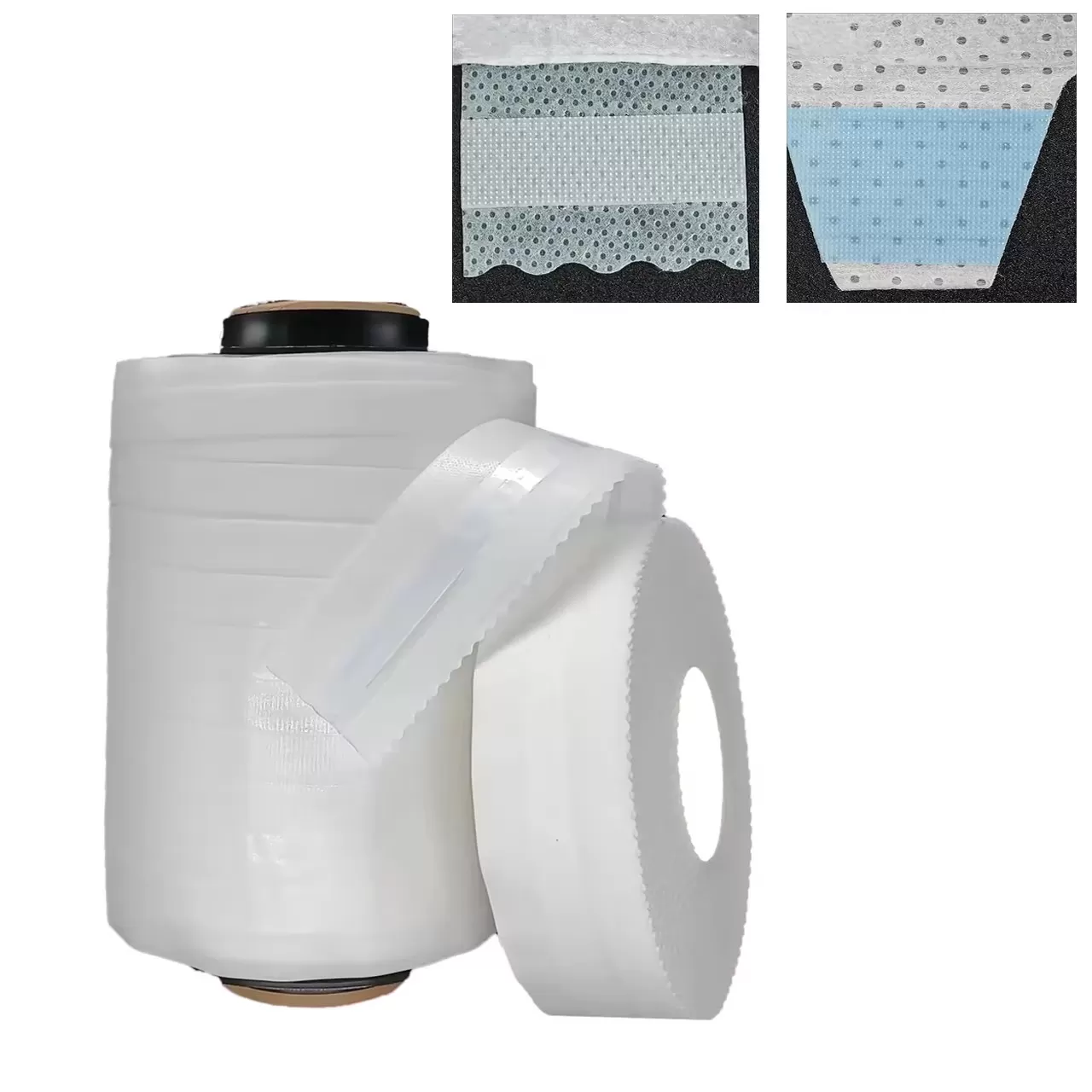
FAQ – common questions about elastic waistband material
Q1: What is the minimum order quantity (MOQ) for custom elastic
waistband material?
A1: For custom widths (20–200 mm) and basis
weights (60–180 gsm), our MOQ is one full master roll (approximately 2,000–3,000
metres, depending on width). For trial quantities, we can produce 500-metre
mini-rolls to support your line testing. Contact our sales team to discuss your
specific needs.
Q2: How do you ensure batch-to-batch consistency in stretch and
recovery?
A2: We monitor every master roll with online tension and
thickness sensors. Additionally, we retain a retained sample from each
production batch and perform a full stress-strain curve test. If a new batch
deviates beyond our internal tolerance (±5% on modulus), we quarantine it and
rework—never ship it to you.
Q3: Can you supply elastic waistband material that is compatible with
ultrasonic bonding?
A3: Absolutely. We design the nonwoven substrate
and adhesive formulation to respond well to both ultrasonic and thermal bonding.
We can provide a bonding-window chart that shows optimal amplitude and weld
pressure for your specific machine model.
Q4: What certifications do your medical-grade materials
hold?
A4: Our medical-grade elastic waistband material complies with
ISO 10993-5 (cytotoxicity), ISO 10993-10 (irritation and sensitisation), and
REACH/ROHS for restricted substances. We also offer FDA Drug Master File (DMF)
letters upon request for registered device manufacturers.
Q5: How fast can you ship an emergency order if my stock runs out
unexpectedly?
A5: For standard dimensions, we can dispatch within 48
hours from our warehouse. For custom dimensions, we maintain a buffer of
un-laminated spandex and nonwoven substrates, so we can start production within
24 hours and ship in 5–7 working days. We recommend sharing your forecast to
avoid emergency situations altogether.
Ready to secure your elastic waistband material supply?
Choosing the right elastic waistband material is not just about a spec sheet—it is about reliability, responsiveness, and shared risk management. KIMEPR brings engineering depth, medical-grade quality, and a shipping model that respects your production urgency.
We invite you to put us to the test. Request your free sample pack today, and let our team prepare a material matching proposal tailored to your product line and converting equipment. We also provide a confidential cost-comparison worksheet that shows exactly where you can save.
Contact KIMEPR now
📧 Email: tina@kimbersolution.com / scarlet@kimbersolution.com
🌐 Web: www.kimbersolution.com
📞 Phone: +86 133 5829 1202
Ask about our annual framework agreement—it includes tiered pricing, guaranteed capacity slots, and a quality guarantee clause that protects your production peace of mind.
Let’s build a long-term partnership around the elastic waistband material that your users will never notice—because it works so well.