
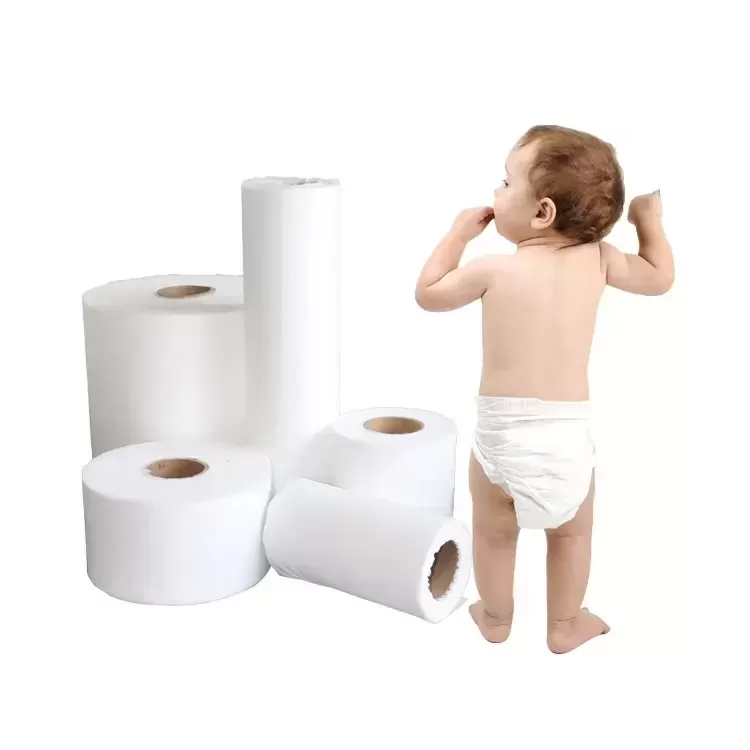
In modern absorbent hygiene products (AHPs)—ranging from infant diapers to adult incontinence briefs and femcare pads—fluid management is fundamentally a transport phenomena challenge. While the topsheet dictates skin-contact comfort and the absorbent core governs ultimate capacity, the functional efficiency of the entire system depends on the intermediate component: the Acquisition Distribution Layer (ADL). Operating as a fluidic surge buffer and hydrodynamic distribution channel, the ADL prevents premature core saturation, minimizes surface rewet, and optimizes Super Absorbent Polymer (SAP) activation under dynamic physiological loads.
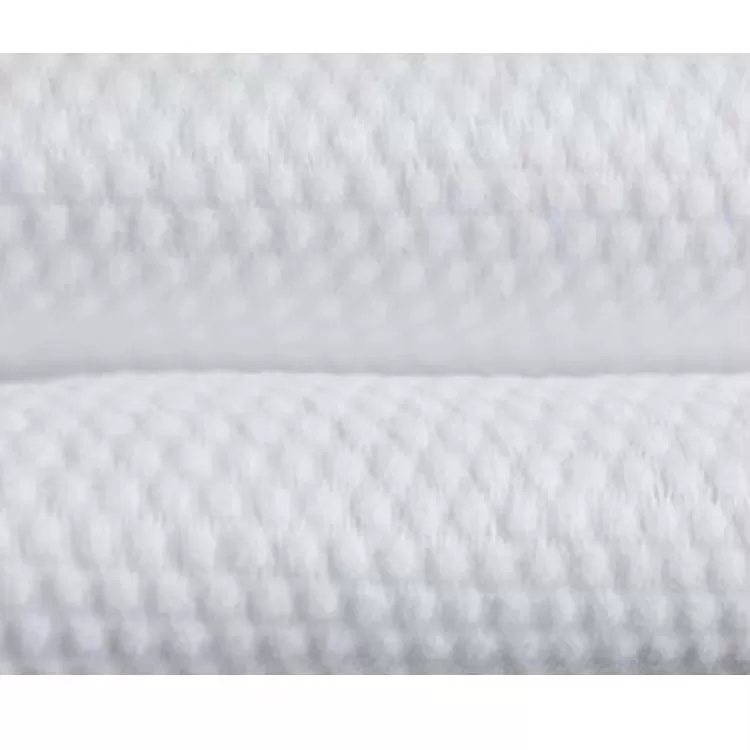
Fluid Dynamics within Absorbent Hygiene Systems
Liquid insults occur as localized, high-velocity discharges. A single infant urination can deliver 30 to 75 mL of fluid in under three seconds, while adult incontinence events can exceed 200 mL at flow rates surpassing 25 mL/s. The underlying absorbent core, primarily composed of a dense matrix of cellulose fluff pulp and SAP particles, cannot absorb fluid at this instantaneous rate due to finite swelling kinetics.
Without an engineered transfer medium, high-volume insults result in fluid pooling along the skin-contact topsheet, catastrophic perimeter leakage, and severe localized saturation. The Acquisition Distribution Layer bridges this kinetic mismatch through three concurrent physical mechanisms:
Instantaneous Void Acquisition (Surge Absorption): The ADL provides an open, highly porous three-dimensional matrix directly beneath the topsheet. This structure acts as a temporary reservoir, capturing fluid via low-resistance capillary draw to clear the skin-contact zone in under two seconds.
Longitudinal Hydrodynamic Distribution: Leveraging directional fiber orientation and differential pore size gradients, the layer drives liquid along the longitudinal axis ($X$-$Y$ plane) of the product rather than allowing it to pool at the point of insult ($Z$-axis). This spreads the insult over a larger surface area of the core.
Core Partitioning and Gel Blocking Mitigation: By governing fluid hand-off across the entire core footprint, the layer prevents localized SAP over-saturation. When SAP particles hydrate too quickly in a localized area, they swell into a continuous, impermeable gel barrier (gel blocking) that stops further fluid penetration. The ADL prevents this failure mode by metering liquid supply uniformly across underutilized zones of the core matrix.
Material Architectures: Through-Air Bonded vs. Mechanical Structures
The performance of an Acquisition Distribution Layer depends directly on its nonwoven manufacturing process, fiber morphology, and chemical finish. While resin-bonded and needle-punched structures historically served basic distribution functions, contemporary high-speed converter lines rely predominantly on Through-Air Bonded Nonwovens (TABN / HAT) and engineered multi-layer composites.
1. Bicomponent Fibers and the Hot Air Through (HAT) Process
Modern high-performance ADL structures rely heavily on synthetic bicomponent staple fibers, typically engineered in a sheath-core configuration (such as Polyethylene/Polypropylene [PE/PP] or Polyethylene/Polyethylene Terephthalate [PE/PET]). In the Hot Air Through process, uncompacted fiber webs pass through a controlled chamber of heated air:
The lower-melting-point outer sheath (PE, melting point ~130°C) melts and flows to fiber intersection crossover points.
The higher-melting-point core (PP ~165°C, or PET ~255°C) remains structurally intact, preserving the three-dimensional fiber network.
Upon cooling, thermal fusion bonds form at every intersection without mechanical compression, producing an open matrix with up to 90–95% void volume.
This structural resilience ensures wet collapse resistance. Under the mechanical weight of a moving infant or seated adult, conventional fibers collapse and lose void volume; HAT-bonded bicomponent fibers maintain their 3D pore network, preserving acquisition rates across multiple insult cycles.
2. Differential Capillary Gradient in Dual-Layer Composites
Fluid movement through porous media is governed by the Young-Laplace equation for capillary pressure:
Pc = (2γ cos θ) / r
Where γ represents liquid surface tension, θ is the contact angle, and r is the effective pore radius. Advanced ADL engineering employs multi-denier, dual-layer gradient architectures to exploit this physical principle:
| Layer Position | Fiber Fineness (Denier) | Pore Architecture | Functional Role |
|---|---|---|---|
| Upper Sub-Layer (Facing Topsheet) | Coarse (2.5 – 6.0 D) | Macroporous, open-pore configuration | Maximizes instantaneous void volume; minimizes fluid intake resistance; prevents topsheet pooling. |
| Lower Sub-Layer (Facing Core) | Fine (0.8 – 1.5 D) | Microporous, dense-pore configuration | Generates high capillary suction; accelerates downward $Z$-direction drainage; distributes fluid along the $X$-$Y$ plane before core entry. |
This pore-size gradient creates a natural directional drive: fluid is rapidly pulled from the coarse top layer into the finer bottom layer, clearing the upper layer so the skin-facing topsheet remains dry.
Surfactant Chemistry and Dynamic Wettability
Native synthetic polymers (polypropylene, polyester, polyethylene) are naturally hydrophobic, with water contact angles typically exceeding 90°. To serve as an effective fluid management medium, fiber surfaces must be functionalized with hydrophilic surfactant finishes.
Industrial surfactant formulations for an Acquisition Distribution Layer must balance two competing operational variables:
Spontaneous Wetting Velocity: The surfactant package must lower the solid-liquid contact angle toward zero degrees ($θ \to 0^\circ$), promoting spontaneous wicking into the fiber assembly.
Surface Tension Preservation: Fugitive or poorly anchored surfactants can wash off the fibers and dissolve into the passing fluid. This lowers the liquid's surface tension ($\gamma$), which impairs the absorbent core’s capillary pull and can compromise the hydrophobic barrier properties of diaper leg cuffs.
Leading manufacturers like KIMEPR implement multi-wash durable topical finishes. These bonded surfactant coatings cross-link or physically anchor to the polyolefin sheath, ensuring consistent fluid acquisition times across three, four, or five consecutive voids without reducing the liquid's surface tension.
Application-Specific ADL Engineering Requirements
An identical nonwoven specification cannot serve all hygiene categories. Product designers must calibrate basis weight, denier profile, thickness, and tensile parameters to the specific rheology and volume of the target bodily fluid.
1. Infant Diapers
Infant applications require rapid capture of low-viscosity, low-surface-tension aqueous fluids during dynamic motion. The ADL must maintain high longitudinal distribution to utilize the front, central, and rear core zones, especially in ultra-thin, high-SAP designs where cellulose fluff pulp is minimized.
Target Basis Weight: 25 – 45 gsm
Primary Metric: Repeat strike-through time under 2.5 seconds (insults 1–3); rewet under load < 0.15 g
Key Challenge: Preventing wet-collapse caused by body movement while keeping the overall core profile thin.
2. Adult Incontinence Products
Adult incontinence involves larger liquid volumes delivered under high hydrostatic pressure, often while the user is seated or lying down. The ADL must act as a heavy-duty hydraulic surge reservoir with high caliper retention under sustained mechanical pressure.
Target Basis Weight: 40 – 80 gsm
Primary Metric: Total surge void capacity; high resilience under 2.0–5.0 kPa sustained load; low back-flow under body weight.
Key Challenge: Handling high single-void volumes without triggering side-leakage before the fluid can reach the core.
3. Feminine Hygiene (Sanitary Napkins)
Menses is a complex, non-Newtonian biological fluid containing cellular debris, proteins, and mucin, with viscosity orders of magnitude higher than urine. Capillary action is significantly slower, and standard surfactant-treated nonwovens often suffer from surface pore clogging.
Target Basis Weight: 18 – 35 gsm
Primary Metric: Clean surface appearance; minimal lateral stain spread on topsheet; rapid separation of fluid components.
Key Challenge: Resisting protein adhesion and viscous fouling across extended wear periods.
Quality Metrics and Laboratory Evaluation
To qualify nonwoven media for conversion lines running between 600 and 1,200 products per minute, ADL performance must be quantitatively verified using standardized test procedures:
Liquid Strike-Through Time (NWSP 070.3 / EDANA 150.9): Measures the time required for a known volume of liquid to penetrate through the nonwoven into an underlying standard receiver pad. High-speed lines target values under 1.8 seconds for initial insult.
Rewet Under Load (NWSP 080.4): Measures the amount of liquid that passes backward through the topsheet under an applied mechanical weight (typically 0.5 to 1.0 psi / 3.5 to 7.0 kPa) after saturation. High-performance configurations yield rewet values below 0.10 grams.
Longitudinal Dispersion Profile: An optical or X-ray absorption measurement assessing the dimensional area ($cm^2$) and longitudinal ratio ($L/W$) of fluid distribution across the absorbent core substrate. A higher ratio indicates more efficient core utilization.
Compression Recovery (Loft Retention): Measures the ratio of thickness after dynamic cycling versus initial uncompressed caliper. Quality materials retain >85% of their initial loft after extended packaging compression.
KIMEPR Engineered ADL Solutions
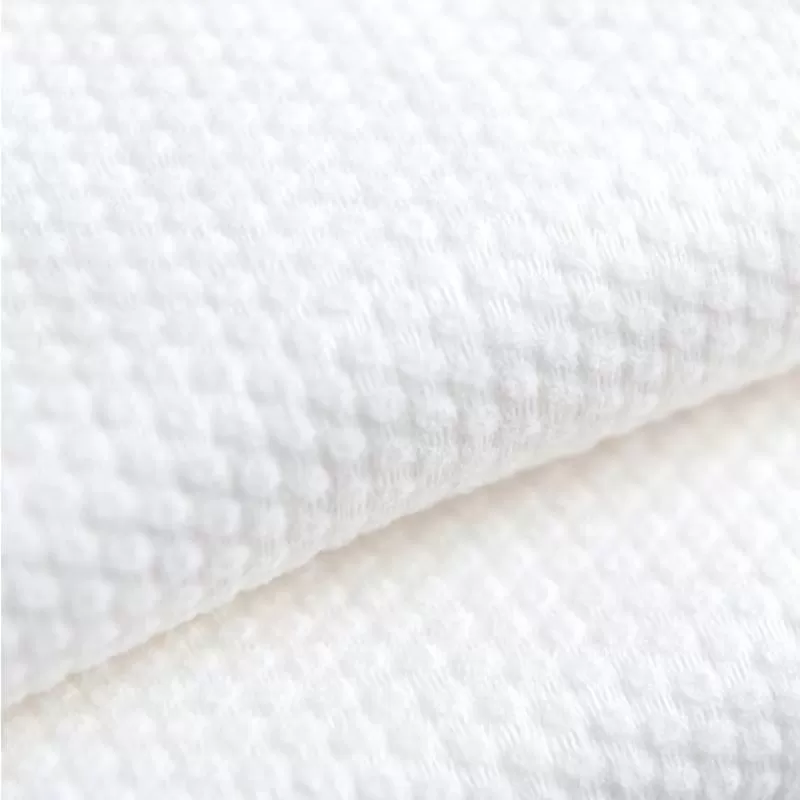
As converting machinery speeds increase and absorbent cores transition to ultra-thin, low-fluff architectures, the functional burden placed on intermediate fluid transport layers grows. KIMEPR engineers and manufactures specialized Through-Air Bonded nonwovens designed specifically for challenging conversion environments.
By using proprietary bicomponent fiber geometries, balanced thermal bonding profiles, and durable multi-wash surfactant technologies, KIMEPR delivers Acquisition Distribution Layer rolls with uniform basis weight distribution, low linting, and high tensile stability across the cross-direction (CD) and machine-direction (MD). These materials integrate smoothly into high-speed diaper, adult care, and feminine hygiene production lines, helping converters minimize line downtime and maintain consistent product quality.
Frequently Asked Questions
What is the primary function of an Acquisition Distribution Layer in a diaper?
The ADL acts as a hydrodynamic buffer and liquid distribution engine. It rapidly pulls liquid away from the topsheet, stores it momentarily during high-flow insults, spreads it along the length of the product, and meters its transfer downward into the absorbent core. This prevents fluid pooling, skin irritation, and premature leakage caused by localized core saturation.
How does an ADL prevent SAP gel blocking?
Super Absorbent Polymer (SAP) particles swell as they absorb liquid, which can create a continuous hydrogel barrier if too much fluid enters one area too quickly. The ADL disperses liquid over a wider longitudinal and lateral area, distributing the volume across a larger number of SAP particles. This ensures balanced core activation and keeps fluid pathways open.
What is the difference between Through-Air Bonded Nonwovens (TABN) and Spunbond nonwovens in ADL applications?
Spunbond nonwovens are thermally calendered under high pressure, producing a dense, relatively flat sheet suited for barrier layers or topsheets. Through-Air Bonded nonwovens are fused using hot air without mechanical compression, preserving an open, high-loft structure with high void volume. This open 3D matrix is essential for handling rapid, high-volume fluid surges.
Why do some Acquisition Distribution Layers feature colored fibers (e.g., blue, green, or purple)?
Colors in an ADL serve two main purposes: visual alignment for the end consumer (identifying the central target zone) and functional verification for optical inspection systems on manufacturing lines. Color is introduced via non-leaching, toxicologically tested masterbatch pigments incorporated directly into the polymer melt prior to fiber spinning.
Can an engineered ADL compensate for reduced fluff pulp in ultra-thin diapers?
Yes. Ultra-thin cores replace high-permeability fluff pulp with high concentrations of SAP or SAP-laminated composite sheets. Because these cores have lower initial open void volume, they require a higher-capacity ADL (typically higher basis weight or dual-layer gradient) to manage the initial fluid volume while the high-density SAP matrix progressively hydrates.
Partner with KIMEPR for High-Performance Fluid Management Solutions
Balancing rapid acquisition, low rewet values, and high converting line efficiency requires precise nonwoven engineering. KIMEPR supplies custom-engineered Acquisition Distribution Layer materials tailored to your specific absorbent core specifications, target basis weights, and line-speed requirements.
Contact our technical sales team today to request material spec sheets, custom fiber blend configurations, or laboratory sample rolls for trial runs on your production line.