
Industrial absorbent hygiene production relies on exact engineering standards, automated quality monitoring, and complex material science. Continuous manufacturing lines operate at linear velocities exceeding 300 meters per minute, turning out 800 to 1,200 finished units every sixty seconds. At these operational speeds, minor mechanical alignment errors generate immediate material waste and line stoppages. Procurement directors, brand owners, and supply chain managers require clear visibility into high-volume manufacturing protocols to maintain product uniformity and contract stability. Operational frameworks established by suppliers like KIMEPR highlight how high-precision automation and rigid material criteria yield uniform product outputs across global market sectors.
High-Speed Converting Machinery and Line Engineering
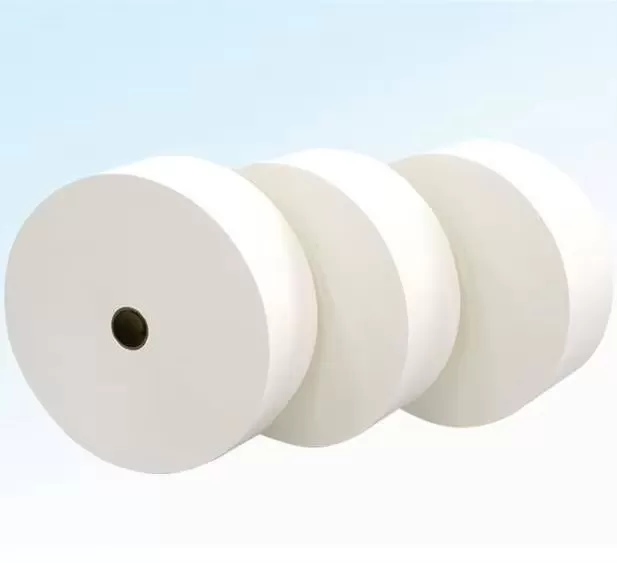
The continuous converting line functions as the structural foundation of an absorbent hygiene production plant. Raw components enter the machine as high-volume rolls of nonwoven fabrics, polymeric films, tissue carriers, wood pulp, and synthetic elastics. These incoming continuous webs must be combined under steady mechanical tension to construct a multi-layer composite product.
Fluff Pulp Defiberization and Core Formation
Core creation begins with heavy rolls of bleached softwood kraft pulp fed into high-speed mechanical defiberization systems. Heavy-duty hammer mills running between 3,000 and 6,000 RPM break apart compressed pulp sheets into individual cellulose fibers. Preserving fiber length during this stage maintains the capillary network necessary for rapid liquid transport along the longitudinal axis of the pad.
Airlaid Fiber Deposition: Pneumatic conveying ducts stream individualized cellulose fibers into a 3D vacuum drum wheel featuring engineered pocket shapes.
Superabsorbent Polymer Dosing: Gravimetric dosing units inject sodium polyacrylate particles straight into the fluidized fiber stream. Precise distribution ratios prevent gel-blocking phenomena during initial liquid saturation.
Co-Form Layer Integration: Advanced production setups introduce meltblown microfiber webs directly into the fluff-polymer matrix, increasing wet integrity and reducing core disintegration during extended wear.
Continuous Web Handling and Automated Tension Control
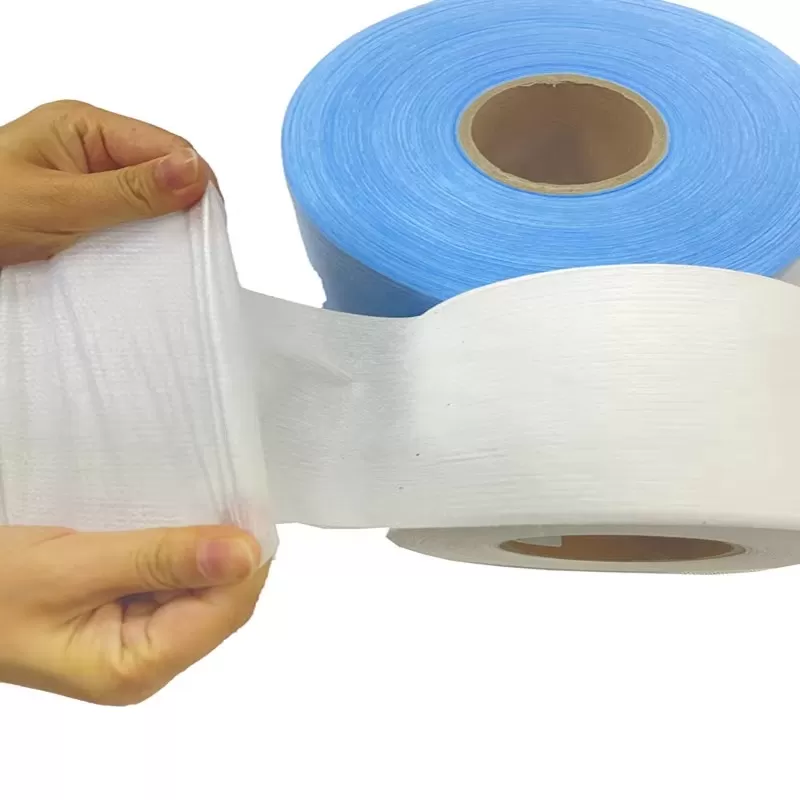
Substrates travel through complex roller arrays driven by independent servo motors. Maintaining consistent web tension protects delicate nonwovens from stretching out of shape or tearing under high line acceleration.
Automated zero-speed splicers execute seamless material changeovers by joining expiring rolls to fresh rolls without slowing line speed. Pneumatic dancer arms dynamically absorb tension spikes during splicing cycles. Downstream, hot-melt adhesive applicators apply precise spiral, slot-coat, or atomized spray patterns onto passing webs at strictly regulated temperatures, bonding sub-layers together without creating stiff areas or blocking vapor permeability.
Material Science and Component Performance Metrics
Absorbent product performance relies on the physical and chemical parameters of its input materials. Sourcing departments evaluate raw materials based on tensile strength, liquid strike-through duration, and skin compatibility.
Absorbent Core Chemistry and Polymer Ratios
The ratio of Superabsorbent Polymer (SAP) to fluff pulp defines overall pad thickness, total retention capacity, and Absorbency Under Load (AUL). Ultra-thin product designs utilize high SAP concentrations reaching up to 70% of total core mass, supported by specialized tissue wrappers or airlaid nonwoven carriers. Traditional thick-core constructions rely on higher pulp proportions to provide fast liquid intake through natural capillary action.
Handling raw polymer materials requires controlled indoor climate settings. Sodium polyacrylate is highly hygroscopic, absorbing moisture from ambient air prior to processing. Keeping relative humidity below 40% inside the core-forming zone prevents early polymer swelling, keeping pneumatic feed lines clear and ensuring consistent distribution across every unit core.
Nonwoven Fabrics and Barrier Laminates
Different functional areas within the chassis require engineered nonwoven structures:
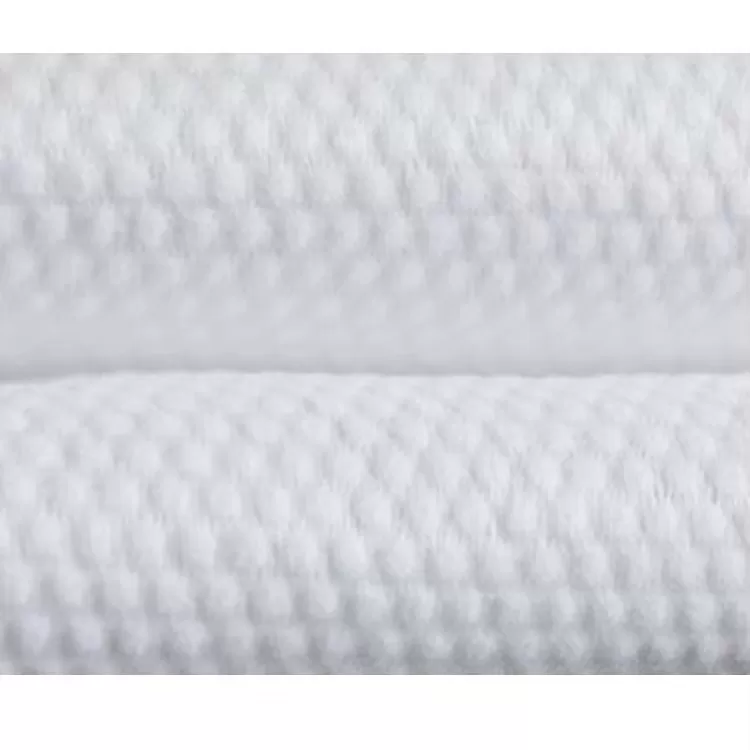
Topsheet Layer: Hydrophilic spunbond polyolefin fabrics, typically manufactured between 12 and 15 GSM (grams per square meter), allow fluid to pass rapidly into the core while staying dry against skin. Air-through bonded nonwovens are frequently selected for premium lines due to their surface softness and loft.
Acquisition Distribution Layer: Positioned directly underneath the topsheet, this open-structure nonwoven temporarily holds liquid surges and spreads fluid laterally before transferring it into the main storage core.
Standing Leg Cuffs: Hydrophobic Spunbond-Meltblown-Spunbond (SMS) nonwovens ranging from 13 to 17 GSM form side barriers that block lateral fluid movement to prevent leg-opening leaks.
Breathable Backsheet: A microporous polyethylene film laminated to a soft spunbond outer layer forms the liquid barrier. Embedded calcium carbonate particles create microscopic pores during film stretching, allowing water vapor to escape while holding back liquid molecules.
Quality Control Protocols Within the Nappies Factory Environment
Delivering structural consistency across millions of units requires automated inline vision checks paired with systematic offline laboratory verification protocols within the nappies factory environment.
Online Automated Inspection Systems
High-resolution charge-coupled device (CCD) camera networks and infrared array sensors monitor moving material webs at key assembly positions along the machine line. Automated vision modules process imagery in milliseconds, instantly spotting geometric or structural defects.
Detection of raw material contaminants, fiber clumping, or surface spots.
Verification of elastic strand tension, waist tape placement, and frontal tape positioning.
Identification of adhesive pattern gaps or uneven glue coverage on leg barrier gathers.
Measurement of outer product dimensions, cut-off tolerances, and folded edge alignment.
When the vision computer marks a defect, positional encoders track the flawed unit down the line to a high-pressure pneumatic reject gate. The air blast ejects the specific unit into a scrap collection hopper without interrupting main line momentum.
Laboratory Validation and Performance Testing
Quality assurance personnel draw finished samples from active production batches at scheduled intervals to perform standardized laboratory tests:
Acquisition Time under Pressure: Recording the time needed for a set volume of saline solution to pass through the topsheet while under a standardized weight.
Surface Rewet Evaluation: Measuring fluid quantity that returns to the surface through filter paper when mechanical pressure is applied over a saturated core. Lower rewet numbers indicate superior dry-feeling performance.
Hydrostatic Head Pressure: Testing barrier nonwovens and side leg cuffs against rising water pressure columns to measure fluid barrier strength.
Fastener Peel and Shear Strength: Testing hook-and-loop closure tapes to verify secure holding power during movement.
Operational Yield, Waste Reduction, and Machine Effectiveness
Plant profitability relies on high Overall Equipment Effectiveness (OEE) metrics, scrap minimization, and energy conservation. Modern plants aim for OEE targets above 85%, sustained by systematic maintenance schedules and streamlined tooling updates.
Single-Minute Exchange of Die (SMED) techniques allow operators to execute size changes in under thirty minutes. Modular component cassettes, quick-release rotary die blocks, and pre-programmed servo controller profiles enable rapid conversion between sizing options (such as Medium to Large) with minimal startup material waste.
Negative-pressure pneumatic systems capture edge trims, cutouts, and pulp dust directly from processing stations. Segregated waste streams route nonwoven and plastic film scrap to thermal re-pelletization systems for industrial recycling, while collected pulp dust is compressed into compact blocks for heat recovery. Modular converting systems configured alongside engineering partners like KIMEPR enable plant operators to implement efficient waste recovery layouts that lower total material loss rates below 3%.
Supply Chain Dynamics and Procurement Strategies
Managing raw material inventories across a high-volume nappies factory relies on robust supply agreements and synchronized logistics schedules. Fluff pulp and acrylic polymer supplies are often secured through long-term index-linked contracts to cushion against market price swings.
Container packaging density remains a key logistics factor for international buyers. Finished products are compressed into heavy plastic bags, then stacked onto pallets for shipping. Applying compression ratios between 20% and 35% maximizes ocean container volume usage, reducing freight costs per unit. The compression level must be calculated carefully so that nonwoven loft, elastic memory, and pad thickness recover fully once packages are opened at the destination.
International procurement arrangements require clear compliance documentation. Facilities maintain quality management system certifications including ISO 9001 for general manufacturing and ISO 13485 for medical-grade hygiene lines. Materials must meet regional product safety requirements, such as REACH regulations in Europe or CPSC standards in the United States, proving the absence of heavy metals, phthalates, or harmful chemical residues.
Frequently Asked Questions
Q1: What structural factors govern core absorption speed versus
surface rewet values?
A1: Absorption speed is driven by topsheet
surface treatment, Acquisition Distribution Layer (ADL) loft, and the open
capillary structure of the fluff pulp matrix. Surface rewet performance depends
on the cross-linking density of the Superabsorbent Polymer (SAP), surface
treatment chemistry, and core compaction density achieved during vacuum
forming.
Q2: How do automated vision systems manage defect removal on
high-speed lines?
A2: CCD camera networks capture surface imagery at
microsecond shutter speeds, comparing real-time component alignment against
programmed CAD templates. When a flaw is flagged, an encoder tracks the unit
position along the conveyor line, triggering a downstream air jet to eject the
defective item without reducing machine speed.
Q3: What parameters determine packaging compression ratios during
export loading?
A3: Compression levels (typically 20% to 35%) are
guided by backsheet film tensile limits, spandex elastic memory retention, and
nonwoven loft recovery. Correctly set compression maximizes shipping container
volume while preserving full pad softness and absorbency performance after
unpacking.
Q4: What primary metrics determine operational yield inside a
high-speed nappies factory?
A4: Production teams monitor Overall
Equipment Effectiveness (OEE), overall scrap percentage (targeting under 3%),
unscheduled line downtime, and total power draw per thousand units produced.
These metrics highlight machine performance, material efficiency, and
maintenance timing.
Q5: How are raw material inventories buffered against supply chain
delays?
A5: Material procurement teams hold 30 to 45 days of SAP and
fluff pulp stock on site while sourcing input components from multiple
geographic regions to avoid single-point shipping delays or regional pulp mill
downtime.
Q6: Which regulatory compliance standards apply to international
hygiene product contracts?
A6: Key industry frameworks include ISO
9001 for quality systems management, ISO 13485 for medical-grade hygiene
production, ISO 14001 for environmental management, and regional material safety
rules such as REACH, OEKO-TEX, or CPSC safety guidelines.
Commercial Sourcing and Direct Procurement Inquiry
Sourcing directly from a fully compliant nappies factory allows commercial buyers, brand owners, and healthcare distributors to secure custom product specifications, steady production capacity, and documented quality control metrics. Detailed project planning ensures that raw material selections match regional market expectations for absorbency performance and packaging formats.
Submit product requirements directly to KIMEPR to request customized manufacturing estimates, complete specification sheets, or factory audit schedules. Providing target market absorbency requirements, desired sizing profiles, and estimated annual order volumes allows engineering teams to prepare tailored commercial proposals.