
The evaluation of modern absorbent hygiene products relies heavily on mechanical integrity, fluid transport rates, and microclimate regulation. Analyzing overall disposable diaper function requires an end-to-end understanding of nonwoven substrate behavior, superabsorbent polymer chemistry, and automated conversion machinery capabilities. As market preferences shift toward thinner profiles and higher retention rates, converting operations face strict performance requirements regarding raw material transformation and high-speed assembly precision. Engineering teams at manufacturing specialists such as KIMEPR examine these multi-layered substrate systems to build production lines capable of handling ultra-thin composite cores while maintaining high output speeds.
Multi-Layered Fluid Dynamics and Surface Acquisition
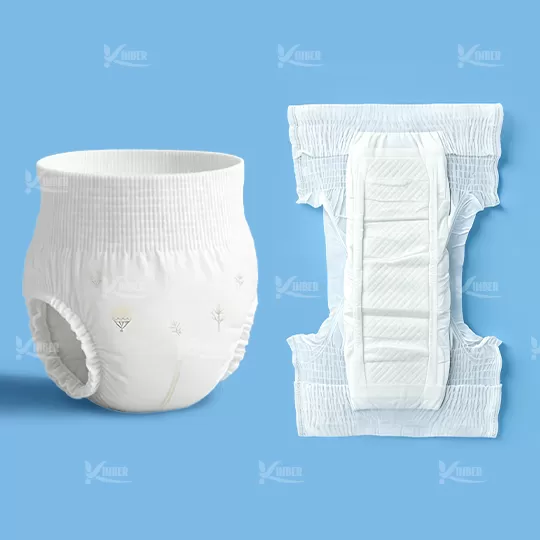
The primary operational surface of an absorbent product must balance rapid fluid intake with surface dryness. Managing disposable diaper function starts with the immediate acquisition of liquid discharges, preventing fluid migration toward the outer edges of the garment before absorption can occur.
The top sheet serves as the direct skin interface. Constructed from hydrophilic spunbond polypropylene nonwovens, this layer is treated with surface-active agents to lower liquid contact angles. The treatment enables fluid to pass through the nonwoven sheet instantly without retaining moisture within the synthetic fibers themselves. Rapid intake minimizes surface wetness, protecting skin integrity and decreasing friction against the wearer.
Directly beneath the top sheet lies the Acquisition Distribution Layer, often composed of through-air bonded nonwovens or resin-bonded high-loft synthetic fibers. Liquid surcharges pass from the top sheet into this open matrix, which serves two operational functions:
Temporary Reservoir Management: Storing liquid momentarily during high-volume voids to prevent surface flooding and side leakage.
Lateral Fluid Transport: Spreading fluid along the longitudinal axis of the product via capillary action, expanding the contact surface area above the underlying absorbent core.
Evaluation of this fluid interaction relies on testing parameters such as strike-through time and rewet value. Low rewet values indicate that liquid captured inside the distribution layer and main core cannot migrate backward under physical compression, maintaining skin dryness under variable mechanical loads.
Absorbent Core Architecture and Polymer Retention
The core acts as the principal reservoir where fluid containment occurs. The primary foundation of disposable diaper function centers on the operational balance between cross-linked sodium polyacrylate superabsorbent polymers and cellulose fluff pulp fibers.
Superabsorbent polymer granules possess a high affinity for aqueous fluids through osmotic pressure differential. When liquid contacts the polymer matrix, cross-linked polymer chains expand, locking liquid inside a stable hydrogel network. This chemical bond retains fluid even when subjected to external mechanical pressure, such as a child sitting or moving.
Traditional core structures combine superabsorbent granules with kraft fluff pulp. Fluff pulp fibers act as a physical matrix, providing structural loft and temporary capillary pathways that pull fluid away from the intake zone. The structural arrangement of these materials prevents a phenomenon known as gel blocking.
Gel blocking occurs when localized superabsorbent particles swell prematurely upon contact with fluid, forming an impenetrable outer hydrogel barrier. This barrier prevents liquid from reaching unexposed, dry polymer granules deeper within the core structure. Modern core designs address this through several architectural modifications:
Channel Embossing: Mechanics-based compression channels cut into the core to direct fluid along defined paths prior to full polymer expansion.
Dual-Layer Dosing: Stratifying superabsorbent concentrations, utilizing lower polymer densities near the intake side and higher concentrations at the bottom core boundary.
Composite Core Laminates: Eliminating or minimizing fluff pulp by binding superabsorbent particles directly between nonwoven carrier tissue layers using hot-melt adhesive networks or ultrasonic bonding.
Standardized measurement protocols evaluate core efficiency using Centrifuge Retention Capacity, Absorbency Against Pressure, and Free Swell Capacity. Higher Absorbency Against Pressure ratings confirm that the structural matrix retains fluid effectively under dynamic loads, preventing fluid escape during physical movement.
Barrier Containment and Structural Elasticity
Preventing fluid loss requires specialized containment structures positioned around the core perimeter. External containment directly influences disposable diaper function by forming dynamic liquid-tight barriers around anatomical contours.
Standing leg cuffs represent the primary line of side containment. Manufactured from hydrophobic Spunbond-Meltblown-Spunbond nonwoven materials, these cuffs resist fluid penetration due to small pore sizes and inherent hydrophobic material characteristics. Threaded synthetic elastomeric strands—typically polyurethane-based filaments—run inside the cuff edges, applying gentle contraction forces that hold the cuffs upright against the body.
The outermost layer, or backsheet, forms the complete liquid barrier. Industrial standards rely on microporous polyethylene film laminated to a soft spunbond nonwoven outer layer. The inner film features microscopic pores created through mineral filler stretching processes. These pores are large enough to allow water vapor molecules to pass out of the interior microclimate, yet small enough to prevent liquid water droplets from penetrating under hydrostatic pressure gradients. Regulating interior humidity through breathability helps maintain healthy skin conditions.
Mechanical closure systems, including elastic side panels and hook-and-loop landing tapes, ensure structural positioning under dynamic load. These components absorb operational stresses during movement, keeping the absorbent core aligned with fluid discharge zones without tearing substrate layers.
Production Line Capabilities and Conversion Precision
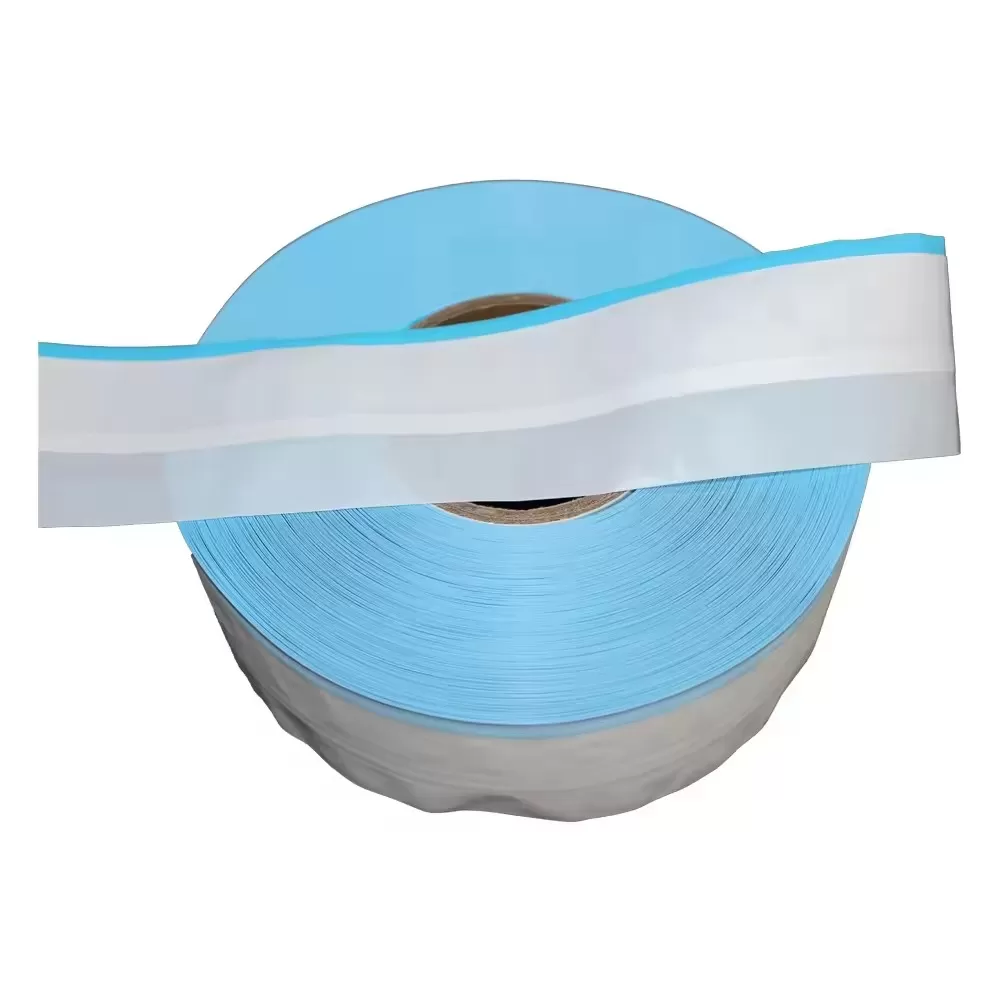
Translating composite material designs into high-speed converting operations requires precise manufacturing equipment. Delivering target disposable diaper function metrics at commercial scales relies on exact web tension management, precise liquid adhesive application, and accurate component metering.
Converting equipment engineered by firms like KIMEPR processes multiple raw material webs simultaneously at speeds exceeding 800 pieces per minute. Converting machinery must balance high linear speeds with delicate material handling to preserve substrate loft and structural integrity.
Dynamic tension variation across material spools introduces processing defects. Inconsistent tension can stretch elastomeric strands unevenly, misalign standing leg cuffs, or tear delicate microporous backsheet films. Advanced converting systems employ automated web-guiding mechanisms, continuous tension feedback sensors, and precision ultrasonic cutting stations to guarantee structural alignment.
Dosing accuracy for superabsorbent polymer deposition represents another primary manufacturing metric. Uneven polymer distribution leads to core instability, inconsistent absorbency profiles, and raw material waste. Modern equipment utilizes gravimetric feeder systems synchronized with production line velocity to distribute polymer exactingly across designated zones, securing consistent performance across every unit produced.
Frequently Asked Questions
Q1: What factors govern liquid intake speed across nonwoven
topsheets?
A1: Liquid intake speed depends on fiber linear density,
surface energy modifications via surfactant application, substrate basis weight,
and pore structure configuration within the spunbond nonwoven layer.
Q2: How does the ratio between superabsorbent polymer and fluff pulp
affect core performance?
A2: Higher polymer concentrations allow for
thinner profiles and higher ultimate liquid retention, but require specialized
fluid distribution pathways to avoid gel blocking. Higher fluff pulp ratios
improve initial fluid intake and capillary wicking speeds, but yield bulkier
cores with lower fluid retention under pressure.
Q3: What role does hydrostatic head pressure play in backsheet
material selection?
A3: Hydrostatic head pressure measures a
laminate's resistance to liquid penetration under fluid force. Higher values
ensure that trapped liquid cannot pass through backsheet films when exposed to
external body pressure.
Q4: How do core channels prevent fluid migration and side
leaks?
A4: Channels form open fluid paths free from concentrated
polymer swell zones. These paths direct liquid along the full length of the
product, utilizing the full surface area of the absorbent core before localized
saturation occurs.
Q5: Why is active web tension control vital on high-speed hygiene
converting lines?
A5: Fluctuation in material tension causes
substrate stretching, elastic strand misalignment, uneven adhesive deposition,
and core breakage, leading to conversion errors and inconsistent product
quality.
Commercial Inquiries and Manufacturing Solutions
For hygiene brand owners, OEM/ODM operators, and hygiene product converters reviewing performance specifications or expanding production capacity, selecting appropriate machinery configurations is central to product success. KIMEPR supplies high-speed converting machinery, continuous superabsorbent dosing systems, and line automation solutions tailored to precise material requirements. Contact our sales engineering division to submit an inquiry regarding machinery specifications, equipment trials, or plant layout planning.