
The global adult incontinence market is experiencing unprecedented growth. Industry data indicates that the global adult diaper market size is projected to reach over USD 24 billion by 2030, driven by an aging demographic and rising awareness of bariatric care needs. Within this sector, manufacturing the biggest diaper sizes—specifically XL, XXL, and customized bariatric options—presents a unique set of technical and financial opportunities for B2B buyers and hygiene product manufacturers alike.
However, producing highly functional, large-format diapers is not simply a matter of scaling up the dimensions of a standard medium-sized product. When surface area increases, the physical laws governing fluid dynamics, material tension, and structural integrity change dramatically. Manufacturers must re-evaluate their equipment capabilities and material choices to avoid common pitfalls like product sagging, core cracking, and high waste rates during production.
This article explores the technical complexities of manufacturing the biggest diaper products, highlighting the material science, mechanical adjustments, and design frameworks required to deliver high-performing bariatric hygiene solutions. We will also examine how technology providers like KIMBER are helping manufacturers adapt their production lines to meet this specialized demand.
The Scale Paradox: Why Bigger Diapers Require Different Engineering
In standard diaper manufacturing, the primary design focus is on rapid acquisition and basic retention. However, as diaper dimensions expand to accommodate bariatric patients, a phenomenon known as "The Scale Paradox" occurs. This paradox states that as the surface area of a diaper increases, its structural stability decreases exponentially under wet conditions if standard material ratios are maintained.
When producing the biggest diaper configurations, gravity becomes a primary adversary. Traditional core designs rely on a homogeneous blend of fluff pulp and Superabsorbent Polymer (SAP). In an extra-large chassis, the weight of the absorbed fluid, combined with the physical movement of the wearer, causes the wet core to sag and clump. This clumping leads to core cracking, which ultimately results in catastrophic product failure and leakage.
To overcome this, modern production lines must move away from simple scale-up methods. Instead, they must utilize advanced core-structuring techniques that partition the absorbent media into specific zones. This ensures that fluid is distributed evenly and held firmly in place, regardless of the physical size of the diaper chassis.
Furthermore, the physical footprint of these larger products requires careful management of raw material costs. Using more material without optimizing its distribution will quickly erode profit margins. Manufacturers must leverage advanced machinery, such as those designed by KIMBER, to precisely dose active materials only where they are needed most.
Deep Analysis: Key Dimensions of Large-Format Diaper Production
1. Material Science - SAP vs. Fluff Pulp Dynamics in Heavy-Duty Cores
In large-format adult diapers, the ratio of SAP to fluff pulp must be carefully calibrated. In standard sizes, fluff pulp provides the necessary bulk and temporary fluid storage before SAP locks it away. However, in the biggest diaper designs, relying too heavily on fluff pulp makes the product excessively bulky, uncomfortable, and costly to package and ship.
Modern bariatric diapers require a higher concentration of SAP, but this introduces the risk of "gel blocking"—where the surface SAP swells upon initial contact with fluid, preventing subsequent insults from penetrating deeper into the core. To prevent this, manufacturers utilize multi-bonded channel cores. These channels act as physical highways, directing fluid rapidly along the entire length of the absorbent pad.
2. Mechanical Tension Control on the Production Line
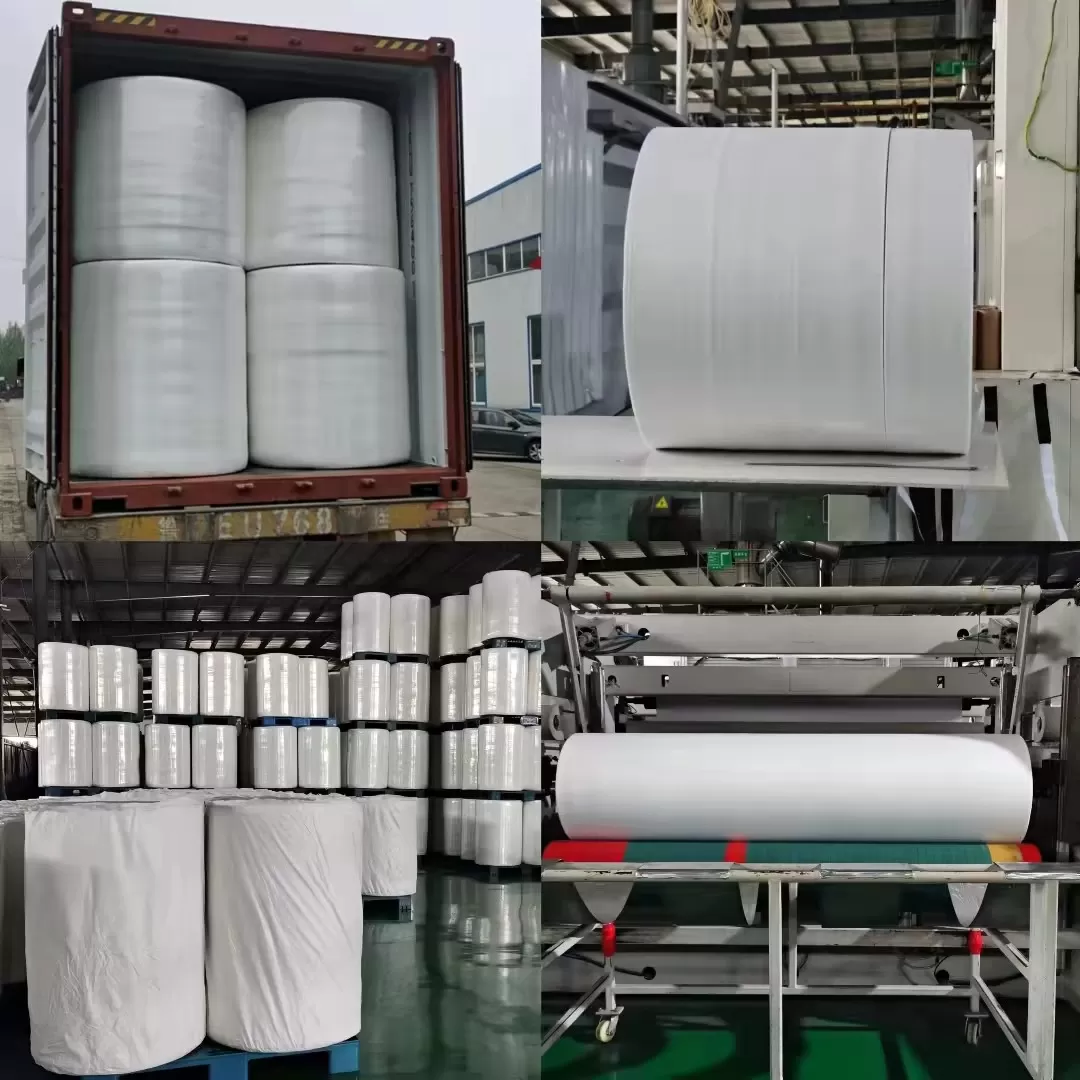
Running wider nonwoven webs at high speeds presents significant mechanical challenges. As web width increases to manufacture the biggest diaper footprints, maintaining consistent lateral and longitudinal tension becomes highly complex. Any variance in tension can cause web weaving, wrinkles, or material breaks, leading to unplanned downtime.
High-precision manufacturing equipment, such as KIMBER customized hygiene production lines, addresses this by utilizing closed-loop tension control systems and active web-guiding sensors. These systems dynamically adjust rollers in real-time to ensure that delicate nonwoven backsheets and elasticized waistbands are laminated with high precision, minimizing material waste and ensuring consistent product dimensions.
3. Anatomical Fit and Elasticity Engineering
A larger diaper must accommodate a wider range of body shapes and movement profiles. Standard leg cuffs and waist elastics are often insufficient for bariatric applications. If the elastics are too tight, they cause skin irritation and pressure ulcers; if they are too loose, they fail to prevent leaks.
The solution lies in multi-strand Lycra distribution and ultrasonic bonding. By applying varying tension profiles across different zones of the chassis, manufacturers can create a conforming "three-dimensional" fit. This ensures that the biggest diaper remains secure against the body during movement, providing both comfort and leak protection without requiring excessive adhesive application.
4. Raw Material Efficiency and Packaging Challenges
The sheer size of large-format diapers impacts downstream logistics. Packaging lines must compress these high-volume products into manageable bag sizes without damaging the loft of the nonwovens or causing the elastics to lose their memory. This requires precise compression and sealing technologies to ensure that the products remain stable throughout global shipping routes.
The C.O.R.E. Scaling Matrix for Bariatric Hygiene
To help product development teams and manufacturing engineers systematically approach the design of large-format products, we have developed the C.O.R.E. Scaling Matrix. This framework balances performance, comfort, and manufacturability.
| Pillar | Key Focus Area | Technical Solution | Manufacturing Impact |
|---|---|---|---|
| Capacity (Absorbency) | Preventing gel blocking and managing high-volume fluid insults. | High-efficiency SAP with structured channel core design. | Requires precise multi-dosing SAP systems on the line. |
| Outline (Anatomical Fit) | Accommodating diverse bariatric body shapes. | Zoned elastic tensioning and wider hook-and-loop fastening systems. | Demands flexible side-panel application modules. |
| Retention (Core Integrity) | Preventing core cracking, sagging, and wet clumping under gravity. | Ultrasonic bonding of core layers and high-integrity acquisition layers. | Reduces hot-melt adhesive usage, improving product softness. |
| Ergonomics (Skin Health) | Maintaining skin dryness and preventing friction-induced irritation. | High-breathability backsheets and hypoallergenic top-sheets. | Requires gentle handling of high-GSM, low-tensile materials. |
Bariatric Diaper Feasibility Checklist
For procurement managers and production engineers planning to introduce or optimize the production of the biggest diaper sizes, this checklist serves as an initial feasibility assessment for your current machinery and material supply chain.
[ ] Web Width Capability: Does your unwind station and cutting section support a raw material web width of up to 1200mm?
[ ] Tension Control Sensitivity: Can your system maintain web tension variations within ±5% across wide nonwoven rolls?
[ ] SAP Dosing Accuracy: Is your SAP dosing system capable of variable distribution to prevent gel blocking in high-volume zones?
[ ] Ultrasonic Bonding Modules: Do you have functional ultrasonic units for core stabilization to minimize adhesive usage?
[ ] Compression Packaging: Is your final packaging unit equipped with high-pressure compression plates that do not compromise the integrity of the elastic components?
[ ] Partner Integration: Have you consulted with equipment specialists like KIMBER to evaluate retrofitting options for your existing lines?
Frequently Asked Questions (FAQ)
1. How does the SAP-to-pulp ratio change as diaper size increases?
As diaper size increases to the biggest diaper categories, the ratio of SAP to pulp typically shifts toward a higher concentration of SAP. In standard adult diapers, a 50:50 ratio is common. However, for bariatric sizes, manufacturers often use a 60:40 or even 70:30 SAP-to-pulp ratio. This shift is necessary to achieve high absorbent capacity without creating an excessively bulky product that would restrict mobility and increase shipping costs. To prevent gel blocking at these higher ratios, advanced channel core structures must be implemented.
2. What machinery modifications are required to run XL/XXL+ sizes on standard lines?
Running larger sizes on standard lines typically requires modifications in several areas:
Unwind and Folding Sections: Widening the unwind stands and adjusting the folding boards to accommodate the larger chassis footprint.
Cutting Dies: Installing larger rotary cutting dies for the outer chassis and side panels.
Tension Control: Upgrading to high-sensitivity closed-loop tension systems to manage the increased drag of wider webs.
Modern equipment brands, such as KIMBER, design modular systems that allow these changeovers to be performed with minimal downtime through quick-change tooling cartridges.
3. How do you prevent sagging and leakage in bariatric-sized products?
Sagging and leakage are prevented through a combination of structural core design and customized elastic profiling. By incorporating longitudinal acquisition distribution layers (ADL) and multiple channels within the core, fluid is quickly directed away from the point of insult and spread evenly throughout the diaper. Additionally, applying multi-strand elastics with graded tension profiles along the leg cuffs and waistband ensures the product stays flush against the skin, even when fully saturated, without causing discomfort.

Selecting the Right Customization Partner
Manufacturing the biggest diaper sizes successfully requires a careful balance of material science, mechanical precision, and cost management. As global demand for bariatric hygiene solutions continues to grow, B2B brands and manufacturers must ensure their production lines are equipped to handle the unique physical demands of larger product footprints.
Partnering with experienced machinery and technology providers like KIMBER can help simplify this transition. By leveraging advanced tension control, precise SAP distribution systems, and modular machine designs, manufacturers can expand their product portfolios to include high-quality, high-performance large-format diapers while maintaining efficient production rates and managing input costs.