
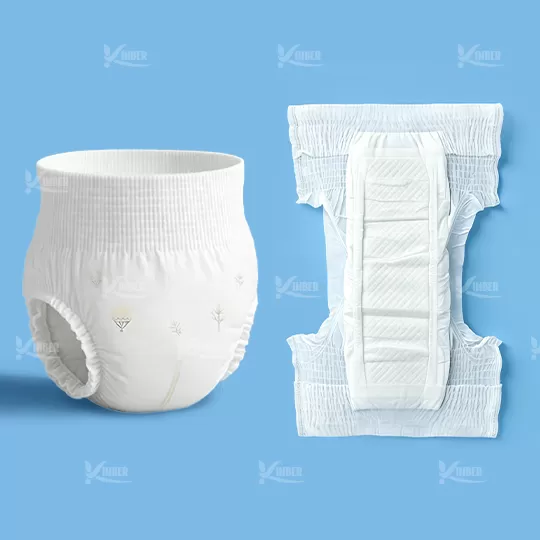
Consumer expectations for hygiene products have shifted dramatically. Modern parents demand disposable diapers that are wafer-thin, breathable, and virtually unnoticeable under clothing, all while providing zero-leak security. For hygiene product developers and supply chain leaders at companies like KIMEPR, engineering these ultra-thin profiles without compromising core integrity is a major technical hurdle.
The solution does not rely on packing more fluff pulp into the chassis. Instead, it demands advanced polymer chemistry. As the personal care sector transitions away from bulky, fiber-heavy pads, superabsorbent polymers (SAP) have shifted from being an auxiliary component to the primary functional engine of the diaper core.
BASF stands at the forefront of this transformation. Through its long-running HySorb® line and advanced polymer innovations, BASF SAP provides the precise liquid handling, mechanical stability, and environmental credentials necessary for next-generation hygiene manufacturing.

Solving Core Failure Modes: Rewet, Slumping, and Gel Blocking
Traditional diaper cores fail under dynamic real-world conditions. A diaper may perform well on a static bench test, yet fail when a 10-kilogram infant crawls, rolls, or sits down abruptly. These movements apply mechanical stress directly to the saturated core, resulting in leakages, surface rewet, or structural collapse.
Formulating with BASF SAP allows R&D teams to target these failure points on a molecular level. By carefully tuning crosslinking density, surface treatment, and particle morphology, these polymers turn fluid mechanics into a predictable science.
Absorbency Under Pressure (AUP) vs. Centrifuge Retention Capacity (CRC)
For decades, procurement teams prioritized Centrifuge Retention Capacity (CRC), measuring how many grams of 0.9% saline solution a single gram of polymer holds after centrifugation. While CRC reflects raw storage capacity, it fails to predict performance under real-use conditions.
Free swelling means nothing if the polymer releases fluid the moment a child sits down. BASF engineers its superabsorbent polymers to maximize Absorbency Under Pressure (AUP), typically measured under loads of 0.7 psi (approximately 4.8 kPa). High AUP values ensure the polymer networks retain urine against body weight, stopping fluid from squeezing back to the top-sheet and keeping the infant's skin dry.
Gel Strength and Prevention of Gel Blocking
Gel blocking is one of the most frustrating issues on the R&D bench. It occurs when dry polymer particles swell too quickly upon the first insult, merging into a continuous, rubbery gel layer. This gelatinous wall seals off the core, preventing subsequent insults from penetrating into unsaturated zones deeper down.
BASF counters this through optimized surface crosslinking. By engineering a higher crosslink density at the particle periphery compared to the interior, the swollen granules maintain high shear modulus and structural stiffness. The particles retain their discrete spherical geometry even when saturated.
This high gel strength keeps inter-particle interstitial voids open. Saline Flow Conductivity (SFC) remains high, allowing second, third, and fourth insults to flow cleanly through the z-axis and distribute along the length of the diaper.
Liquid Dispersion Dynamics
Managing fluid acquisition requires balancing rapid uptake with controlled wicking. If a polymer absorbs fluid instantly at the point of impact, localized saturation occurs, leaving the front and back wings of the pad dry and underutilized.
BASF SAP works synergistically with acquisition distribution layers (ADL). The polymer controls the intake pace just enough to allow capillary-driven distribution channels to transfer the liquid along the x- and y-axes. This balanced dynamic ensures total volume utilization across the absorbent composite.
Factory Floor Realities: High-Speed Converting and Fluffless Cores
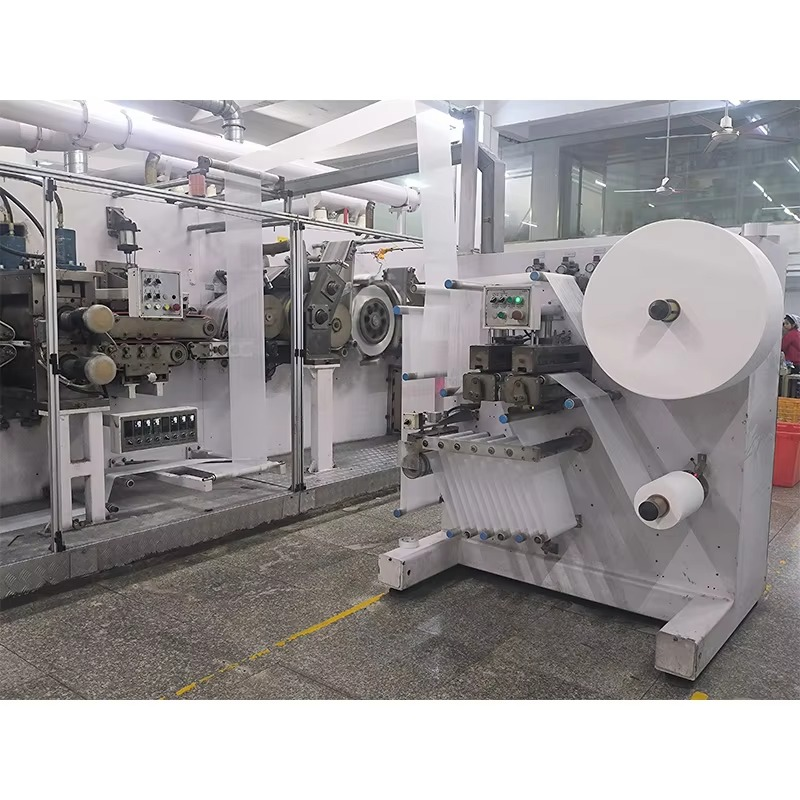
For plant managers and production engineers, a high-performing polymer is useless if it creates downtime on high-speed converting lines running at 800 to 1,200 pads per minute. Converting issues quickly erode operating margins.
Material choices directly affect equipment maintenance, waste rates, and line speeds. Technical teams like those at KIMEPR continually review raw material behavior to optimize throughput and reduce adhesive requirements.
The Push Toward Totally Fluffless Cores
The personal care industry is moving steadily from traditional pulp-SAP blended cores toward semi-fluffless and totally fluffless (pure SAP composite) cores. Removing cellulose pulp reduces pad thickness by over 50%, which cuts packaging material, shipping volume, and shelf space requirements.
However, running fluffless cores requires polymers that bond securely within nonwoven structures. Traditional pulp fibers acted as a mechanical net to hold SAP particles in place. In fluffless cores, the SAP must bind cleanly with hot-melt adhesives or ultrasonic bonding matrices without losing fluid capacity. BASF SAP provides consistent surface properties that ensure steady resin-to-adhesive bonding, preventing core shifting and cracking during energetic toddler use.
Particle Size Distribution (PSD) and Dosing Precision
Inconsistent particle sizing causes headaches for dosage calibration. Variations in bulk density cause feeding hoppers to dose unevenly, leading to pad-to-pad weight variations and off-spec products.
Narrow Sieve Spectrum: BASF maintains strict control over its Particle Size Distribution, minimizing particles above 800 microns and below 150 microns.
Elimination of Over-Sized Grains: Oversized grains swell too slowly and create a gritty, sandy feel through thin backsheets, which leads to negative consumer feedback.
Dosing Uniformity: Uniform spherical morphology ensures consistent bulk flow through pneumatic dosing units, maintaining minimal standard deviation across high-speed shifts.
Fines Reduction, Machine Wear, and Factory Downtime
Fine particles (dust under 100 microns) are an operational hazard in converting facilities. Airborne polymer dust settles on rotary dies, gums up adhesive applicators, and clogs vacuum transport belts. Worse, polymer dust pulls moisture from the ambient factory air, creating slick coatings on machinery that require manual cleaning.
BASF implements aggressive de-dusting stages during post-polymerization processing. The result is a clean-running material that reduces abrasive wear on expensive rotary knives and cutting drums. Less airborne dust means cleaner factory environments, fewer operator interventions, and significantly higher Overall Equipment Effectiveness (OEE).
Sustainable Raw Materials: Biomass Balance and Low PCF
Environmental stewardship is no longer an optional marketing bullet point; it is a baseline commercial requirement. Stringent regulations, such as the EU Corporate Sustainability Due Diligence Directive and tightening consumer scrutiny, are forcing brands to strip fossil carbon out of their supply chains.
Traditional SAP relies entirely on petrochemical-derived acrylic acid. Sourcing low-carbon alternatives at industrial scale has historically challenged procurement teams. BASF addresses this bottleneck through drop-in chemical innovations that preserve product performance.
The Mass Balance Method in Superabsorbent Polymers
Developing completely separated bio-based production lines requires massive capital expenditure and generates substantial logistical inefficiencies. BASF solves this through the certified Mass Balance approach.
In this production model, renewable feedstocks—such as bio-naphtha or biomethane derived from organic waste or vegetable oil processing residues—are fed into the very first steps of the chemical steam cracker. The exact volume of bio-attributed feedstock is tracked mathematically and allocated to specific end products, including their superabsorbent polymer lines.
This process is audited and certified by independent frameworks such as ISCC PLUS (International Sustainability and Carbon Certification) and REDcert². The key advantage for R&D engineers is that the resulting bio-balanced acrylic acid is chemically and physically identical to its fossil-based counterpart. OEMs can decarbonize their products instantly without retooling lines or qualifying new specs.
Verifiable Product Carbon Footprint (PCF)
Greenwashing claims do not pass regulatory muster in North American and European retail channels. Brands need validated, cradle-to-gate data to back up their marketing claims.
BASF provides detailed Product Carbon Footprint (PCF) calculations for its performance polymers. By adopting mass-balanced SAP, personal care manufacturers can show measurable Scope 3 emissions reductions on their balance sheets. This verified data helps premium diaper brands substantiate their claims on retail packaging with ironclad technical documentation.
Strategic Procurement: Risk Mitigation in Global Supply Chains
Procurement directors in the absorbent hygiene sector deal with volatile freight rates, localized raw material shortages, and geopolitical supply disruptions. A single chemical plant shutdown can halt converting lines worldwide.
Relying on low-cost, single-site regional chemical compounders carries unacceptably high risks for global consumer health companies. BASF offers supply chain resilience that smaller producers cannot match.
Global Asset Footprint and Redundancy
BASF operates major SAP production assets across multiple continents, including facilities in Europe, North America, and Asia. This geographic diversity protects buyers against local utility spikes, regional shipping bottlenecks, and force majeure events.
A multi-site operational structure gives procurement teams supply redundancy. If unexpected downtime strikes one facility, supply contracts can be balanced through production assets elsewhere. This infrastructure guarantees continuity of supply for critical high-volume manufacturing lines.
Batch-to-Batch Consistency and Lower Defect Rates
For high-speed converters, variance is the enemy. If one shipment of SAP exhibits a 5% difference in moisture content, swelling time, or bulk density, the plant floor pays the price. Slitting defects, core blowouts, and uneven package weights quickly follow.
BASF maintains tight Process Analytical Technology (PAT) systems throughout the synthesis and drying loops. This closed-loop control guarantees that polymer bags unloaded in January run exactly like those unpacked in June. Predictable raw material performance drives lower scrap rates, reduces customer returns, and preserves factory margins.
Technical Collaboration and Formulation Support
Procurement at this level involves collaborative engineering, not simply buying off a spec sheet. BASF supports hygiene manufacturers with specialized technical support teams.
Their technical centers replicate OEM plant line configurations, conduct multi-insult core fluidics analyses, and assist in designing hybrid core designs. Whether formulating an ultra-light daytime diaper or a high-capacity overnight training pant, manufacturers can draw on BASF's technical resources to fine-tune polymer properties for their exact chassis design.
Performance Comparison: Conventional SAP vs. Next-Gen BASF SAP
| Performance Metric | Conventional Standard SAP | Next-Gen BASF SAP (HySorb® Series) | Manufacturing Advantage |
|---|---|---|---|
| AUP (0.7 psi) | 18 – 22 g/g | 25 – 30+ g/g | Stops leaks under body weight; lowers surface rewet |
| Saline Flow Conductivity (SFC) | Low to Moderate (< 20 units) | High (40 – 80+ units) | Eliminates gel blocking during repeated insults |
| Particle Size Distribution | Wide distribution (50 - 850 µm) | Narrow cut (150 - 600 µm) | Prevents gritty texture; improves dosing precision |
| Fines Content (< 100 µm) | High (> 3%) | Extremely Low (< 0.5%) | Reduces dust, reduces knife wear, increases OEE |
| Carbon Footprint Profile | 100% Fossil Virgin Carbon | Biomass Balanced Options (ISCC+) | Enables certified Scope 3 emission reductions |
Frequently Asked Questions (FAQ)
Q1: Why is AUP a more critical metric than CRC when designing ultra-thin diapers?
A1: Centrifuge Retention Capacity (CRC) measures fluid retention in a free-swelling, unconstrained state. In contrast, Absorbency Under Pressure (AUP) measures the polymer's ability to pull in and hold fluid against mechanical forces, such as an infant sitting or moving. In ultra-thin cores where fluff pulp is minimal, the polymer must resist compression independently to prevent rewet and skin irritation.
Q2: How does BASF SAP prevent gel blocking in high-density, fluffless cores?
A2: BASF uses specialized surface crosslinking to create a resilient, highly crosslinked outer shell on each polymer particle. When the particle contacts liquid, it swells without turning soft or mushy. The high gel strength keeps individual granules distinct, preserving the open capillary channels needed for secondary and tertiary liquid insults to disperse evenly.
Q3: Does biomass-balanced SAP require adjustments to existing diaper manufacturing lines?
A3: No adjustments are needed. Biomass-balanced SAP is a complete drop-in replacement. Because renewable feedstocks are introduced at the start of the chemical production process, the final acrylic acid polymer has the identical molecular structure, purity, and performance metrics as petrochemical SAP. Factory floor settings, line speeds, and adhesive profiles remain completely unchanged.
Q4: What role does SAP particle size play in overall converter efficiency?
A4: Particle size distribution directly impacts pneumatic dosing accuracy and machine reliability. A narrow particle distribution ensures predictable mass flow rates through dosing heads, preventing core weight variations. Eliminating microscopic fines also prevents dust from clogging vacuum transfer belts, fouling adhesive glue nozzles, and dulling cutting dies.
Q5: Can BASF SAP formulations be tailored for regional market conditions?
A5: Yes. Diaper design requirements vary by region based on local preferences, climate humidity, and raw material availability. BASF provides multiple grades within its HySorb® portfolio, allowing engineers to balance liquid acquisition speed, ultimate retention capacity, and gel stiffness to suit specific product tiers, from mass-market day diapers to premium overnight lines.
Build Your Next-Generation Core with Confidence
Engineering a high-performance diaper requires balancing raw material science, converting floor reliability, and environmental sustainability. BASF SAP provides the underlying chemistry needed to resolve trade-offs between core thinness and absorbency.
As converting systems run faster and consumer sustainability demands grow stricter, your raw material choices determine your market success. Industry leaders like KIMEPR continually test, validate, and incorporate top-tier components to keep their commercial diaper portfolios ahead of the pack.
Whether you need to upgrade an existing core structure, eliminate fluff pulp from your production lines, or transition your brand to verified mass-balanced sustainable materials, our engineering and procurement team is ready to assist.
Contact our technical sales division today to discuss your manufacturing targets, request comprehensive technical data sheets, or order trial production lots of advanced superabsorbent polymers.