
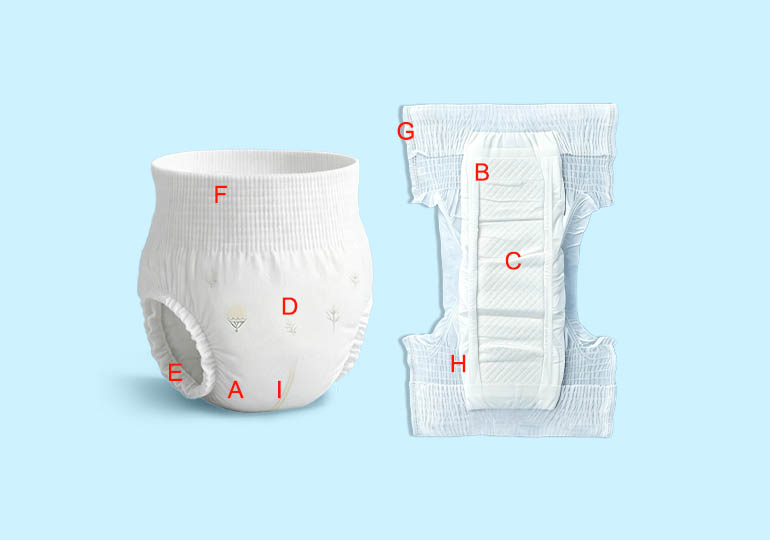
Absorbent hygiene cores face uncompromising performance tests every day. A menstrual pad must rapidly pull in thick, protein-rich discharge without pooling on the topsheet. An adult incontinence brief must instantly trap up to 800 milliliters of saline liquid while bearing the physical weight of a seated or resting patient.
Standard polymers fail under these specific conditions. When conventional superabsorbent polymers encounter high-viscosity discharge or sudden urine surges, they soften, collapse, and cause liquid to leak out along the edges. This breakdown ruins product performance and damages brand credibility.
Sumitomo Seika solved these mechanical failures through its specialized suspension polymerization process. Today, Sumitomo SAP serves as the benchmark raw material for tier-one hygiene manufacturers worldwide. At KIMBER, where our engineers have spent more than twenty years building and retrofitting high-speed converting machinery, we have observed that material choice dictates mechanical performance across every single stage of the manufacturing line.
The Physics of Absorption: Where Standard Polymers Fall Short
Superabsorbent polymers (SAP) are partially cross-linked sodium polyacrylate networks. In basic terms, they draw liquid into their molecular structure via osmotic pressure, locking fluid away as a firm gel. However, not all fluids react the same way inside a core.
Most commercial superabsorbents use a solution polymerization process. This method produces irregular, crushed granules with a broad particle size distribution. While cost-effective for generic baby diapers, these granules often present serious structural weaknesses when used in thinner, specialized personal care items.
Sumitomo Seika relies on an inverse suspension polymerization method. This chemical engineering route creates uniform, spherical beads with smooth surfaces. The spherical geometry changes how liquids diffuse throughout the entire absorbent core matrix.
Consistent Void Geometry: Spherical beads leave open interstitial channels between individual particles, which allows rapid fluid transmission through the layer.
Balanced Cross-Linking Density: A concentrated outer boundary prevents the bead from dissolving, while the interior retains maximum capacity.
Reduced Dust Fractions: Spherical beads resist mechanical abrasion during high-speed pneumatic conveying on converting lines.
Femcare Challenges: Viscosity, Permeability, and Gel Blocking
Formulating a modern ultrathin feminine hygiene core presents severe fluid-dynamic challenges. Menstrual fluid is not water. It is a complex biological suspension containing red blood cells, cellular debris, proteins, and electrolytes. It exhibits non-Newtonian flow properties, meaning its viscosity shifts under pressure.
When standard polymers absorb water, their outer layers swell immediately. In a thin feminine pad, these swollen particles press tightly against each other. They form an impenetrable gel barrier before the fluid can penetrate the lower core. Engineers call this failure mode gel blocking.
Gel blocking causes menstrual fluid to pool horizontally across the nonwoven topsheet. This leads directly to side leakage, foul odors, and skin discomfort. Sumitomo SAP counters gel blocking through a proprietary surface cross-linking process.
By engineering a rigid outer shell around each polymer bead, Sumitomo ensures that the particles maintain their shape as they swell. Fluid continues to move through the gaps between beads, descending into the lower absorbent core rather than running along the surface. This high-permeability design allows manufacturers to build dependable, wingless or winged ultrathin pads that measure less than two millimeters thick.
Adult Incontinence: Managing High Volume Under Constant Load
Adult incontinence core design demands a completely different performance profile. Rather than dealing with a low-volume, high-viscosity fluid, adult briefs and pull-on pants must handle sudden, high-velocity discharges ranging from 200 to 400 milliliters per insult, often under steady physical compression.
Two lab metrics govern the success or failure of an adult incontinence core:
Centrifuge Retention Capacity (CRC): The amount of fluid a polymer holds after being spun in a centrifuge, expressed in grams of liquid per gram of polymer (g/g). It measures internal holding power.
Absorption Under Load (AUL): The amount of fluid the polymer can pull in while subjected to physical pressure, typically measured at 0.3 psi or 0.7 psi (representing a patient sitting or lying down).
Many low-cost polymers show a high CRC in an open dish, sometimes exceeding 35 g/g, but their AUL drops sharply once pressure is applied. Under the weight of a patient's body, those swollen polymers rupture or deform into a mushy sludge. Fluid then squeezes right back out onto the wearer's skin—a defect known as rewet.
Sumitomo addresses this issue through outstanding gel strength. Sumitomo SAP formulations for incontinence balance a robust CRC (typically 28 to 32 g/g) with exceptional AUL at 0.7 psi (often exceeding 20 to 24 g/g). The swollen polymer matrix resists mechanical deformation under body weight. The core stays uniform, preventing lumps, cracks, or shifts during prolonged wear.
Converting Dynamics: Processing High-Grade Polymers on the Factory Floor
Formulating an exceptional absorbent pad in a test lab is one thing. Running it reliably on a converting line at 600 to 1,000 products per minute is another. High-performance polymers introduce distinct engineering variables to high-speed plant machinery.
Because premium polymer carries a higher raw material price than generic polymer, waste directly impacts profitability. Standard manufacturing lines often struggle with three specific polymer handling issues:
1. Feeding Accuracy and Grammage Variation
Modern ultrathin cores rely on high ratios of polymer to cellulose fluff pulp—sometimes up to 70% or 80% polymer by weight. If the dosing feeder vibrates or fluctuates, polymer concentration will vary down the web. A core that is light on polymer risks customer leakage; a core that is heavy on polymer inflates unit production costs.
2. Dusting and Pneumatic Drag
Irregularly shaped crushed polymers generate fine dust as they travel through pneumatic transport tubes. This dust bypasses the suction drums, coats machine sensors, clogs vacuum conveyors, and creates plant safety risks. The spherical shape of Sumitomo SAP beads significantly cuts friction-induced dusting, protecting machinery and maintaining clean web deposition.
3. Static Accumulation
Polyacrylate polymers naturally generate electrostatic charges when flowing quickly through plastic or metal piping. Electrostatic charges cause particles to cling to the interior of dosing nozzles, forming clumps that periodically dislodge and tear the delicate tissue wraps or nonwoven webs below.
The KIMBER Solution: Maximizing Value Through Machine Engineering
A superior raw material requires an equally capable processing platform. At KIMBER, we build, remanufacture, and fine-tune high-speed hygiene equipment to handle technical polymers like Sumitomo SAP with high precision and minimal material loss.
We work as technical production partners, not just machinery fabricators. Our engineering team assists hygiene brands through four key production phases:
Material Formulation and Supply Chain Planning
Choosing the right core structure involves a careful balance between raw material costs and product performance. KIMBER helps factory managers determine the ideal polymer-to-pulp ratio, testing how different polymer grades interact with spunlace nonwovens, airlaid fabrics, and multi-layer acquisition distribution layers (ADL).
We analyze the properties of your absorbent materials to optimize how fluids move through your product, helping you build a lighter, more reliable core while maintaining dependable supply lines.
Zero-Trim Core-Forming Upgrades
Edge trimming is a major source of financial waste on hygiene manufacturing lines. When high-value polymer blends are trimmed off along the sides of an anatomically shaped core, that material usually ends up as factory scrap.
KIMBER designs proprietary core-forming drums and zero-trim retrofits that shape the core outline right inside the pocket mold. By eliminating lateral edge trimming, our converting systems ensure every gram of your chosen polymer stays inside the final product, directly lowering raw material costs.
High-Precision Dosing Upgrades
For existing production setups, KIMBER provides custom-engineered gravimetric and volumetric dosing units. These systems synchronize directly with production line speed, maintaining dosing consistency within +/- 1% across speed changes, startups, and line stops.
Our units feature built-in anti-static bars and smooth-path nozzles to prevent polymer agglomeration. This guarantees a steady, uniform flow of beads across the entire width of your absorbent pad.
Refurbished Production Lines with Modern Control Systems
Investing in a brand-new European converting line demands millions of dollars in capital expenditure and often requires a twelve- to eighteen-month wait. KIMBER provides an attractive alternative through professionally remanufactured lines.
We source proven, heavy-duty machinery bases and rebuild them from the frame up in our own workshops. We fit these machines with modern PLC controls, servo drives, digital vision inspection systems, and advanced core-forming units. You receive the speed and accuracy needed to run Sumitomo SAP smoothly, at a fraction of the cost of new equipment and with substantially shorter lead times.
Total Cost of Ownership: Analyzing the Real Economics
Purchasing managers frequently fall into the trap of evaluating polymers solely by their purchase price per metric ton. This approach overlooks the wider production picture. A lower-priced raw material often ends up costing more once processing factors are accounted for.
Consider the total operational equation:
Core Weight Reduction: Due to the high AUL of Sumitomo SAP, engineers can lower the total weight of the core by 15% to 25% without sacrificing fluid retention. This reduction cuts freight costs for both incoming materials and finished goods.
Lower Reject Rates: Consistent particle sizes minimize core lumpiness and pinholes, which significantly reduces the number of units flagged by inline optical rejection systems.
Maintenance Downtime: Reduced polymer dusting keeps vacuum drums, rotary dies, and drive chains cleaner, extending maintenance cycles and cutting downtime.
When combined with KIMBER's efficient manufacturing lines, this technical synergy lowers your overall cost per thousand sellable units, giving your business a lasting advantage in the market.
Frequently Asked Questions
Q1: Why is Sumitomo SAP more expensive than standard
solution-polymerized SAP?
A1: Sumitomo uses an advanced inverse
suspension polymerization method rather than standard solution polymerization.
This technique requires specialized reactor systems, organic suspension media,
and complex surface cross-linking steps. The resulting spherical beads provide
uniform particle distribution, higher gel strength, and superior fluid
permeability under real-world pressure. The premium in initial price is
typically balanced out by lower reject rates, reduced core weight, and fewer
product leakage issues.
Q2: How does spherical polymer geometry prevent gel blocking in thin
feminine pads?
A2: Crushed polymer particles fit tightly together
when they swell, forming a solid, continuous layer of gel that blocks incoming
fluid. Spherical polymer beads leave smooth, regular interstitial spaces between
adjacent particles even as they expand. These open spaces serve as drainage
channels, allowing fluid to drop through the core and diffuse evenly across the
lower layers.
Q3: Can existing converting lines run high-SAP cores without major
modifications?
A3: Most legacy converting lines were built for
thicker cores containing high amounts of fluff pulp (70% pulp to 30% polymer).
Transitioning to modern ultrathin cores (70% polymer to 30% pulp) usually
requires upgrading the dosing units, changing the vacuum transfer drums, and
installing specialized tissue wrap folders. KIMBER provides targeted modular
upgrades that allow legacy machines to process high-polymer cores cleanly
without requiring a full machine replacement.
Q4: What is the ideal balance between CRC and AUL for adult
incontinence products?
A4: An adult incontinence core should
prioritize Absorption Under Load (AUL at 0.7 psi) over raw Centrifuge Retention
Capacity (CRC). While a high CRC shows that a polymer can hold fluid in an
unconstrained state, a low AUL means the polymer will release that liquid when
the wearer sits or moves. For robust leakage protection, we recommend choosing
polymers with an AUL greater than 20 g/g at 0.7 psi alongside a CRC between 28
and 32 g/g.
Q5: How does KIMBER assist manufacturers who struggle with high raw
material scrap rates?
A5: KIMBER analyzes your current core-forming
setup to identify material losses. We then design zero-trim drum systems, adjust
vacuum extraction paths, and install synchronized gravimetric feeders. These
mechanical modifications eliminate unnecessary edge trimming, contain polymer
dusting, and ensure that your raw materials are deposited accurately within the
active core area.
Take Control of Your Core Manufacturing
Building high-performance feminine hygiene and adult incontinence products requires two things: reliable polymer chemistry and precision equipment. Choosing high-grade materials like Sumitomo SAP gives your core exceptional absorption, while partnering with KIMBER ensures your production machinery runs that material cleanly, quickly, and cost-effectively.
Do not let dosing inaccuracies, machine dusting, and material scrap cut into your profit margins. Contact the KIMBER engineering team today to review your production line requirements, explore our zero-trim retrofit options, or request a complete Total Cost of Ownership (TCO) evaluation.