
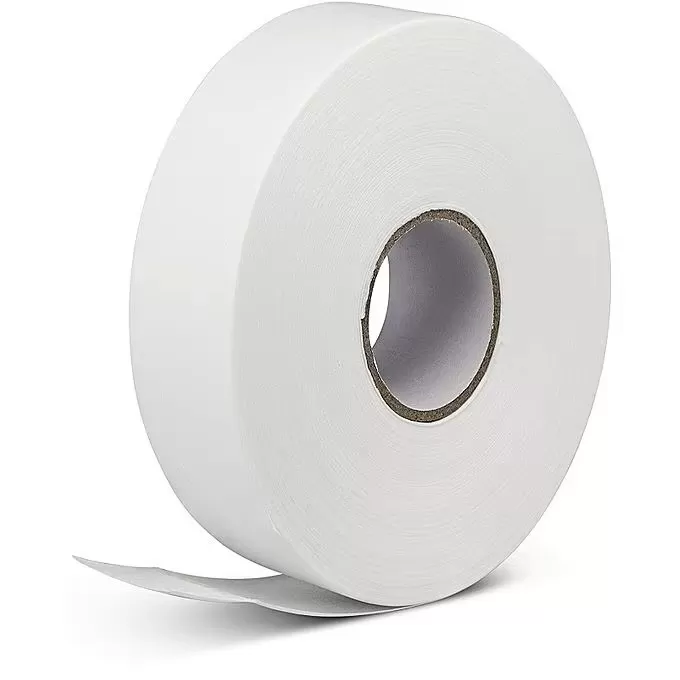
In modern personal hygiene manufacturing, the topsheet serves as the immediate mechanical and biological interface between the end-user and the engineered absorbent core. Specifying an optimal nonwoven topsheet for diapers involves balancing biological compatibility, capillary transport physics, and mechanical resilience under dynamic line tension. Hygiene converters operate under continuous pressure to reduce basis weight (GSM) while maintaining web integrity at processing line velocities often reaching or exceeding 800 to 1,000 products per minute. Achieving this balance requires a deep understanding of polymer formulations, web forming technologies, chemical surface finishes, and the mechanics of web handling.
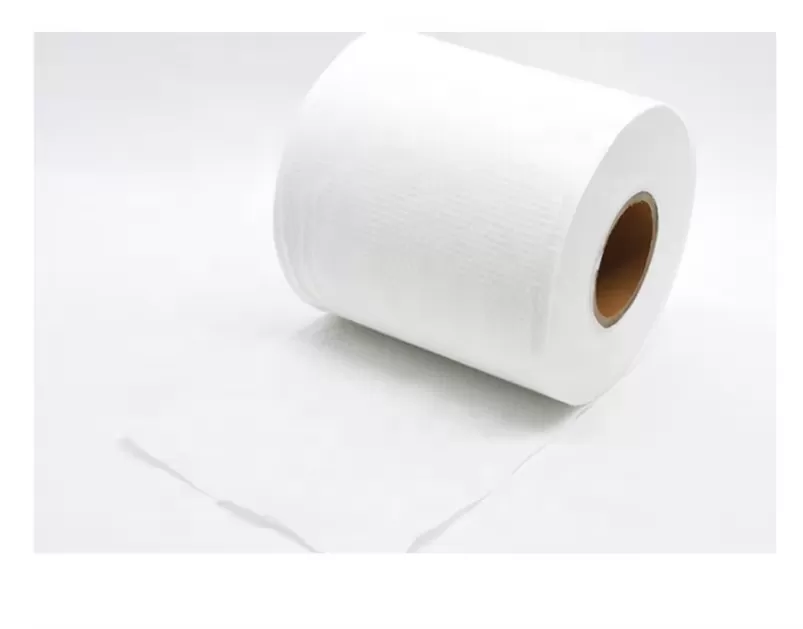
Functional Architecture of Modern Topsheet Materials
The topsheet is not merely a permeable coverstock; it functions as an active multi-phase transport layer. It must execute three critical actions simultaneously: instantaneous fluid intake, rapid transfer to the underlying acquisition distribution layer (ADL), and continuous isolation of the user's skin from moisture stored within the superabsorbent polymer (SAP) matrix.
Instantaneous Liquid Intake: The liquid strike-through rate measures the speed at which a predetermined volume of saline solution penetrates the nonwoven substrate. Modern premium specifications require repeat strike-through values under 2.5 seconds on the third discharge.
Moisture Isolation (Low Rewet): Following void discharge, capillary pressure within the topsheet fibers must prevent the backward flow of liquids when exposed to typical mechanical pressures exerted by a moving infant (ranging from 2.0 to 5.0 kPa). Rewet figures must remain below 0.15 grams under standardized testing methods.
Biological Inertness: Direct contact with delicate epidermal tissue requires a neutral pH, zero cytotoxicity, and a kinetic friction coefficient low enough to prevent mechanical abrasion during sustained user movement.
Masking Efficiency: Visual masking of biological fluids is achieved through deliberate fiber cross-sections, engineered opacity, and fiber titering that scatters light without reducing hydraulic permeability.
Polymer Morphology and Web Formation Technologies
The selection of web forming technology dictates fiber diameter, pore size distribution, bulk caliper, and mechanical anisotropy. Converters select primarily between carded thermal bonding and spunmelt continuous filament technologies based on specific product tiers.
Through-Air Bonded Carded Webs (TABCW)
Through-air bonding produces the premier substrate class for ultra-soft, premium diaper topsheets. Staple fibers—predominantly bicomponent configurations such as Polyethylene/Polypropylene (PE/PP) or Polyethylene/Polyethylene Terephthalate (PE/PET) core-sheath designs—are laid through mechanical cards. The web then traverses a perforated drum through which controlled-temperature air flows.
Hot air melts the low-melting-point outer sheath (typically PE at approximately 130°C) without compromising the structural integrity of the high-melting-point core (PP at 165°C or PET at 255°C). The resulting three-dimensional matrix retains unmatched void volume, exceptionally low bulk density, and superior recovery properties under compression. Fiber deniers commonly range between 1.5 and 2.5 dtex, providing a cloud-like touch suitable for sensitive neonatal skin applications.
Spunbond and Spunmelt Formations (SSS / SSMMS)
Spunbond technology relies on continuous filament extrusion of polypropylene resin through spinnerets, followed by aerodynamic attenuation and thermal point-bonding via calender rolls. Spunbond polypropylene topsheets deliver high tensile strength in both Machine Direction (MD) and Cross Direction (CD), enabling stable runnability at ultra-low basis weights ranging from 10 to 14 GSM.
While historically perceived as stiffer than carded variants, modern micro-denier spinning technologies (sub-1.2 dtex) paired with specialized 3D patterned calender rolls have closed the softness disparity. Spunbond remains the most cost-efficient choice for mass-market absorbent lines, offering consistent web uniformity and minimal fiber shedding during high-speed converting steps.
Hydroentangled Spunlace
Utilizing high-pressure micro-water jets to mechanically entangle staple fibers, spunlace offers extraordinary softness without thermal binders. Often chosen for biodegradable products utilizing cotton, viscose, or lyocell fibers, hydroentanglement presents unique challenges regarding wet rewet retention, requiring specialized hydrophobic-hydrophilic fiber blending strategies to prevent fluid entrapment near the skin interface.
Surface Chemistry: Surfactant Thermodynamics and Durability
Naturally, untreated polyolefin fibers exhibit inherent hydrophobicity, demonstrating contact angles with water exceeding 100 degrees. To enable fluid acquisition, nonwoven substrates must undergo precise surface modifications using chemical surfactant finishes.
Surfactant chemistry governs liquid intake dynamics through the classic Young-Laplace equation:
The capillary pressure driving fluid through the fibrous network is expressed as: P = (2γ cos θ) / r, where γ represents the liquid-air surface tension, θ is the dynamic contact angle between liquid and fiber surface, and r is the effective pore radius. Surfactant formulations must drop the contact angle below 90 degrees instantly without causing a significant decline in dynamic surface tension, which could otherwise induce premature leakage along diaper containment cuffs.
Fugitive versus Durable Formulations: Conventional topically-applied internal surfactants tend to wash off during the first liquid insult. Durable surfactants, based on modified silicones or ethoxylated fatty alcohols with long-chain alkyl backbones, chemically anchor to the fiber surfaces. This chemical persistence ensures low strike-through times across multiple insults (3 to 5 voids), maintaining liquid management throughout extended overnight wear cycles.
Plant-Based and Skin-Biocompatible Surfactants: Market shifts toward gentle skin formulations have accelerated adoption of alkyl polyglucosides (APG) and phospholipid-based finishes. These chemistries avoid skin irritation, eliminate standard endocrine-disrupting elements, and retain full compliance with strict global regulatory mandates.
Structural Modifications: 3D Texturing, Aperturing, and Routing
Transforming flat substrates into three-dimensional topographies enhances both visual aesthetics and hydraulic capabilities. Structural modifications are typically introduced either during the nonwoven production process or directly upstream of the converting station.
Hot-pin mechanical aperturing and ultrasonic perforation modify the bulk substrate by generating discrete physical funnels. These apertures (typically 0.5 mm to 2.0 mm in diameter) drastically reduce viscous resistance when handling high-viscosity infant bowel movements (BM). The conical geometry of these apertures creates a directional valve effect: liquid passes effortlessly downward into the storage core while the narrower lower aperture exit limits fluid flow back to the surface.
Thermal and ultrasonic micro-embossing generates alternating zones of high and low density within the web. High-density embossed troughs generate strong capillary pull, channeling liquids across continuous channels, while low-density raised regions stay elevated from the infant's skin, minimizing continuous skin-to-wetness contact area.
Converting Line Dynamics and Machinability
When specifying a nonwoven topsheet for diapers, converters must evaluate mechanical performance parameters alongside consumer-facing metrics. High-speed assembly operations place complex mechanical stresses on thin substrates.
Tensile anisotropy dictates processing behavior. The ratio of Machine Direction to Cross Direction tensile strength (MD:CD ratio) must be closely regulated. An excessively high MD:CD ratio (e.g., > 4:1) risks necking—a transverse width contraction under web tension that disrupts critical placement alignment over glue tracks and elastic components. Target specifications aim for an MD:CD ratio between 1.8:1 and 2.5:1, providing sufficient crosswise stability while supporting continuous longitudinal pull.
Modern production machinery supplied by leading automation innovators like KIMEPR features multi-axis closed-loop servo tensioning capable of handling lightweight nonwovens at minimal web tensions (10–30 N). When processing high-bulk TABCW materials, excessive nip roll pressure must be avoided to prevent irreversible crushing of the three-dimensional air pocket structure. Equipment developed by KIMEPR incorporates precision non-contact web tension transducers and automated ultrasonic splicing arrays to eliminate dynamic tension spikes during high-speed unwinds.
Static electricity dissipation represents another critical operational factor. Synthetic fibers like polypropylene accumulate massive electrostatic charges when sliding over steel idler rolls at velocities above 600 m/min. Integrated ionization bars, controlled environmental humidity (50–60% RH), and antistatic surfactant components prevent web flutter, alignment distortion, and dust accumulation inside the converting cell.
Quality Validation and Laboratory Testing Metrics
Stringent quality assurance protocols must confirm topsheet performance prior to high-volume commercial production. Converters rely on globally recognized standards established by EDANA and INDA to ensure incoming material consistency:
Liquid Strike-Through Time (EDANA WSP 70.3 / ISO 9073-8): Quantifies the time in seconds required for a 5 mL saline dose to penetrate the material under a specified electrical conductivity sensor. High-speed grades regularly test under 1.8 seconds.
Repeated Strike-Through Test: Measures the durability of the hydrophilic coating by repeating the liquid insult three to five times at defined rest intervals. Durable topsheets limit time increases between the first and fifth strike-through to under 1.0 second.
Wetback / Rewet Performance (EDANA WSP 80.10): Measures the quantity of fluid transferred back to dry filter paper placed on top of the insulted substrate under a 4 kg weight. Target values remain below 0.08 grams for premium lines.
Dry and Wet Mechanical Tensile (ASTM D5035 / ISO 9073-3): Verifies peak tensile load, elongation at break, and yield limits in both orientations, ensuring feeding the nonwoven topsheet for diapers into continuous ultrasonic bonding units does not cause substrate tearing or neckdown failures.
Caliper under Load: Measured via automated micrometers under 0.5 kPa and 2.0 kPa loadings to confirm that the material retains bulk after reel unwinding, embossing, and long-term bale storage.
Comparative Substrate Performance Matrix
To assist converting and product development engineers in selecting optimal raw materials, the table below maps common nonwoven topsheet configurations against critical functional metrics.
| Technology Type | Typical Basis Weight (GSM) | Touch & Hand Feel | Tensile Stability (MD/CD) | Repeated Rewet Control | Typical Line Runnability |
|---|---|---|---|---|---|
| Standard PP Spunbond (SSS) | 10 - 13 | Standard / Medium | Exceptional | Moderate | Outstanding (>1,000 m/min) |
| Bico Through-Air (TABCW) | 18 - 28 | Ultra-Soft / Lofted | Moderate | Superior | Controlled (600–800 m/min) |
| 3D Apertured Spunbond | 13 - 16 | Textured / Dry | High | High | High (>800 m/min) |
| Viscose/PP Carded Spunlace | 20 - 35 | Natural Cloth Feel | High | Low to Moderate | Moderate (500–700 m/min) |
Frequently Asked Questions
What mechanical factors cause surfactant wash-off on diaper topsheets?
Surfactant wash-off occurs when topically applied hydrophilic chemicals dissolve into the biological fluid during passage through the web. If the surfactant molecules have weak lipophilic interactions with the polyolefin polymer chains, the liquid strips the coating away. Subsequent insults encounter an increasingly hydrophobic surface, extending strike-through duration and causing fluid runoff along the sides of the core. Solving this issue requires switching to durable surfactants containing high-molecular-weight reactive groups that anchor firmly to fiber surfaces.
How does web caliper affect converting speeds on high-speed diaper equipment?
Lofted substrates, such as high-bulk TABCW, carry boundary air layers during unwinding at elevated line speeds. This dynamic air displacement can cause web float, wrinkling, and misregistration during thermal or ultrasonic laminations. Equipment from KIMEPR mitigates these issues by implementing grooved vacuum guide tables, low-inertia carbon-fiber idler rollers, and optimized web tension profiles that stabilize the lofted material without permanently crushing its internal volume.
What metric best predicts skin health performance for infant diaper topsheets?
Dynamic skin rewet values paired with low kinetic friction coefficients provide the most accurate laboratory indicators of skin protection. While strike-through rate measures intake speed, residual surface moisture under pressure directly increases epidermal hydration levels, which weakens the skin barrier. Keeping liquid rewet below 0.10 grams prevents skin maceration and significantly limits diaper dermatitis.
Can biodegradable fibers be integrated into conventional spunbond topsheet equipment?
Standard polypropylene spunbond lines cannot run 100% polylactic acid (PLA) or viscose without mechanical and thermal adjustments. PLA exhibits distinct rheological behavior, an altered melt temperature window (150–170°C), and sensitivity to hydrolytic breakdown under trace moisture. Converting equipment requires targeted temperature zoning across extruder barrels, altered calendar roll metallurgy, and tightly managed drying systems before PLA can match the operational efficiencies of traditional polyolefins.
Why are bicomponent staple fibers preferred over mono-component fibers in TABCW topsheets?
Mono-component fibers possess a singular melting point. When passing through a thermal bonding oven, heating them to their softening point risks collapsing the bulk fiber structure, resulting in a thin, brittle nonwoven sheet. Bicomponent fibers combine a low-melting sheath (such as Polyethylene) with a high-melting structural core (such as Polypropylene or Polyester). The outer sheath melts to create strong welded junctures, while the core remains intact, preserving three-dimensional bulk, resilience, and softness.
Partner with Technical Experts for Your Production Requirements
Selecting the correct raw materials and optimizing machine synchronization are essential steps to producing top-tier absorbent hygiene products. Material properties must align precisely with mechanical converting systems to maximize yield, limit waste, and ensure stable machine operation. To validate nonwoven topsheet for diapers configurations on pilot converting lines, obtain customized substrate compatibility evaluations, or review technical specifications for high-capacity diaper manufacturing machinery, submit your inquiry to our engineering team.