
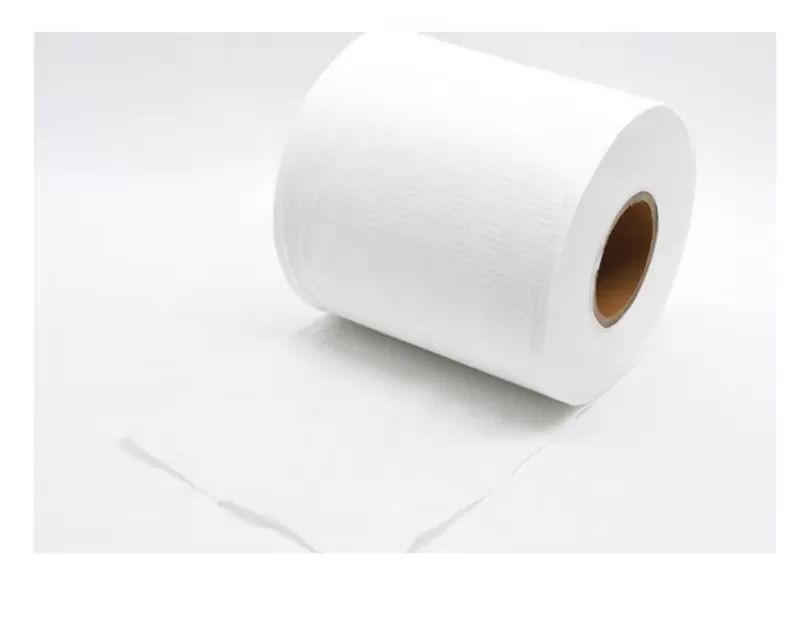
Liquid management within absorbent hygiene products (AHPs) and specialized medical textiles demands precise physical and chemical manipulation of polymeric interfaces. Synthetic polymers like polypropylene (PP) and polyethylene (PE) possess natural hydrophobic properties, characterized by low surface energy typically ranging between 30 and 34 mN/m. Transforming these nonpolar polymers into an efficient fluid-distribution substrate requires engineering hydrophilic nonwoven fabric that lowers the aqueous contact angle, minimizes fluid acquisition time, and controls fluid migration into absorbent core structures.
For industrial converters and production engineers, specifying the right technical media impacts line runnability, bonding integrity, and product performance. Evaluating the micro-mechanics of wetting, surfactant migration, multi-strike durability, and web interaction under high-tension converting lines informs raw material selection and ensures predictable processing behavior.
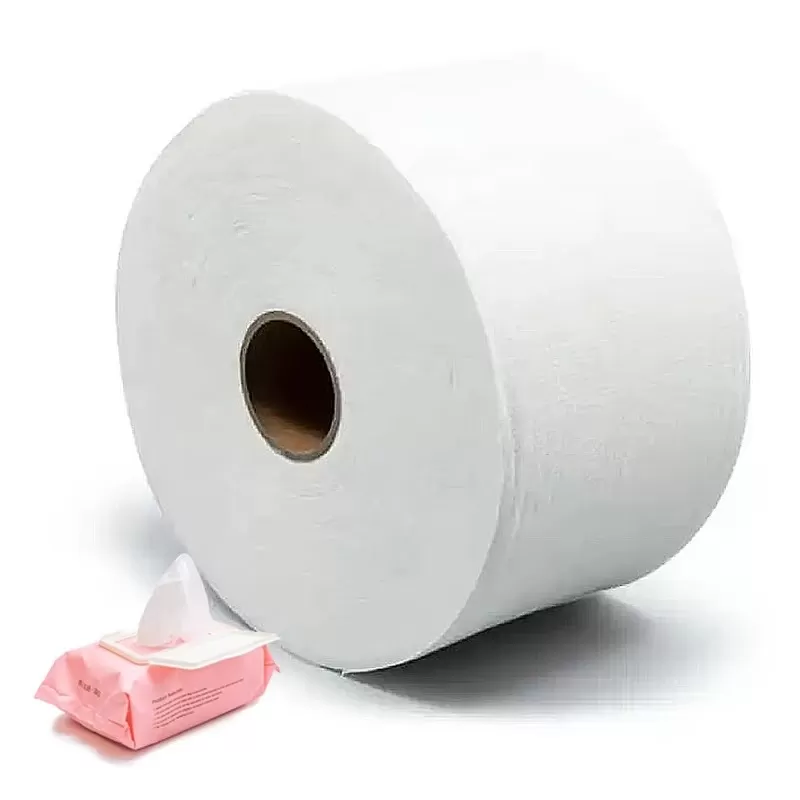
Fiber Morphology, Surface Tension, and Wetting Mechanics
Fluid movement through fibrous assemblies follows classical thermodynamic and hydrodynamic models. The fundamental wetting behavior of a single filament is governed by the Young-Dupré equation:
γSV = γSL + γLV · cos(θ)
In this dynamic, γSV represents the solid-vapor interfacial tension, γSL the solid-liquid interfacial tension, γLV the liquid-vapor surface tension (approximately 72.8 mN/m for pure water at 20°C), and θ the thermodynamic contact angle. For nonwoven spunbond or carded webs derived from unmodified polyolefins, the contact angle exceeds 90 degrees, preventing fluid penetration and generating positive hydrostatic back-pressure.
Converting this interface to a spontaneous wetting environment requires modifying the surface energy such that cos(θ) approaches 1 (θ → 0°). Achieving this state causes spontaneous capillary wicking, driven by Laplace pressure differentials within the fibrous void network:
ΔP = (2 · γLV · cos(θ)) / reff
Here, reff represents the effective capillary pore radius formed by the random orientation of continuous filaments. Fine-denier spunbond structures (1.2 to 2.0 denier) create small capillary radii that generate high capillary suction once the surface is rendered wettable. High-loft through-air bonded (TAB) structures preserve wider interstitial voids to facilitate bulk fluid intake without immediate interstitial saturation.
Surfactant Chemistry and Topical Modification Systems
Because polyolefin resins do not possess polar functional groups within their molecular backbones, hydrophilic properties are typically achieved through downstream topical chemical treatment or upstream internal melt compounding.
Topical Surfactant Application
The predominant manufacturing methodology relies on aqueous topical treatments applied post-formation via kiss-roll, dip-and-squeeze foulard, or precision acoustic spray systems. Surfactants selected for hygienic coverstocks fall primarily into non-ionic and gently amphoteric categories:
Ethoxylated alcohols and fatty acid esters: Provide rapid strike-through speeds with minimal skin irritation profiles, making them standard in infant care topsheets.
Organosilicone polyethers: Deliver ultra-low dynamic contact angles and silky surface tactile values, though they require precise bath balance to eliminate roller slippage on high-speed unwinds.
Polymeric hydrophilic coatings: Utilize cross-linkable moieties to achieve permanent surface anchorage, preventing wash-off during multiple voids.
Topical application requires rigorous moisture evacuation. The impregnated web passes through controlled multi-zone drying chambers to flash off the aqueous carrier without exceeding the softening point of the polymer filaments. Operating within precise thermal bands maintains fiber tensile strength and avoids surfactant thermal breakdown. Modern plants rely on the KIMEPR thermal distribution architecture to maintain transverse temperature uniformity within ±1°C across wide-width drying lines, preventing localized re-hydrophobization.
Internal Melt Additives
Internal hydrophilization incorporates amphiphilic migratory masterbatches directly into the polymer melt prior to extrusion through the spinneret. Once spun, the hydrophilic heads migrate slowly toward the filament exterior, driven by thermodynamic incompatibility with the crystalline matrix. While internal additives exhibit exceptional wash-off resistance and eliminate wet drying processes, they demand controlled aging periods (often 24 to 72 hours) to reach target surface concentration and stable equilibrium contact angles.
Converting Dynamics and Line Runnability
Operating modern diaper and feminine pad lines at speeds between 600 and 1,200 meters per minute exposes raw materials to immense web handling forces. Hydrophilic nonwoven fabric behaves differently than standard hydrophobic backsheets under high-speed conversion, particularly across slitting, tensioning, and dynamic joining stations.
Topical surfactants alter the web coefficient of friction (COF). An excess of lubricating chemistry lowers kinetic COF below 0.20, leading to tracking issues, dynamic skew, and unstable winding profiles. Conversely, high-friction surfactant deposits cause static accumulation, web vibration, and slitter blade gumming. Controlling chemical pickup via precise gravimetric metering avoids surfactant crystallization on vacuum transport belts and folding boards.
Bonding affinity introduces another processing variable. Ultrasonic and thermal bonding require consistent polymer melt rheology. Surfactant layers containing high free-moisture contents or volatile processing oils can boil at the horn interface, causing cavitation voids, pinholes, or unstable weld seams during elastic attachment. The engineering standards embedded in KIMEPR processing units compensate for these surface dynamics by balancing mechanical anvil profiles against local web shear factors.
Standardized Metrology and Quality Validation Protocols
Procuring raw materials for high-volume conversion requires strict adherence to standardized empirical testing methodologies recognized by EDANA and INDA organizations.
Liquid Strike-Through Time (NWSP 070.1 / WSP 070.3): Measures the time required for a set volume (typically 5 mL) of synthetic urine to penetrate through the nonwoven into an underlying standard reference absorbent pad under specified hydrostatic load. Premier commercial grades achieve initial strike-through in less than 1.8 seconds.
Repeated Strike-Through (Durability): Assesses surfactant durability by delivering consecutive liquid discharges (e.g., three to five standard voids) onto the identical test location at specific rest intervals. High-performing durable webs maintain strike-through times under 3.0 seconds across three cycles, indicating low surfactant wash-off into the fluid stream.
Wetback / Rewet Performance (NWSP 070.7): Quantifies the mass of fluid that migrates backward through the coverstock under simulated infant or adult body pressure (typically 0.5 to 0.8 psi). Excellent hydrophilic nonwovens yield rewet values below 0.1 grams, verifying that capillary suction operates preferentially downward into the sub-layers.
Surface Tension of Run-Off Liquid: Measures whether the surfactant strips from the nonwoven during fluid insult and dissolves into the liquid. If the run-off fluid surface tension drops significantly below 70 mN/m, it degrades the retention capacity of subsequent superabsorbent polymer (SAP) networks.
Tensile Elongation and Modulus (NWSP 110.4): Evaluates cross-direction (CD) and machine-direction (MD) tensile properties, ensuring web stability across acceleration cycles.
Standardized automated metrology stations manufactured under KIMEPR engineering guidelines provide laboratory-grade consistency across multi-lot sampling plans, directly correlating laboratory micro-liter runoff data to converting yield.
Application Architecture in Multi-Layer Absorbent Systems
Hydrophilic media does not operate in isolation; it functions as the entrance vector within an interconnected liquid transmission matrix. The performance of this system depends on matching the porous structure of the coverstock to the underlying technical layers.
Topsheets
As the primary patient- or infant-contact surface, the topsheet balances immediate permeability with skin dryness. Low basis weight spunbond materials (10 to 14 gsm) are common, but through-air bonded carded nonwovens (18 to 25 gsm) made from bicomponent (PE/PET or PE/PP) fibers are widely used in premium markets. These bulky webs separate the skin from damp core layers, using localized hydrophilic nonwoven fabric zones to accelerate drainage while keeping outer edges dry.
Acquisition and Distribution Layers (ADL)
Positioned directly beneath the topsheet, the ADL serves as a temporary reservoir that manages sudden, high-volume fluid surges. ADLs demand a structural compromise: large, open interstitial voids to intake fluids without pooling, coupled with enough capillary force to channel fluid along the length of the product before transferring it into the absorbent core. High-resilience, high-denier thermally bonded nonwovens (30 to 60 gsm) achieve this balance, with targeted KIMEPR fiber arrays preserving directional fluid movement under sustained compression.
Medical Drapes and Barrier Gowns
Surgical apparel presents a different fluid challenge. Medical environments require composite nonwovens—typically Spunbond-Meltblown-Spunbond (SMS) or Spunbond-Meltblown-Meltblown-Spunbond (SMMS) structures. In surgical drape designs, critical zones around the incision must absorb fluids to prevent runoff into the operative field, while surrounding zones block fluid and bacterial transmission. Zone-coated hydrophilic nonwovens create these controlled fluid collection perimeters directly over high-barrier hydrophobic base substrates.
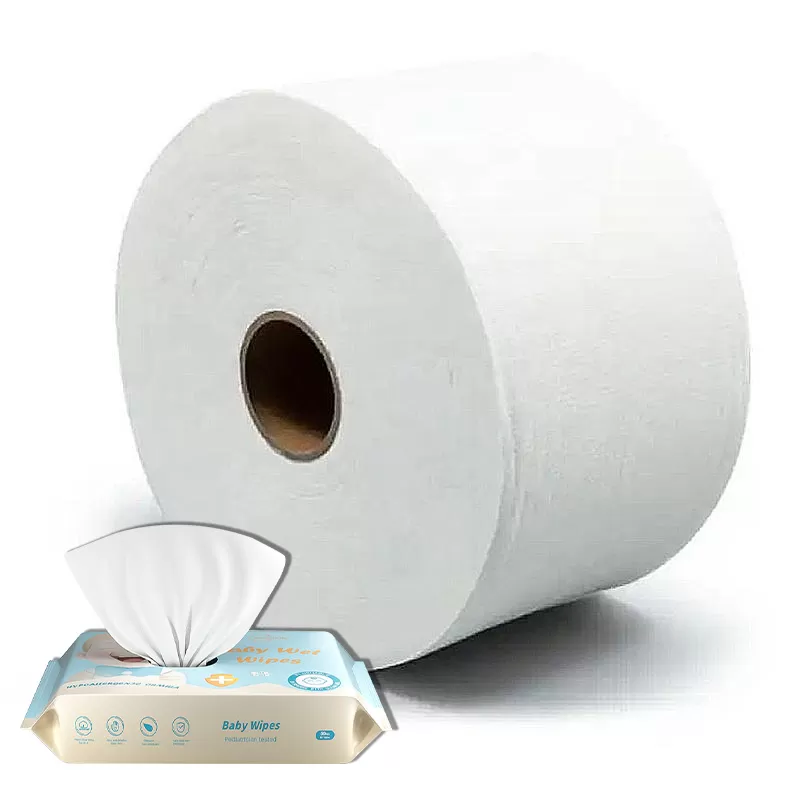
Material Specifications Matrix
Procurement teams require structured parameter baselines when negotiating supply specifications with commercial roll goods manufacturers. The table below outlines technical properties across three standard manufacturing variations:
| Technical Property | Standard Spunbond (H-SB) | Through-Air Bonded (TAB) | Composite (SMS Hydrophilic) |
|---|---|---|---|
| Basis Weight (gsm) | 10.0 – 15.0 | 18.0 – 30.0 | 15.0 – 35.0 |
| Polymer Base | 100% Polypropylene | PE/PET or PE/PP Bico | Polypropylene Laminate |
| Initial Strike-Through (s) | ≤ 1.8 | ≤ 1.2 | ≤ 2.5 |
| Repeated Strike (Cycle 3, s) | ≤ 3.5 | ≤ 2.2 | ≤ 4.8 |
| Tensile MD (N / 50mm) | ≥ 28.0 | ≥ 14.0 | ≥ 45.0 |
| Tensile CD (N / 50mm) | ≥ 16.0 | ≥ 8.0 | ≥ 30.0 |
| Rewet Value (g) | ≤ 0.15 | ≤ 0.08 | ≤ 0.20 |
These values can be tuned by changing resin melt flow rates (MFR), adjusting calender roll embossing patterns (oval, diamond, or micro-dot), and modifying the chemical concentration in the surfactant bath. Selecting the right roll goods depends on finding the best balance between mechanical strength and fluid management speeds.
Technical Considerations for Converting Lines
Integrating rolls into high-speed converting machinery requires monitoring web tension, static buildup, and environmental moisture. Surfactants draw airborne moisture if stored in humid warehouses, altering web unrolling resistance and causing edge-flutter along tension-isolated zones.
When running wide-format parent rolls, slitting stations require sharp carbide shear knives set to precise overlap depths. Dull blades crush the porous edges of the web rather than cleanly cutting the fibers. This mechanical pinching closes the surface capillaries, turning roll edges hydrophobic and causing edge-leakage along hygiene assembly lines. Implementing KIMEPR automated slit-management modules eliminates these edge-sealing effects, maintaining uniform wettability across the full width of the parent roll.
Frequently Asked Questions
What differentiates durable from non-durable hydrophilic surface finishes?
Non-durable finishes utilize low-molecular-weight surfactants formulated for rapid, single-event wetting. Fluid insults can wash these surfactants from the fiber surfaces, causing subsequent strike-through times to rise noticeably. Durable finishes incorporate cross-linkable, polymeric, or reactive surfactants that chemically anchor to or physically interlock with the polymer chains. These durable chemistries withstand multiple fluid insults without washing off, preserving low strike-through times and high core-retention values.
How does surfactant wash-off impact superabsorbent polymer (SAP) efficiency?
When loosely bonded surfactants wash off the nonwoven coverstock, they dissolve into the penetrating liquid, lowering the liquid surface tension from roughly 72 mN/m to below 45 mN/m. This lower surface tension undermines the capillary suction of the SAP network and the surrounding fluff matrix. As a result, the absorbent core struggles to lock fluid away under pressure, driving up rewet values and causing the product to feel damp against the skin.
Why are bicomponent fibers preferred in through-air bonded hydrophilic webs?
Through-air bonding relies on passing heated air directly through an uncompacted fiber web. Bicomponent fibers feature a core polymer with a higher melting point (such as polyester or polypropylene) surrounded by a lower-melting sheath (such as polyethylene). The process air melts only the sheath polymer, forming stable fused junctions at every fiber crossing point while the structural core stays solid. This creates a resilient, high-loft, and open three-dimensional pore network that quickly pulls in fluids while maintaining bulk thickness under load.
Can hydrophilic nonwoven fabric be processed via ultrasonic welding?
Hydrophilic nonwoven fabric can be ultrasonically welded, provided the surfactant formulation is thermally stable and the chemical pick-up weight (PUW) is managed carefully. Excessive surfactant or residual moisture on the web can boil at the horn interface, generating high steam pressures that disrupt sonotrode resonance and produce pinholes or weakened bonds. Clean chemistries run reliably on standard ultrasonic equipment without requiring elevated tool pressures or prolonged dwell times.
What storage and handling conditions best protect hydrophilic roll goods?
Hydrophilic roll goods should be stored in climate-controlled environments between 15°C and 28°C, with relative humidity maintained between 40% and 60%. Prolonged exposure to high ambient heat can accelerate surfactant migration away from the fiber surfaces, while high humidity leads to moisture absorption that interferes with static control and tensioning on the unwinds. Storing rolls horizontally with proper core plugs prevents edge deformation and preserves uniform unspooling performance.
How does fiber cross-section shape influence fluid wicking?
Standard round fibers provide smooth cylindrical surfaces, leaving fluid movement dependent entirely on the interstitial spaces between adjacent fibers. Specialty cross-sections—such as trilobal, pentalobal, and deep-grooved shapes—introduce micro-capillary channels running parallel to the fiber axis. These longitudinal grooves pull fluid along the filament via capillary pressure, accelerating fluid distribution across the absorbent area before it drops into the storage core.
Engineering Collaboration and Sourcing Inquiries
Specifying the optimal substrate configuration requires aligning functional fluid dynamics with converting line physics. Material performance depends on multiple interacting variables: basis weight, surfactant chemistry, bond-point density, denier distribution, and tensile properties. Industrial development teams must balance fluid strike-through requirements against downstream line yields to avoid production bottlenecks.
The engineering team behind KIMEPR production technologies collaborates directly with procurement departments, production supervisors, and material scientists to configure custom hydrophilic nonwoven fabric specifications. Share your line parameters, core design requirements, target strike-through metrics, and basis weight constraints with our technical sales division to request trial roll samples, structural data sheets, and custom quotation packages.