
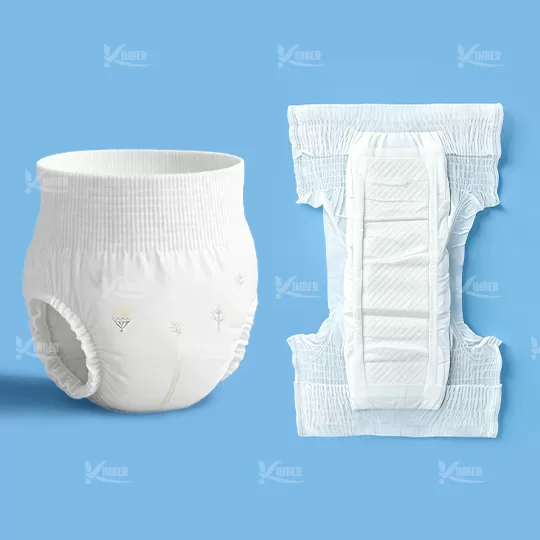
Disposable hygiene products rely on a sequence of layered materials to provide leak prevention, fluid acquisition, and structural integrity. Within this mechanical assembly, the closure system carries the primary burden of fit retention, dynamic load distribution, and re-fastenability. The precise engineering of side tape for diapers dictates not only the final product performance on the wearer but also the efficiency, scrap rate, and downtime across modern high-speed converting lines.
As diaper manufacturing lines push conversion speeds beyond 800 to 1,000 pieces per minute, fastening materials face extreme dynamic mechanical stresses. Micro-hook geometry, adhesive rheology, carrier film tensile modulus, and release properties must operate in total synchronization. A failure in any of these components leads to issues such as premature detachment under baby movement, web breaks during converting, or material tearing upon opening.

Material Architecture and Composite Structures in Diaper Fastening
Modern diaper closure tapes are not monolithic strips; they are engineered multi-layer composite structures. Each layer serves an exact mechanical or tactile function, bonded together via specialized hot-melt lamination processes.
The multi-layer composite construction of side tape for diapers incorporates several key zones:
Carrier Substrates: Nonwoven-film laminates form the foundation. Spunbond-Meltblown-Spunbond (SMS) or carded nonwovens laminated to cast polypropylene (CPP) or polyethylene (PE) films provide tensile strength in the machine direction (MD) while maintaining soft tactile properties in the cross direction (CD).
Fastening Heads (Mechanical Hooks): Extruded polypropylene micro-hooks are thermally or ultrasonically bonded to the carrier. These hooks, often shaped in mushroom, palm-tree, or J-hook profiles, interface directly with the loop structure of the frontal tape. Hook density typically ranges from 200 to over 500 hooks per square centimeter, governing the engagement and disengagement forces.
Finger Lift (Release Zone): Non-adhesive tabs at the distal edge allow users to easily grasp and open the tape without adhesive residue or delamination.
Adhesive Systems: Synthetic rubber-based Hot Melt Pressure-Sensitive Adhesives (HMPSA) provide the bonding mechanism that secures the tape to the diaper chassis, while specialized formulations hold the functional components together without bleeding through porous nonwovens.
Manufacturers like KIMEPR formulate these composite structures to strike a balance between structural stiffness required for accurate high-speed rotary placement and the flexibility needed to avoid skin irritation on the end user.
Adhesive Chemistry and Cohesive vs. Peel Performance
The adhesive layer anchoring the tape to the ear or chassis must withstand significant shear force without exhibiting continuous creep. At the same time, any exposed pressure-sensitive areas must release cleanly from siliconized release zones during the initial deployment of the fastening tab.
HMPSA formulations rely predominantly on Styrene-Isoprene-Styrene (SIS) or Styrene-Ethylene-Butylene-Styrene (SEBS) block copolymers. These polymers provide elastic recovery and thermal stability during application at temperatures between 140°C and 165°C. Hydrocarbon tackifiers and mineral plasticizers are balanced to adjust the glass transition temperature (Tg) of the adhesive matrix. This maintains flexibility under cold distribution environments while preventing adhesive softening and oily migration under body-heat conditions (37°C).
Maintaining adhesive balance requires measuring three interdependent properties:
180-Degree Peel Adhesion (ASTM D3330 / FINAT FTM 1): Evaluates the force required to separate the adhesive bond from various substrate films (PE backsheets, nonwoven backings) under controlled peel rates.
Static Shear Resistance (ASTM D3654 / FINAT FTM 8): Measures the internal cohesive strength of the adhesive under a constant dead-load shear stress at both room temperature and elevated temperatures (40°C). High static shear is vital to ensure the diaper ears do not slowly pull loose while the wearer moves.
Dynamic Shear Resistance: Determines the instantaneous force required to shear the hook-loop or adhesive-film interface, simulating sudden acceleration loads caused by an infant's movement or abdomen expansion.
Converting Line Dynamics and Machinability at High Speeds
Raw material performance in a laboratory setting must translate directly to the continuous converting environment. Stable high-speed line feeding of side tape for diapers requires consistent unwinding force, low roll runout, and high dimensional stability under varying web tensions.
When side tapes are fed into continuous diaper machines, they are unwound from high-capacity pancake rolls or traverse-wound spools, cut to shape by high-speed rotary dies, and applied via vacuum slip-and-cut applicators onto the moving diaper chassis web. Web speeds often exceed 5 to 7 meters per second.
Several mechanical properties dictate line runnability:
Tensile Modulus and Elongation: The carrier tape must possess a high enough tensile modulus in the machine direction to prevent neck-down (width reduction) under inline tension. Excessive elongation causes registration errors during the rotary die-cutting phase, leading to asymmetric tape placement.
Rotary Die-Cut Cleanliness: If the adhesive formulation is overly soft or cold-flows into the cut line, it accumulates on anvil rolls and die blades. This causes "gumming," which results in incomplete cuts, frayed nonwoven edges, and frequent line stoppages for blade cleaning.
Anti-Static Properties: Friction during high-speed unwinding generates static electricity, causing lightweight nonwoven tape ends to fold over or adhere to metal guide rollers. Antistatic surface treatments on carrier films prevent electrostatic build-up and ensure smooth transit across vacuum transfer drums.
Addressing Mechanical Failures and Interfacial Mismatches
In diaper manufacturing, component mismatch often causes assembly failures. Fastening performance does not depend on the tape alone; it relies on the mechanical pairing between the side tape hook system and the nonwoven loops of the frontal landing zone.
When an improper mismatch between the frontal zone and the side tape for diapers leads to insufficient holding force, the root cause is frequently incompatible hook-and-loop dimensions. For instance, large-diameter J-hooks cannot adequately penetrate high-density, low-loft knit frontal tapes, resulting in low initial engagement and high rates of shear failure. Conversely, aggressive micro-hooks applied to low-tensile spunbond frontal materials can cause fiber pull-out and surface tearing upon re-fastening, destroying the re-usability of the tab.
Another prevalent processing failure is tab delamination. When the adhesive bond between the carrier nonwoven and the hook strip is weaker than the dynamic peel force needed to open the diaper, the hook patch remains stuck to the frontal tape while the carrier strip pulls away. Preventing this demands precise ultrasonic welding or cross-linked reactive hot-melt application during the tape fabrication process.
Standard Quality Metrics and Testing Protocols
Quality assurance programs in industrial hygiene plants rely on standardized testing protocols to validate side tape lots prior to line loading. Incoming quality control (IQC) procedures typically monitor the following baseline parameters:
Caliper (Thickness) Consistency (ASTM D1777): Variations in total thickness across the tape width can induce uneven roll winding tension and create pressure variations under the rotary cutting unit.
Release Force (FTM 10): The force required to unwind the tape or separate the finger lift must remain within a tight tolerance band. Excessive release force causes web snapping; inadequate release force causes premature pre-opening inside the converting machine’s folders.
Refastening Cycles: Testing dynamic peel and shear values through 1, 3, and 5 mechanical open-close cycles against standardized loop substrates ensures the hook structures do not bend, deform, or break under repeated usage.
Thermal Creep Compliance: Samples held under 1 kg loads at 40°C for 24 hours must show less than 1.0 mm of displacement to verify that body temperature will not compromise structural fit.

Manufacturing Specifications and Customization with KIMEPR
Different markets present distinct mechanical demands. Adult incontinence briefs require substantially higher tensile values, wider tape formats, and heavy-duty hook configurations to handle adult body masses and high fluid loads. Infant diapers prioritize extreme edge softness, zero-scratch ultrasonic perimeters, flexible elastic ears, and easy-open peeling dynamics tailored for parents.
Hygiene material converters partner with dedicated producers to customize specifications. KIMEPR engineers specific configurations of side tape for diapers to match target machine kinematics, chassis nonwoven blends, and end-use mechanical requirements.
Parameters subject to exact configuration include:
Slit Widths and Spool Lengths: Standard widths from 12 mm to 30 mm, delivered in high-density traverse-wound spools to minimize roll-change frequency on continuous lines.
Carrier Base Colors and Textures: Hydrophobic carded nonwovens, spunbond combinations, and custom-colored film backings for visual line differentiation.
Hook Geometries: Micro-molded directional or omni-directional hooks with varying hook heights (0.2 mm to 0.5 mm) designed for specific knit or nonwoven loop targets.
Elastic Integration: Pre-laminated elastic side ears combining film, elastomer, and fastening hooks into an integrated single-feed roll, simplifying the diaper machine's mechanical layout.
Frequently Asked Questions
What determines the refastenability of side tape for diapers?
Refastenability depends on the mechanical integrity of the hook-and-loop interface rather than chemical adhesion. High-grade polypropylene micro-hooks flex during opening without plastic deformation or fracture, allowing them to re-engage loop fibers repeatedly without losing dynamic shear resistance.
How does cross-direction (CD) flexibility affect diaper fit?
A carrier tape with calibrated CD flexibility conforms to the natural curves of the infant's hip and waist. If the tape is too rigid along the cross direction, it creates localized pressure points, red marks on the skin, and an increased likelihood that the tape edge will dig into the leg fold during movement.
Why do high-speed lines experience tape flagging or fold-over?
Tape flagging generally occurs due to three factors: static electrical charges building up during roll unwinding, insufficient web tension control leading to flutter before the applicator roll, or an unoptimized finger lift design that catches ambient airflow within the machine cabinet.
Can hot-melt adhesive bleed through nonwoven carriers during summer storage?
Yes, if the HMPSA contains high concentrations of low-molecular-weight plasticizing oils with an unoptimized softening point. When warehouse storage temperatures exceed 40°C, low-grade adhesives can migrate through the porous nonwoven backing, leading to roll blocking (layers sticking together) and machine jams.
What is the difference between extruded hooks and molded hooks on side tapes?
Extruded hooks are formed through continuous profile extrusion followed by transverse cutting and machine-direction stretching, which yields directional holding power. Molded micro-hooks are formed directly on cooled rollers with micro-cavities, producing omnidirectional engagement profiles with lower profile heights and softer tactile properties.
Advance Your Hygiene Manufacturing Operations
Evaluating raw material performance and establishing the proper fastening parameters requires detailed specification alignment. To resolve line tension challenges, eliminate converting line adhesive buildup, or review mechanical properties for customized side tape for diapers, consult directly with our technical application specialists.
Submit your production line speeds, target chassis specifications, and substrate requirements to KIMEPR. Our engineering team provides complete material data sheets, mechanical test reports, and sample reels for factory qualification trials.