
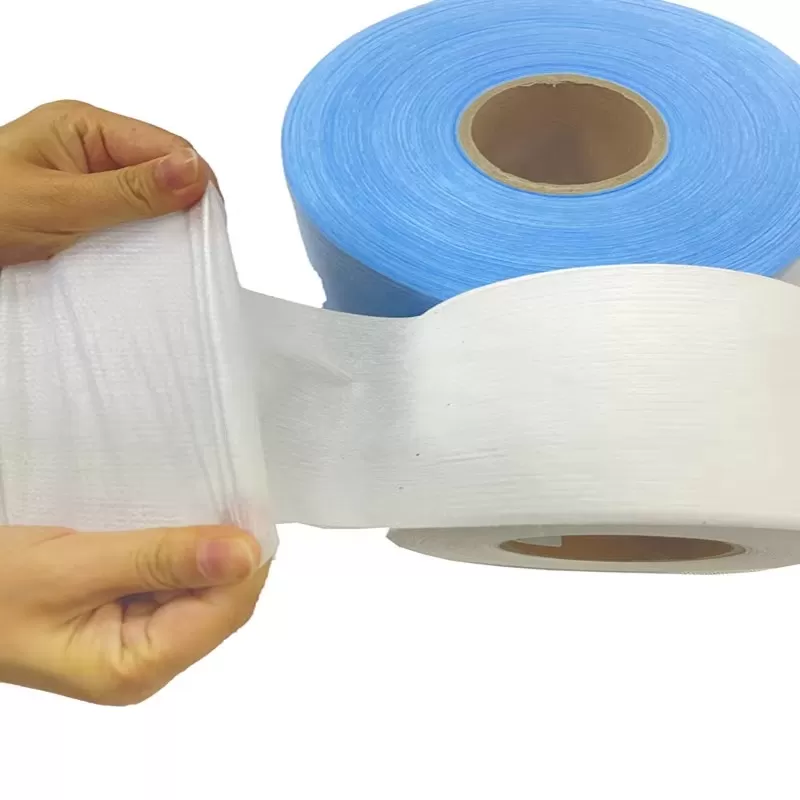
Personal hygiene manufacturing relies on elastomeric performance to deliver leakage protection, anatomical fit, and skin comfort. Within disposable baby diapers and adult incontinence briefs, the leg barrier system stands as the primary line of defense against liquid exudates. The integration of high-grade synthetic elastane filaments directly dictates the operational efficiency of production lines and the functional reliability of the finished product. Understanding the mechanical, chemical, and thermal properties of elastomeric strands allows hygiene converters to stabilize production metrics while maintaining low material consumption rates.
Elastic Mechanics in Barrier Leg Gathers
Modern diaper constructions employ a dual-cuff architecture: the inner standing leak barrier (frequently termed the standing cuff) and the outer perimeter leg gather. The standing cuff operates under continuous vertical lifting tension, propelled by elastic strands laminated into hydrophobic spunbond-meltblown-spunbond (SMS) nonwovens. These standing barriers must quickly erect when the package is opened and maintain a perpendicular seal against the inguinal fold throughout the movement cycle of the wearer.
Achieving this barrier seal requires precise tension delivery. If the elastic retraction is insufficient, liquid passes through side channels during sudden voiding events. Conversely, excessive elastic tension generates focal pressure points, restricting capillary blood flow in sensitive skin and producing visible red marks (erythema). Sourcing the correct spandex for diaper leg cuffs ensures an elastic modulus that delivers consistent gentle holding force without relying on high compressive loads against delicate tissue.
Polymer Chemistry and Decitex Classifications
Hygiene-grade elastane consists of a synthetic linear macromolecule containing at least 85% segmented polyurethane-urea. The molecular chain combines alternating soft segments and hard segments that function cooperatively under strain:
Soft Segments: Long-chain polyether diols (typically polytetramethylene ether glycol, or PTMG) provide flexibility, elongation capacity, and low-temperature elasticity. These segments unfold rapidly when subjected to tensile forces.
Hard Segments: Diisocyanate units reacted with low-molecular-weight diamine chain extenders form rigid crystalline domains. These domains act as physical cross-links through extensive hydrogen bonding, preventing permanent polymer slippage and enabling swift elastic recovery.
Linear mass density dictates the tensile strength and cross-sectional footprint of each strand. In infant diapers and adult pull-up pants, linear density is measured in Decitex (dtex, grams per 10,000 meters) or Denier (den, grams per 9,000 meters). Common configurations include:
490 dtex to 560 dtex (440–500 Denier): Standard specification for lightweight baby diapers, often deployed in multi-strand arrays (3 to 4 threads per side) to disperse contact stress across a broader surface area.
620 dtex to 840 dtex (560–750 Denier): Medium-to-heavy linear density preferred for adult incontinence products, overnight pants, and high-girth leg openings requiring sustained retentive force.
940 dtex to 1120 dtex (840–1000 Denier): Heavy-duty filaments used in specialized standing core barriers and waistbands where single-thread retraction replaces multi-thread setups.
Material suppliers such as KIMEPR manufacture polyether-based formulations designed to preserve molecular cohesion across broad temperature ranges, protecting converted articles against tension degradation during ocean transit and prolonged warehousing.
High-Speed Converting Dynamics and Tension Control
Hygiene converting lines run at continuous speeds exceeding 600 to 1,000 units per minute, equating to web linear velocities greater than 350 meters per minute. At these production speeds, the runnability of spandex for diaper leg cuffs depends on unwinding stability and package winding integrity.
Process equipment pulls elastomeric threads from multi-end creels using active servo-driven unwinding systems rather than passive drag brakes. Active unwinding systems track line speed changes in real time, adjusting spindle revolution to maintain feed tension tolerances within a narrow ±0.05 gram-force window. Fluctuations in unwinding tension lead directly to asymmetry in finished diapers, causing skewed standing cuffs, uneven pad curling, and high rejection rates during optical camera inspections.
The drafting ratio (draw ratio) defines the degree of elongation applied to the elastane before lamination between nonwoven layers. In diaper cuff assemblies, drafting ratios typically range from 2.0x to 3.5x (100% to 250% applied elongation). Running consistent drafting requires filaments with high elongation-at-break values (often exceeding 500%) and a steep tensile recovery slope, ensuring the filament retains its elastic memory after repeated mechanical elongation cycles through guide combs and drive rollers.
Adhesive Compatibility and Spin Finish Management
The permanence of the leg cuff seal relies entirely on the mechanical lock achieved between the elastic filaments, the nonwoven sheet, and the construction adhesive. Two adhesive technologies dominate hygiene lamination: hot-melt pressure-sensitive adhesives (HMPSA) based on synthetic block copolymers (such as SIS or SBS), and metallocene-catalyzed polyolefin adhesives.
During manufacturing, elastane filaments receive a surface coating known as spin finish (a specialized formulation of mineral oils, modified silicones, and antistatic agents). Spin finish prevents filament-to-filament adhesion on the spool and mitigates electrostatic buildup along metal thread guides. However, excessive or incompatible spin finish acts as a barrier to adhesive wet-out, causing adhesive debonding under sustained strain.
Advanced spandex for diaper leg cuffs features optimized spin finish chemistry with uniform surface application rates (typically maintained between 0.5% and 2.0% by weight). This balances low unwinding friction with high hot-melt adhesion, preventing the filament from pulling loose inside the glued channel when wet or warm.
Creep Resistance and Thermal Aging
Creep denotes the irreversible loss of retraction force and mechanical displacement of the elastane thread within the laminated cuff over time. When a diaper is stored under compression in tropical warehouses or worn against the human body (37°C), low-grade elastomeric filaments undergo physical slippage within the adhesive matrix, commonly referred to as cuff creep.
Hygiene manufacturers evaluate this phenomenon using standardized creep testing protocols. The test procedure entails:
Extending the diaper leg gather to its maximum flat length and mounting it onto a standardized rigid test board.
Marking an initial reference length across the glued elastane channel (typically 200 mm or 300 mm).
Cutting the nonwoven and elastic cleanly at both boundary marks, leaving the elastic anchored only by the adhesive lamination.
Exposing the test fixture to a constant climate chamber at 37°C (or 40°C) for 4 hours.
Measuring the contracted length of the elastic thread ends and calculating the creep percentage according to the formula:
Creep % = [(Initial
Length - Final Retained Length) / Initial Length] × 100%
Premium raw materials, such as those refined by KIMEPR, consistently achieve creep values below 8% under accelerated thermal exposure. Low creep guarantees that standing cuffs retain their 3D barrier shape throughout extended wear cycles, preventing leakage when the diaper core reaches high saturation levels.
Ultrasonic Lamination Considerations
To reduce raw material costs and eliminate chemical odor associated with hot-melt adhesives, converting lines increasingly adopt adhesive-free ultrasonic bonding. Ultrasonic welding utilizes high-frequency acoustic vibrations (typically 20 kHz to 35 kHz) transmitted through a titanium or steel sonotrode onto a patterned rotary anvil.
The mechanical energy generates instantaneous localized frictional heat, melting the thermoplastic polypropylene nonwovens around the spandex filaments to form physical anchor pockets. Successful ultrasonic anchoring demands tight thermal property matching between the elastic core and the surrounding polyolefin matrices. If the elastane melting point deviates sharply from the nonwoven polymer, the ultrasonic energy either severs the elastic thread (causing immediate snap-backs) or fails to generate sufficient polymer entrapment, resulting in bond failure during consumer use.
Fit Ergonomics and Multi-Strand Distribution
Early disposable diaper designs relied on single, heavy-gauge rubber ribbons along each leg opening. Modern hygiene ergonomics has shifted away from single-elastic construction toward multi-strand arrays containing 2 to 6 micro-filaments grouped closely together. This configuration provides several functional advantages:
Stress Decoupling: Distributing tension across four separate 560 dtex filaments rather than a single 2240 dtex strand disperses interfacial shear stress against the nonwoven, reducing the probability of delamination.
Gasket Sealing Dynamics: Multiple parallel strands generate micro-gathers that conform to the complex contours of the human groin, acting as a dynamic labyrinth seal that impedes fluid passage even during active body motion.
Reduced Skin Marking: Multi-strand arrays yield a broader footprint, dramatically lowering local pressure (measured in kiloPascals) applied to the epidermis.
The careful selection of spandex for diaper leg cuffs allows absorbent hygiene product designers to dial in the exact force-versus-elongation curve desired for target demographics, from premature infants weighing under 1.5 kg to bariatric adult care patients.
Quality Control Protocols for High-Volume Sourcing
Procurement teams and quality assurance engineers require structured testing frameworks to qualify incoming container shipments of elastomeric filaments. Key laboratory metrics include:
Dynamic Tensile Hysteresis: Measuring the loading and unloading force curves through consecutive cycles (typically five elongation cycles to 200% strain). The unloading force at the fifth cycle determines the real-world retentive power applied to the wearer.
Package Density and Bobbin Geometry: Verifying that spool wind angles prevent edge sloughing, saddle shapes, or overlapping strands, all of which trigger strand breaks on high-speed unwinding lines.
Linear Density Uniformity: Utilizing precision cut-and-weigh methods or vibroscopic resonance testing to ensure Decitex variations remain within a strict ±3% coefficient of variation across the entire filament run.
Consistent material quality from manufacturers like KIMEPR helps hygiene factories minimize unscheduled production downtime, maximize Overall Equipment Effectiveness (OEE), and eliminate raw material waste across global supply chains.
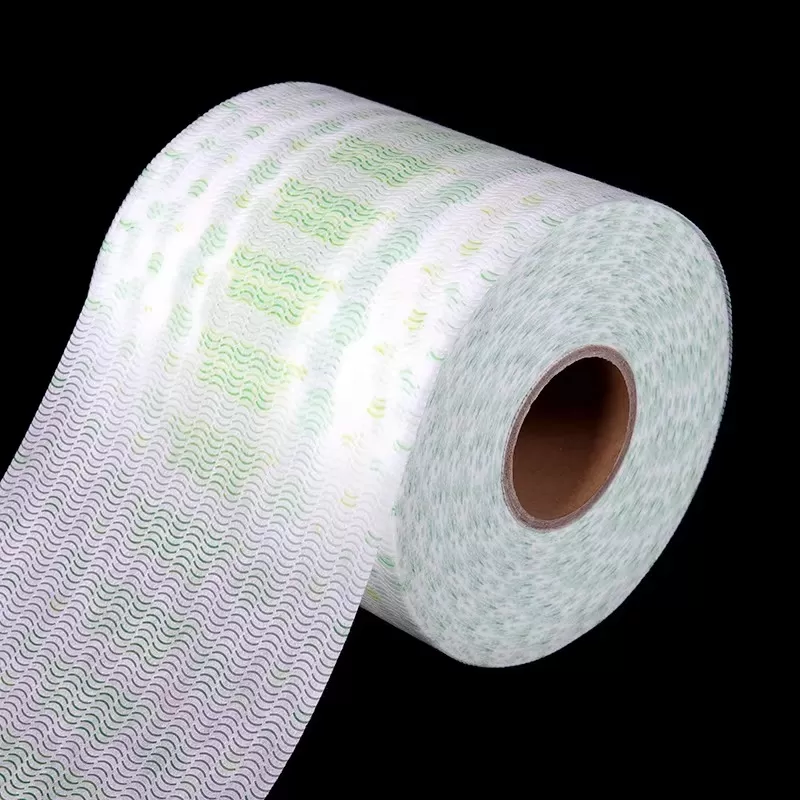
Comparative Analysis of Leg Cuff Elastic Types
The hygiene industry has evaluated various elastic formats over decades of development. The matrix below outlines how modern elastane filaments compare to alternative elastomeric technologies in hygiene converting lines.
| Parameter | Synthetic Polyether Spandex | Natural Rubber / Latex Ribbon | Elastic Nonwoven Laminates |
|---|---|---|---|
| Elongation at Break | 500% – 650% | 400% – 500% | 150% – 250% |
| Creep Resistance (37°C) | Superior (< 8%) | Moderate (10% – 15%) | Variable (12% – 20%) |
| Skin Hypoallergenicity | High (Latex-Free) | Low (Protein Allergens) | High (Polyolefin-based) |
| Converting Speed Limit | > 1,000 units/min | < 400 units/min | 600 – 800 units/min |
| Adhesive Consumption | Low (Pinpoint / Spiral) | High (Full Coating) | None to Low (Direct Bond) |
Frequently Asked Questions
What is the standard Decitex used for diaper leg cuffs?
The most common linear densities for baby diaper leg barriers are 560 dtex and 620 dtex. Adult incontinence briefs generally utilize heavier filaments ranging from 620 dtex to 840 dtex to deliver greater retentive force across wider product dimensions.
How does spin finish oil affect hot-melt adhesive bonding?
Spin finish oil reduces friction during strand extrusion and unwinding. If the oil concentration is too high or chemically incompatible with the HMPSA formulation, it creates a weak boundary layer that prevents the adhesive from anchoring to the polyurethane core, leading to elastic creep and delamination.
Why is natural rubber no longer used in diaper leg gathers?
Natural rubber latex contains proteins that can cause type-I allergic reactions in infant populations. Spandex offers significantly higher recovery efficiency, tighter tension control, better chemical stability against urine, and allows higher line speeds without strand breakage.
What causes elastic snap-backs on high-speed diaper converting lines?
Snap-backs are typically caused by uneven spool winding, physical defects along thread guide paths, inconsistent spin finish distribution, or excessive drafting ratios exceeding the ultimate tensile threshold of the polymer. Maintaining proper alignment and active unwind tension control prevents these failures.
How does ambient temperature affect the storage of elastane spools?
Spandex spools should be stored in climate-controlled environments between 15°C and 25°C with relative humidity below 65%. Prolonged exposure to temperatures above 40°C can cause soft-segment relaxation, migration of spin finish oils, and filament fusing (tackiness) on the bobbin, complicating unwinding.
Can spandex for diaper leg cuffs be used without adhesives?
Yes. Ultrasonic bonding technology allows converters to encapsulate elastomeric strands directly between nonwoven layers using ultrasonic energy, forming mechanical entrapment zones without hot-melt adhesives.
Procure High-Efficiency Hygiene Elastane
Selecting the optimal elastane specification balances machine throughput, product comfort, and leakage containment. For detailed technical datasheets, Decitex force curves, or sample bobbins for pilot line trials, submit your operational specifications to our materials engineering team:
Technical Inquiries & Sourcing Desk: tina@kimbersolution.com / scarlet@kimbersolution.com