
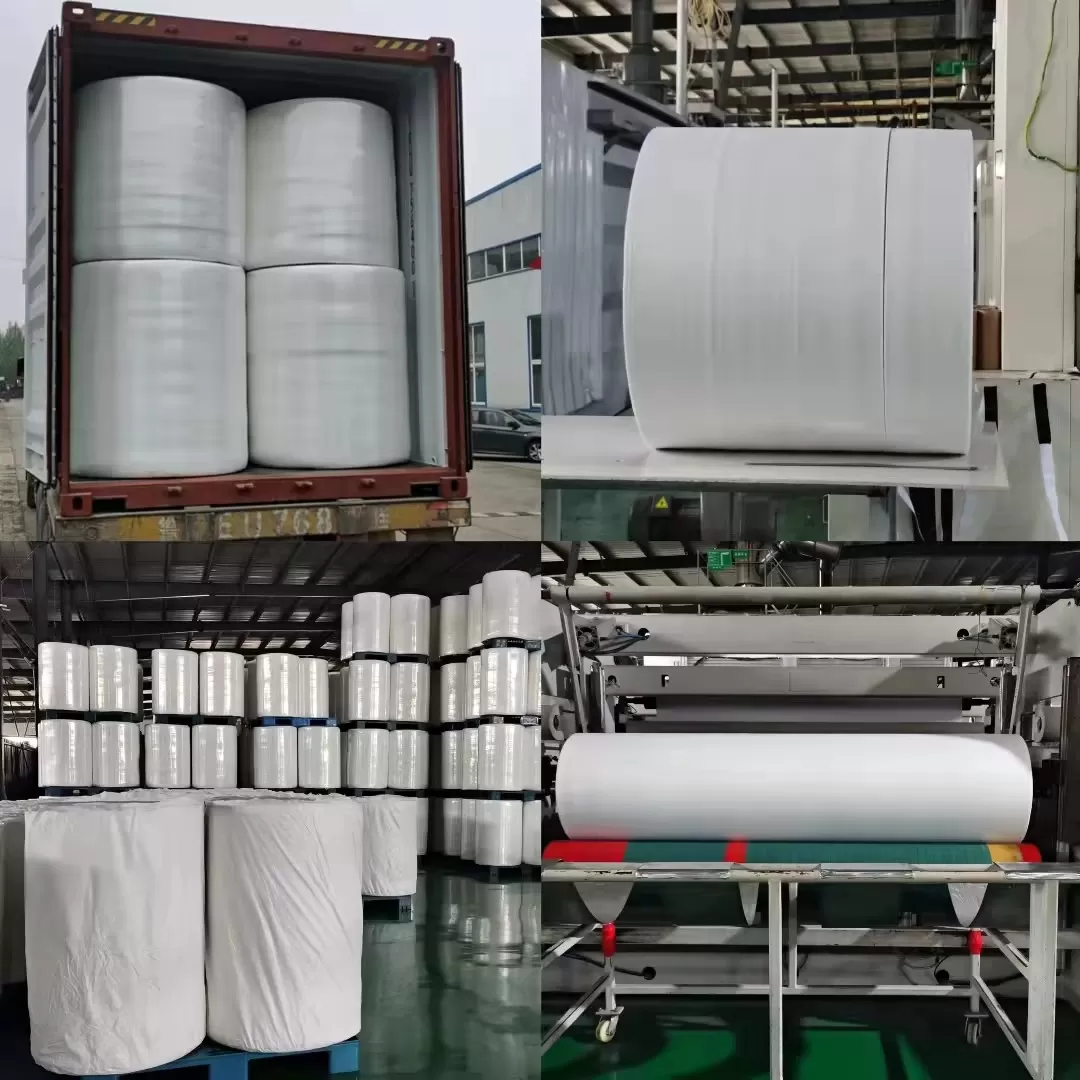
Modern consumers demand diapers that feel like real underwear. They reject the crinkly, noisy plastic sheets of past decades. They want softness, quiet movement, and reliable leak protection.
This market shift has forced hygiene converters to upgrade their raw material strategies. Cloth-like backsheet material now serves as the undisputed benchmark for both baby diapers and adult incontinence products.
At KIMBER, we support converters worldwide as they transition to modern laminate substrates. Achieving high tactile appeal while keeping plant efficiency high requires a firm grasp of polymer behavior, machine tension, and lamination physics.
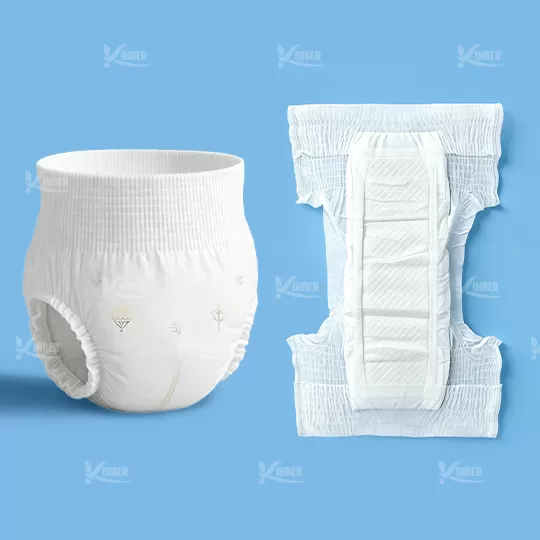
Anatomy of Modern Cloth-Like Backsheet Material
A cloth-like backsheet is not a single, monolithic film. It is an engineered, multi-layer composite designed to block liquids while maintaining a soft, textile hand-feel on the garment exterior.
The structure relies on two essential functional layers:
The Functional Inner Core: A thin liquid barrier layer, typically made from cast or blown polyethylene (PE). In premium configurations, converters run a breathable PE film filled with calcium carbonate (CaCO3) particles. Stretching this film creates millions of microscopic pores that allow water vapor to escape while locking liquids inside.
The Outer Contact Layer: A nonwoven backsheet web, usually spunbond polypropylene (PP) or ultra-soft air-through bonded nonwovens. This substrate gives the diaper its cloth texture, eliminates skin irritation, and prevents external condensation build-up.
Engineering this hybrid structure requires finding the right balance between film gauge, web weight, and adhesive mass. A minor error in fiber denier or polymer formulation can ruin high-speed runnability on the converting floor.
Lamination Technologies Compared
Hygiene manufacturers bond the nonwoven web and the barrier film together using three primary lamination technologies. Each system demands specific operating parameters and distinct machine setups.
1. Hot-Melt Adhesive Lamination
Hot-melt systems spray or slot-coat synthetic rubber-based adhesives between the nonwoven and PE web. This technique offers wide operating windows and handles diverse substrate weights easily.
However, running excessive glue weights stiffens the laminate and adds raw material expense. Excess adhesive can also bleed through light-gauge nonwovens, contaminating processing rollers downstream.
2. Extrusion and Thermal Lamination
Thermal bonding uses heat and calender pressure to weld compatible polyolefin fibers directly to the PE film without glue. Extrusion lamination casts a molten polymer film directly onto the moving nonwoven substrate.
These methods eliminate adhesive costs and eradicate chemical odors. However, operating windows are tight. Excessive heat will burn through thin films, while inadequate temperature results in severe web delamination.
3. Ultrasonic Bonding
Ultrasonic horns generate localized acoustic friction to fuse fibers to the barrier layer at designated weld points. This clean, energy-efficient process creates exceptionally soft composites.
The trade-off lies in web speed limits. Ultrasonic tooling requires precise anvil positioning and mechanical rigidity, making ultra-high-speed converting difficult to stabilize without robust line engineering.
Technical Specifications: The Manufacturer’s Checklist
Procuring and processing cloth-like backsheet material requires rigorous validation of raw physical properties. Floor managers and quality control teams must evaluate four critical performance metrics.
Moisture Vapor Transmission Rate (MVTR)
Breathability prevents skin maceration and diaper rash. Breathable PE film lamination must deliver controlled MVTR values, typically between 1,500 and 4,500 g/m²/24h depending on regional climates.
Day-use baby products operate well at moderate breathability ranges. Premium overnight and adult care lines demand higher ratings to clear heavy humidity without allowing surface dampness to accumulate.
Tensile Strength and Elongation
Modern diaper converting lines operate at speeds between 500 and 1,000 products per minute. The composite must withstand intense machine-direction (MD) pulling forces without snapping.
It must also maintain cross-direction (CD) flexibility to prevent side-wing tearing when caregivers apply mechanical tapes. An optimal balance prevents costly line stops caused by unexpected web breaks.
Hydrostatic Head Performance
A soft texture means nothing if fluid seeps through under body weight. The micro-porous barrier must resist hydrostatic water pressure typically exceeding 120 to 150 mbar.
High pinhole resistance ensures the backsheet holds its seal even when dynamic mechanical loads compress the saturated absorbent core inside.
Flexographic Print Registration
Modern backsheets feature soft pastel patterns, wetness indicators, and size markers. The material surface must maintain uniform surface energy (dyne levels) to hold solvent-free inks cleanly.
Unstable films distort under heat and tension, causing registration blur and graphic bleed that diminish product appearance.
Converting Line Pitfalls: Handling Backsheets at High Speeds
Upgrading your catalog to feature cloth-like composites introduces mechanical challenges inside the diaper line. Operators often struggle with runnability issues when running low-basis-weight materials.
Uneven tension distribution across the nonwoven-film composite causes edge curl and wrinkling. Because film and nonwoven stretch at different rates, inaccurate brake calibration creates web drift that disrupts final product folding.
Material trim scrap poses another ongoing headache. Trimming outer edges across continuous rolls creates substantial raw material waste, inflating unit costs on every single shift.
Legacy machines face frequent jams when feeding low-GSM cloth-like composites. Older vacuum systems, static bars, and knife anvils pull and rip thin films, dragging line OEE (Overall Equipment Effectiveness) down.
How KIMBER Protects Your Operating Margins
Mastering diaper backsheet manufacturing demands more than buying raw stock off the open market. It requires deep integration between machine mechanics, web dynamics, and polymer chemistry. That is where KIMBER steps in.
With over two decades of global hygiene equipment execution, KIMBER helps diaper brands source reliable hygiene raw materials and optimize their web-handling equipment. We assess your target MVTR, tensile targets, and nonwoven selections to build dependable operational recipes.
To eliminate scrap, KIMBER designs proprietary Zero-Trim cutting retrofits for existing and new diaper machines. Our zero-trim configurations alter continuous web application, saving companies thousands of dollars each month in trim scrap recovery.
We analyze the Total Cost of Ownership (TCO) across your entire footprint. By pairing optimized material weights with re-engineered tension drives or fully turnkey refurbished machines, we protect your profit margins from rising resin prices.
Frequently Asked Questions
Q1: What is the standard basis weight for a cloth-like
backsheet?
A1: Most standard baby diapers use a composite ranging
from 22 to 30 gsm (grams per square meter). This typically combines a 12-16 gsm
breathable PE film with a 10-14 gsm spunbond PP nonwoven web.
Q2: Why does our cloth-like backsheet material delaminate during
cutting?
A2: Delamination usually points to insufficient adhesive
add-on, poor calender temperature uniformity, or blunt rotary knives. Unequal
web tensions pulling the film away from the nonwoven during feeding will also
cause layers to split.
Q3: Can breathable PE film cause sweating on the diaper
exterior?
A3: Yes. In high-humidity environments, high-MVTR
backsheets move moist air out quickly. If air outside the diaper is cooler, that
vapor condenses into water droplets on the nonwoven, which consumers mistake for
leaks.
Q4: How can plants cut down on web drift when feeding light nonwoven
laminates?
A4: You need modern diaper machine tension control. This
includes multi-stage load cells, active servo-driven unwinds, driven nip rolls,
and ultrasonic web edge guides that adjust for camber in raw material rolls.
Q5: Can our plant run low-GSM cloth-like backsheets on older
converting machines?
A5: Yes, but older equipment typically requires
upgraded servo unwinds, low-friction rollers, anti-static discharge systems, and
modern vacuum transfer paths engineered by hygiene retrofitting specialists like
KIMBER.
Upgrade Your Hygiene Manufacturing Efficiency
Selecting the right cloth-like backsheet material helps you deliver the comfort consumers demand without sacrificing floor efficiency. Protect your production line from high scrap rates, delamination, and web breaks.
Partner with KIMBER for turnkey machine design, Zero-Trim waste retrofits, and comprehensive TCO engineering. Contact our engineering desk today at scarlet@kimbersolution.com to audit your converting line and streamline your hygiene material costs.