
Modern baby diapers and adult incontinence products require dependable bonding under extreme production speeds. As production targets push past 600 pieces per minute, line managers face strict quality and cost demands. Choosing the right hot melt adhesive for diaper construction determines whether a plant runs smoothly or suffers from regular downtime.
For more than two decades, KIMBER has worked directly with hygiene manufacturers to integrate production machinery with high-grade raw materials. Adhesive formulation is not just a chemical choice; it is a core mechanical variable that affects energy draw, nozzle health, and total product integrity.
1. The Invisible Backbone of Modern Diaper Performance
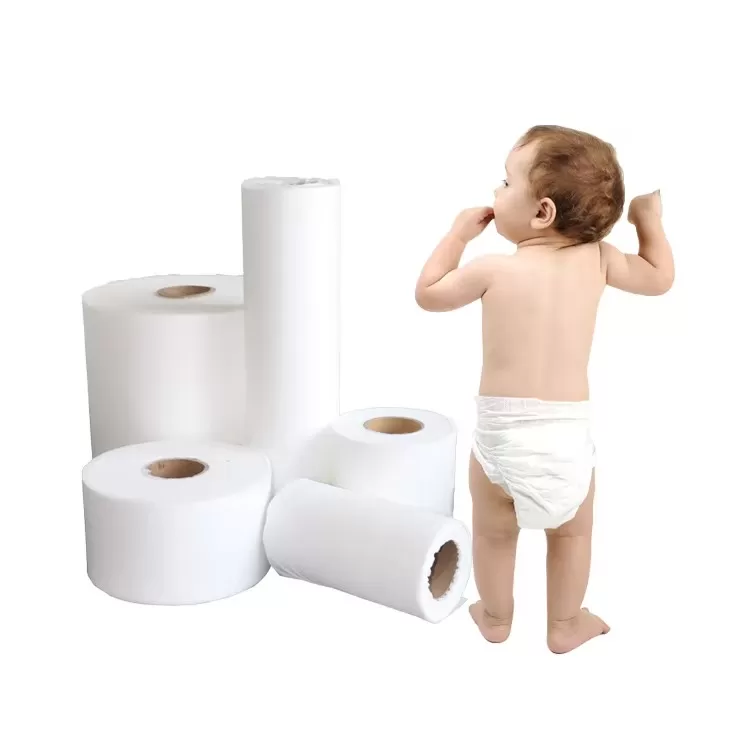
Construction adhesives bond the fundamental components of an absorbent hygiene product. They join the breathable backsheet to the nonwoven backsheet, secure the acquisition distribution layer (ADL), and anchor the absorbent core between the topsheet and barrier films.
In 2026, the hygiene sector faces several practical pressures:
The dominance of ultra-thin composite cores containing high concentrations of Super Absorbent Polymer (SAP).
The transition toward low-basis-weight nonwovens (under 10 gsm) to save material costs.
Strict global thresholds on volatile organic compounds (VOCs) and chemical odors in baby products.
When engineers run the wrong hot melt adhesive for diaper construction, lines quickly run into trouble. Common failures include strike-through on thin films, delamination during wearer movement, core cracking, and adhesive bleed-through that fouls machine guide rollers.
2. Understanding Diaper Construction Adhesive: Chemistry & Types
Hygiene adhesives have evolved from basic tackified polymers to targeted synthetic systems. Selecting the correct polymer backbone determines your line speed limits and material consumption per unit.
Styrene Block Copolymers (SBC)
SBC formulations—primarily Styrene-Isoprene-Styrene (SIS) and Styrene-Butadiene-Styrene (SBS)—remain common workhorses in many hygiene facilities. They provide high initial tack, excellent green strength, and broad formulation latitude. However, SBC adhesives carry higher density, higher odor profiles, and can degrade or char inside melt tanks if held at high temperatures during unplanned stops.
Metallocene Polyolefins (mPO)
Metallocene-catalyzed polyolefin adhesives represent the technical benchmark for 2026 production lines. Their precise molecular structure creates exceptional thermal stability and clean processing. Comparing metallocene vs SBC diaper adhesive systems reveals clear advantages for mPO: lower density (meaning up to 15% lower add-on weight by volume), near-zero odor, water-white color, and superior oxidation resistance.
Bio-based and Biodegradable Formulations
Driven by regional sustainability regulations, formulators now offer adhesives containing 20% to 40% bio-sourced resins and tackifiers. While these options help brands meet specific retail sustainability audits, engineers must monitor their open times and thermal stability carefully under continuous high-shear pumping.
| Performance Property | SBC Formulations | mPO (Metallocene) | Bio-Based Hybrids |
|---|---|---|---|
| Peel Strength Stability | High Initial / Moderate Aging | High / Long-term Stable | Moderate / Formula-Dependent |
| Specific Gravity (Density) | 0.98 - 1.02 g/cm³ | 0.88 - 0.92 g/cm³ | 0.95 - 1.00 g/cm³ |
| Thermal Stability & Pot Life | Moderate (Prone to charring) | Exceptional (No nozzle build-up) | Moderate |
| Application Temperature | 140°C - 160°C | 120°C - 140°C | 135°C - 150°C |
| Odor & VOC Level | Low to Moderate | Ultra-Low / Odorless | Low to Moderate |
3. Key Technical Criteria for Selecting Construction Adhesive in 2026
Hygiene manufacturers cannot afford a trial-and-error approach on the factory floor. Plant managers must evaluate their glue specifications against four rigid operational benchmarks.
Low Application Temperature (120°C to 135°C)
A reliable low application temperature hot melt for diapers protects ultra-thin polyethylene (PE) backsheets from thermal burn-through. Running your tanks at 125°C instead of 160°C also cuts factory electrical power consumption and shortens warm-up cycles during shift handovers.
Bleed-Through Resistance and Sheet Softness
Construction glue must secure hydrophobic side cuffs and hydrophilic topsheets without bleeding through to the surface. Bleed-through causes sticky residues that irritate infant skin and harden the overall chassis feel. The adhesive must yield a flexible bond line that preserves the natural drape of lightweight spunbond fabrics.
Thermal Stability and Clean Cut-Off
High thermal stability prevents adhesive oxidation inside the applicator hoses and manifolds. Gel formation and carbon buildup block nozzles, causing uneven spray distribution. Clean cut-off properties ensure that high-speed intermittent gluing operations do not leave adhesive strings across unglued margins.
Odor and Color Standards
Tier-one consumer brands demand water-white adhesives with negligible volatile release. Selecting high-purity hydrogenated hydrocarbon tackifiers guarantees that diapers retain a fresh, neutral scent when opening sealed retail packaging.
4. The Engineering Perspective: Matching Glue with Machine Application Systems
Adhesive performance depends heavily on the mechanical delivery system. A premium formulation will fail if your pump pressures, nozzle types, and line speeds fall out of balance. Engineering teams like KIMBER focus on matching chemical viscosities with precise mechanical settings.
Modern diaper machinery utilizes three primary application modes:
Continuous Spiral Spray: Ideal for bonding backsheets to topsheets across broad surface areas. Requires adhesives with balanced cohesive strength to prevent filament breakage at high line air pressures.
Slot Coating: Delivers full-surface, continuous film application with zero overspray. Essential for ultra-thin composite cores requiring consistent anchor points for SAP particles.
Multi-Bead and Omega Spray: Used primarily for side-panel assembly and core stabilization, applying concentrated adhesive lines where peel stress is highest.
High-speed lines running at 500 to 800+ pieces per minute present severe aerodynamic shear. At these velocities, low-cohesion adhesives suffer from "flying glue" or misting, which contaminates machine guide rollers and optical inspection cameras. Proper rheology control ensures the adhesive web lands precisely within the target boundary.
On refurbished or retrofitted production lines, upgrading the hot melt applicator system is the most cost-effective path to modernize output. KIMBER engineers regularly recalibrate legacy gluing modules with precision metering gear pumps. This retrofitting matches the tight tolerances of modern metallocene glues without requiring a completely new production chassis.
5. Sustainable Trends & Raw Material Synergy: From Spunlace to Adhesives
A successful production setup treats materials as an interconnected ecosystem. You cannot select your diaper core construction glue in isolation from your nonwovens and core composition.
Recent industry shifts toward cotton-enhanced topsheets, PLA fibers, and spunlace nonwovens alter the chemical polarity of the substrate. Standard adhesives engineered for standard polypropylene (PP) fibers may show reduced mechanical anchoring on natural fibers. Formulations must balance surface tension to penetrate fiber matrices without saturating them.
Similarly, the rise of pre-formed composite cores—built from airlaid pulp, tissue, and high-ratio SAP—demands adhesives that maintain bond strength when the core expands with fluid. If the construction glue locks the SAP particles too tightly, it restricts absorbency. If it is too weak, the core slumps, causing leakage.
6. How KIMBER Optimizes Diaper Manufacturing & Supply Chain (TCO Optimization)
Total Cost of Ownership (TCO) in hygiene manufacturing extends far beyond the price-per-kilogram of raw adhesive. True cost efficiency comes from minimizing add-on weights, eliminating line stops, and reducing material scrap.
KIMBER brings a comprehensive engineering approach to hygiene manufacturing:
Integrated Machinery and Chemistry Audits: Drawing on over 20 years of equipment engineering, KIMBER evaluates your line speed, nozzle geometry, and nonwoven properties to recommend the exact glue viscosity and add-on levels you need.
Glue Consumption Optimization: Our process engineers implement optimized spray profiles and Zero-Trim cutting technologies. By switching to lower-density metallocene adhesives and precise pneumatic controls, plants regularly reduce hot melt glue consumption in diaper machines by 15% to 25%.
Turnkey Equipment and Raw Material Sourcing: As a single-source partner, KIMBER provides new and fully reconditioned diaper production lines, spare parts, and dependable raw material supply chains—from spunlace nonwovens to specialized hot melt adhesive for diaper construction.
This end-to-end integration simplifies procurement and prevents the common finger-pointing between raw material suppliers and machine vendors when production issues arise.
7. Frequently Asked Questions (FAQ)
Q1: What is the optimal add-on level for hot melt adhesive for diaper
construction?
A1: Typical construction add-on levels range between
1.2 and 2.5 gsm for continuous backsheet/topsheet lamination, and 2.0 to 4.0 gsm
for core construction. Upgrading from traditional SBC to lower-density mPO
formulations often allows manufacturers to lower these target weights by 10% to
15% without sacrificing peel strength.
Q2: How does low application temperature hot melt for diapers reduce
factory maintenance costs?
A2: Operating at 120°C to 135°C
significantly reduces thermal degradation and charring inside hot melt tanks,
hoses, and nozzles. This cuts down nozzle-clogging events, extends the lifespan
of heated hoses, lowers spare-part replacement frequency, and reduces weekly
maintenance labor.
Q3: Can mPO hot melt adhesive run on refurbished or older diaper
machines?
A3: Yes. However, older machines may require adjustments
to their temperature PID controllers, hose temperature zones, and nozzle air
pressures. KIMBER routinely helps factories calibrate older and retrofitted
lines to run high-efficiency mPO adhesives cleanly at full design speeds.
Q4: How do I select the right hygiene hot melt adhesive supplier for
high-speed lines?
A4: Look for a partner that provides full
rheological data, lot-to-lot viscosity consistency, and on-site technical
support. A reliable supplier must understand high-speed line dynamics (500+ ppm)
and offer formulations that prevent adhesive misting and nozzle buildup.
Q5: How does KIMBER support raw material procurement and machine
integration?
A5: KIMBER combines machinery manufacturing with direct
raw material supply chain consulting. We supply both new and reconditioned
diaper production lines alongside tested raw materials, including adhesives,
nonwovens, and elastics, ensuring every component functions reliably from day
one.
8. Take the Next Step Toward Lower Production Costs
Optimizing your hot melt adhesive for diaper construction offers an immediate path to improve line stability, lower unit costs, and deliver a softer end product. Do not let improper glue selection or uncalibrated application systems drain your operational margins.
Contact the KIMBER engineering team today. Send us your line specifications to request a comprehensive TCO cost analysis and discover how our turnkey machinery and raw material solutions can upgrade your manufacturing efficiency.